
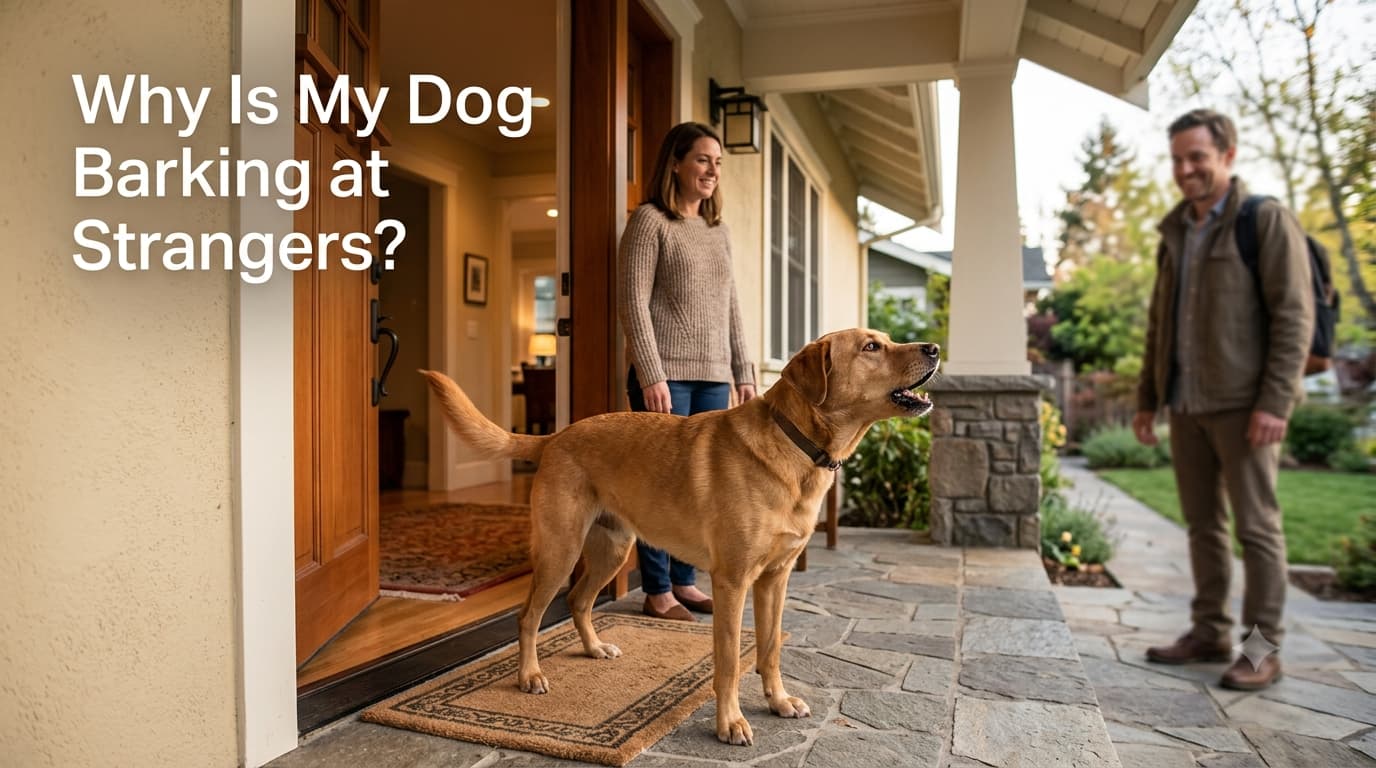
If your dog suddenly starts barking the moment a stranger walks past, rings the doorbell, or comes into your home, you’re definitely not alone.
It can be confusing because your dog may be perfectly relaxed with family members but completely different around unfamiliar people. You may even wonder, “Why is my dog barking at strangers when nobody has done anything to them?”
The important thing is that barking doesn’t automatically mean your dog is aggressive. Dogs bark for many reasons, including fear, excitement, territorial behavior, uncertainty, or simply because they haven’t learned how to respond calmly to unfamiliar people.
Understanding why your dog is barking at strangers is the first step toward changing the behavior.
Table of Contents
Quick Answer
Why is my dog barking at strangers? Your dog may be barking because they feel nervous, threatened, excited, protective, or unsure around unfamiliar people. Some dogs also bark because they have learned that barking makes strangers move away.
Look at your dog’s body language as well as the barking:
- Is their body stiff or relaxed?
- Are their ears forward or pulled back?
- Are they trying to move closer or get away?
- Is their tail loose or tucked?
- Do they stop barking once the stranger leaves?
These clues can help you understand what your dog is actually feeling.
7 Common Reasons Your Dog Barks at Strangers
1. Your Dog Feels Nervous or Afraid

Fear is one of the most common reasons a dog may bark at unfamiliar people.
A stranger may look, sound, or move differently from the people your dog knows. If your dog feels uncomfortable, barking can become their way of saying, “Please stay away.”
You may also notice:
- Backing away
- Hiding behind you
- Tucked tail
- Lip licking
- Trembling
A fearful dog shouldn’t be forced to approach strangers.
2. Your Dog Is Protecting Its Territory
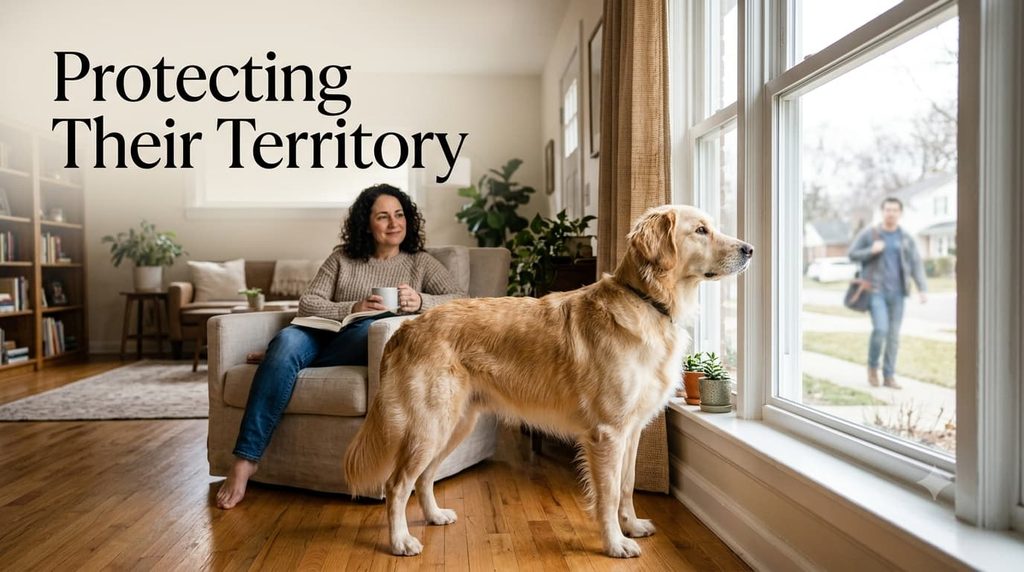
Some dogs become especially vocal when strangers approach their home, yard, car, or family.
From your dog’s perspective, someone walking toward the front door may look like an unfamiliar person entering their territory.
This is why your dog may bark more at strangers near your house than when you’re out walking.
3. Your Dog Is Excited
Not every bark is caused by fear.
Some dogs bark because they’re extremely excited to see someone. They may jump, wag their tail, pull toward the person, or try desperately to get closer.
If your dog looks loose and playful rather than tense or frightened, excitement may be driving the barking.
4. Your Dog Wasn’t Socialized Enough
Dogs learn about the world through experiences.
If a dog had limited exposure to different people, places, sounds, and situations while growing up, unfamiliar people may seem much more intimidating.
This doesn’t mean your dog can’t improve. Calm, gradual exposure can help many dogs become more comfortable around strangers.
Gradual and positive exposure to different people and situations can help dogs become more comfortable. The American Kennel Club also offers helpful guidance on dog socialization and behavior.
5. Your Dog Had a Bad Experience
A frightening experience involving a stranger can sometimes create a lasting association.
For example, if someone previously scared your dog, moved suddenly toward them, or handled them roughly, your dog may become suspicious of people who remind them of that experience.
The reaction may look excessive to us, but your dog may genuinely believe they’re protecting themselves.
6. Barking Has Worked Before
Dogs learn from consequences.
If your dog barks at a stranger and the person immediately walks away, your dog may eventually learn:
“I bark → the stranger leaves.”
That can make the behavior stronger over time, even if the stranger wasn’t actually dangerous.
7. Your Dog Is Overwhelmed
Sometimes several things happen at once.
A busy sidewalk, unfamiliar people, loud traffic, other dogs, and a new environment can overwhelm a sensitive dog.
In these situations, barking may simply be your dog’s way of saying that they need more space.
If your dog sometimes barks at things you can’t see or identify, read our guide on Why Is My Dog Barking at Nothing?
How to Stop Your Dog From Barking at Strangers
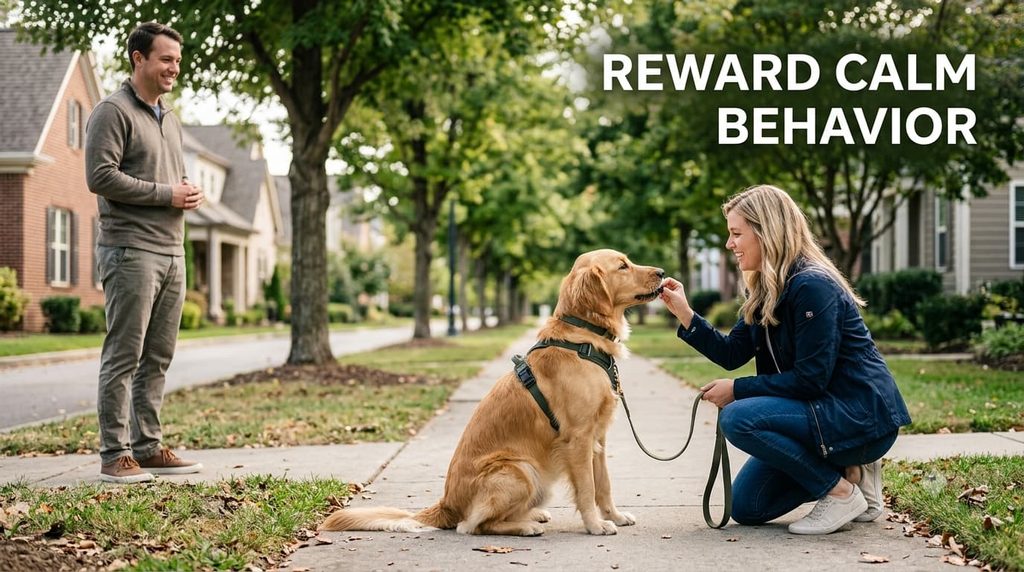
The goal isn’t to punish your dog for communicating. Instead, you want to teach them that seeing a stranger doesn’t automatically require a reaction.
Try these steps:
- Keep enough distance from strangers that your dog can still stay calm.
- Reward your dog when they notice someone without barking.
- Ask visitors to ignore your dog initially.
- Don’t force your dog to greet unfamiliar people.
- Use calm, positive training.
- Practice around strangers from a comfortable distance.
- Gradually decrease the distance as your dog becomes more confident.
If your dog starts barking, don’t drag them toward the person. Move farther away and give your dog a chance to settle.
For more practical training strategies, see our complete guide on How to Stop a Dog From Barking.
What Should You Avoid?
Yelling at your dog may feel natural when the barking becomes frustrating, but it can make an already nervous dog even more stressed.
Avoid:
- Shouting repeatedly
- Punishing fearful behavior
- Forcing greetings
- Letting strangers suddenly touch your dog
- Using frightening corrections
Instead, focus on calm behavior and reward your dog when they make good choices.
When Should You Get Professional Help?

If your dog’s reaction is becoming stronger or includes lunging, snapping, attempting to bite, or extreme fear, it’s worth getting professional help.
You should also consider speaking with your veterinarian or a qualified positive-reinforcement behavior professional if:
- The behavior appeared suddenly.
- Your dog seems extremely frightened.
- Your dog reacts to almost every stranger.
- You can’t safely control your dog around people.
- The behavior keeps getting worse despite consistent training.
A professional can help determine whether fear, anxiety, territorial behavior, or another issue is driving the reaction.
If your dog’s behavior changes suddenly or is accompanied by extreme fear or other unusual symptoms, PetMD provides veterinary-reviewed information about dog behavior and health concerns.
Frequently Asked Questions
1. Why is my dog barking at strangers?
Why is my dog barking at strangers? Most commonly, dogs bark at unfamiliar people because they feel nervous, excited, protective, or uncertain. Some dogs may also have learned that barking makes strangers move away.
2. Why does my dog bark at strangers but not family members?
If you’re wondering why your dog is barking at strangers but not family, it’s usually because family members are familiar and predictable. An unfamiliar person may trigger fear, excitement, territorial instincts, or uncertainty.
3. Is it normal for my dog to bark at strangers?
Yes, some barking at unfamiliar people is normal communication. However, why is my dog barking at strangers becomes more important when the behavior is excessive, getting worse, or accompanied by lunging, extreme fear, or other concerning body language.
4. How can I stop my dog from barking at strangers?
To reduce barking at strangers, keep your dog at a comfortable distance, reward calm behavior, avoid forcing greetings, and gradually introduce them to unfamiliar people. Consistent positive-reinforcement training can help your dog learn a calmer response.
5. Should I worry if my dog suddenly starts barking at strangers?
A sudden change in behavior is worth paying attention to. If your dog unexpectedly becomes much more reactive, fearful, or difficult to control around people, consider speaking with your veterinarian or a qualified behavior professional to rule out an underlying issue.
Conclusion
So, why is my dog barking at strangers? It could be fear, excitement, territorial behavior, limited socialization, a previous bad experience, or simply a learned habit.
The most helpful approach is to understand what your dog is feeling instead of treating every bark as bad behavior.
Give your dog space, reward calm reactions, introduce unfamiliar people gradually, and avoid forcing interactions. With patience and consistent training, many dogs can learn that strangers don’t always need a response.
2 thoughts on “Why Is My Dog Barking at Strangers? 7 Common Reasons & Easy Solutions”