
Introduction
Does your dog bark at every little sound, passing car, visitor, or even for no obvious reason? If so, you’re probably wondering how to stop a dog from barking without being harsh or causing fear.
The truth is, barking is a completely natural way for dogs to communicate. They bark to alert you, express excitement, seek attention, or respond to something they perceive as a threat. However, when barking becomes excessive, it can frustrate owners, disturb neighbors, and sometimes signal an underlying behavioral or medical issue.
The good news is that most excessive barking can be reduced with patience, consistent training, and by understanding why your dog is barking in the first place. Punishing your dog rarely solves the problem—in fact, it can make anxiety and barking even worse.
In this guide, you’ll learn 10 effective ways to stop excessive dog barking, discover common mistakes to avoid, and understand when it’s time to seek help from a veterinarian or a certified dog trainer.
Table of Contents
🐾 Quick Overview
| Question | Answer |
|---|---|
| How can I stop my dog from barking? | Identify the cause, use positive reinforcement, stay consistent, and avoid punishment-based training. |
| Is barking always bad? | ❌ No. Barking is a normal form of communication. Only excessive or unwanted barking needs training. |
| Can training reduce barking? | ✅ Yes. Most dogs improve with consistent, reward-based training. |
| Should I yell at my dog? | ❌ No. Yelling often encourages more barking because your dog may think you’re joining in. |
| When should I seek professional help? | If barking becomes severe, sudden, or is linked to anxiety, aggression, or health problems. |
🎯 Tip #1 – Find Out Why Your Dog Is Barking
Before you can successfully stop excessive barking, you need to understand what is causing it. Different reasons require different training approaches. Treating every bark the same way often leads to frustration for both you and your dog.
Common reasons dogs bark include:
- 🚪 Someone is at the door
- 🐿️ They see another dog or animal
- ❤️ They want attention
- 😰 Fear, stress, or separation anxiety
- 🎾 Excitement during play
- 🥱 Boredom and lack of exercise
Spend a few days observing when, where, and why your dog barks. Keeping track of these patterns will help you choose the most effective training method.
💡 Tip: Solving the cause of barking is much more effective than simply trying to stop the barking itself.
🏆 Tip #2 – Reward Quiet Behavior
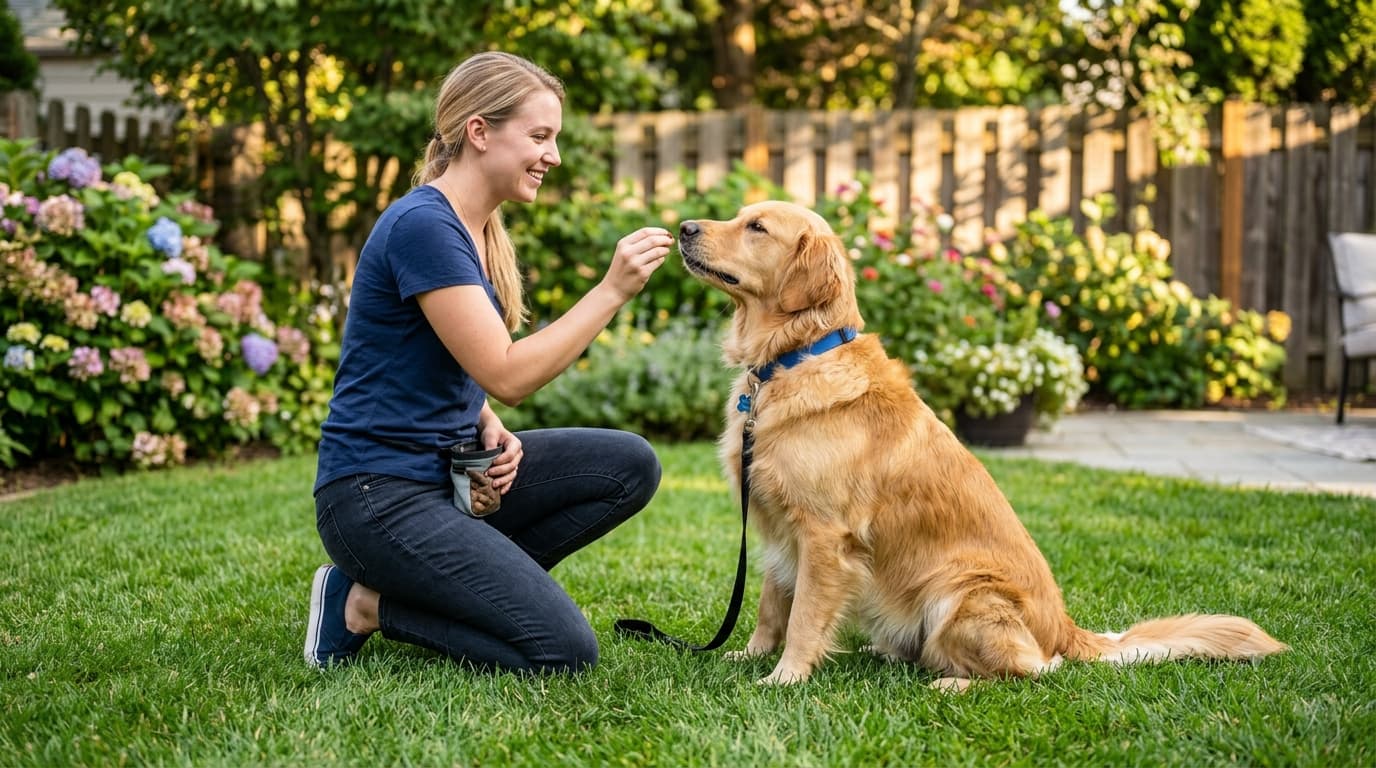
One of the most effective ways to learn how to stop a dog from barking is by rewarding the behavior you want instead of only reacting to the behavior you don’t.
When your dog stops barking and becomes calm, immediately reward them with a treat, praise, or their favorite toy. This teaches your dog that staying quiet leads to positive outcomes.
Reward your dog when they:
- 🐶 Stop barking on their own
- 🤫 Remain calm when someone knocks
- 🦴 Follow the “Quiet” command
- ❤️ Focus on you instead of distractions
- 🎉 Relax after an exciting situation
Consistency is the key. Every family member should reward the same calm behavior so your dog receives a clear message.
💡 Tip: Keep small training treats nearby so you can reward quiet behavior within a few seconds. Dogs learn best when rewards are immediate.
🚫 Tip #3 – Don’t Accidentally Reward Barking
Many dog owners unknowingly encourage barking without realizing it. If your dog barks for attention and you immediately talk to them, pet them, or give them food, they may learn that barking is the easiest way to get what they want.
Avoid these common mistakes:
- ❌ Giving treats while your dog is barking
- ❌ Picking them up every time they bark
- ❌ Throwing a toy just to make them quiet
- ❌ Opening the door because they’re barking
- ❌ Responding immediately to attention-seeking barking
Instead, wait until your dog becomes quiet for a few seconds before giving attention or a reward. This teaches them that calm behavior—not barking—is what earns rewards.
⚠️ Warning: Never punish or yell at your dog for barking. Harsh corrections can increase fear and anxiety, which often leads to even more barking.
🧠 Tip #4 – Teach the “Quiet” Command
If you’re looking for how to stop a dog from barking, teaching the “Quiet” command is one of the most valuable training techniques. Instead of trying to stop barking by shouting, you teach your dog exactly what you expect.
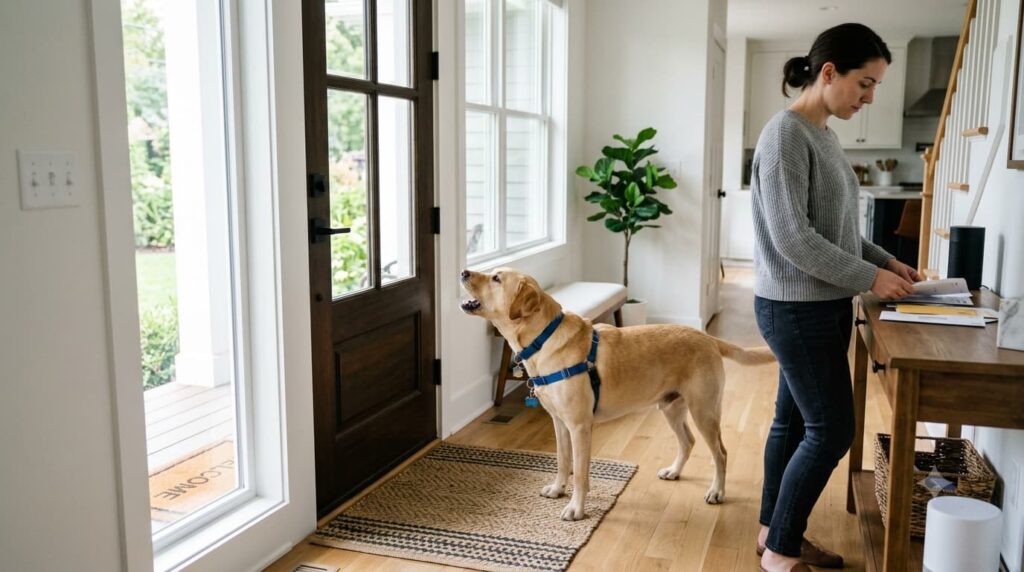
Start when your dog barks at a common trigger, such as the doorbell. Once they pause for a second or two, calmly say “Quiet” and immediately reward them with a treat and praise.
How to teach the “Quiet” command:
- 🐕 Allow one or two barks.
- ✋ Calmly say “Quiet.”
- 🤫 Wait for a brief moment of silence.
- 🦴 Reward your dog immediately.
- 🔁 Repeat daily until your dog understands the command.
Keep training sessions short—about 5 to 10 minutes—to keep your dog focused and motivated.
💡 Tip: Stay calm and use the same word every time. Consistency helps your dog learn faster.
🚶 Tip #5 – Give Your Dog More Exercise and Mental Stimulation
A tired dog is often a quieter dog. One of the biggest reasons behind excessive barking is boredom and excess energy. If your dog doesn’t get enough physical activity or mental challenges, they may bark simply to entertain themselves.
Ways to reduce boredom:
- 🚶 Take daily walks suited to your dog’s age and breed.
- 🎾 Play fetch or tug-of-war.
- 🧩 Use puzzle toys or treat-dispensing toys.
- 👃 Try scent games and hide-and-seek activities.
- 🎓 Practice short obedience training sessions.
Dogs that receive enough exercise and mental stimulation are generally calmer, happier, and less likely to bark excessively.
💡 Tip: High-energy breeds such as Border Collies, Australian Shepherds, and Labrador Retrievers usually need more daily exercise than smaller or lower-energy breeds.
Why Is My Dog Chewing Everything?
🏠 Tip #6 – Reduce or Manage Barking Triggers
If you want to learn how to stop a dog from barking, one of the smartest strategies is to reduce the things that trigger your dog’s barking. Many dogs bark because they constantly see or hear something that excites or frustrates them.
For example, if your dog barks at people walking past the window, simply blocking their view can significantly reduce the barking.
Common barking triggers include:
- 🚪 Doorbells or knocking
- 🚶 People walking past your home
- 🐕 Other dogs nearby
- 🚗 Passing cars or bicycles
- 🐿️ Squirrels, birds, or other animals
You don’t have to eliminate every trigger forever, but managing them while your dog is learning new behaviors can make training much easier.
💡 Tip: Close the curtains, use frosted window film, or move your dog’s bed away from busy windows if outside activity constantly triggers barking.

👥 Tip #7 – Socialize Your Dog Properly
Poor socialization is another common reason dogs bark excessively. Dogs that aren’t comfortable around new people, animals, or environments often bark because they’re unsure, frightened, or overly excited.
Gradual socialization helps your dog build confidence and react more calmly in everyday situations.
Safe ways to socialize your dog:
- 🐕 Introduce them to friendly, vaccinated dogs.
- 👨👩👧 Let them meet calm new people.
- 🌳 Visit different parks and neighborhoods.
- 🚗 Take short, positive car rides.
- 🎓 Reward calm behavior in new environments.
Always let your dog move at their own pace. Forcing interactions can increase fear and make barking worse.
⚠️ Warning: Never punish a fearful dog for barking. Instead, create positive experiences that help them feel safe and confident over time.
🏥 Tip #8 – Rule Out Medical Problems
Sometimes, excessive barking isn’t just a behavior problem—it can be a sign of an underlying health condition. If your dog suddenly starts barking much more than usual, it’s important to consider possible medical causes.
Health problems that may cause excessive barking include:
- 🤕 Pain from arthritis or an injury
- 👂 Ear infections
- 👁️ Vision or hearing loss
- 🧠 Cognitive dysfunction (especially in senior dogs)
- 🤒 Illness or general discomfort
A sudden change in barking behavior should never be ignored, especially if it’s accompanied by other unusual symptoms.
💡 Tip: If your dog’s barking begins unexpectedly and you can’t identify a clear trigger, schedule a veterinary checkup to rule out medical issues.
⏰ Tip #9 – Be Patient and Stay Consistent
Learning how to stop a dog from barking takes time. There isn’t a magic solution that works overnight. Dogs learn through repetition, consistency, and positive experiences.
To help your dog succeed:
- 📅 Practice training every day.
- 🦴 Reward calm behavior consistently.
- ❤️ Stay patient and avoid frustration.
- 👨👩👧 Make sure everyone in the family follows the same training rules.
- 🎯 Celebrate small improvements.
Even a few minutes of daily training can lead to lasting results over time.
💡 Tip: Consistency is more important than long training sessions. Short, positive practice every day is often the most effective.
🐾 Tip #10 – Know When to Get Professional Help
If you’ve tried positive training techniques but your dog continues to bark excessively, professional guidance may be the best solution.
Consider professional help if your dog:
- 🚨 Barks aggressively at people or other dogs
- 😰 Suffers from severe separation anxiety
- 🐕 Barks constantly despite regular training
- 🤕 Shows signs of fear or extreme stress
- 🩺 Develops sudden excessive barking without an obvious cause
A veterinarian can rule out medical problems, while a certified dog trainer or veterinary behaviorist can create a personalized training plan.
⚠️ Warning: Avoid shock collars or punishment-based training methods. These can increase fear, anxiety, and behavioral problems instead of solving them.
🩺 When Should You Seek Professional Help?
While some barking is perfectly normal, you should seek professional advice if your dog:
- 🚨 Barks for hours every day
- 😣 Becomes aggressive while barking
- 💤 Can’t settle down even after exercise
- 🤒 Shows signs of illness or pain
- 🏠 Experiences severe separation anxiety
Early intervention often makes behavior problems much easier to manage.

❓ Frequently Asked Questions (FAQs)
1. Is it possible to completely stop a dog from barking?
No. Barking is a natural form of communication. The goal is to reduce excessive or unnecessary barking, not eliminate barking entirely.
2. Why does my dog bark at everything outside?
Dogs often bark to protect their territory, alert their owners, or react to unfamiliar sights and sounds.
3. Should I ignore attention-seeking barking?
Yes. If your dog is barking only to get attention, wait until they become quiet before rewarding them with attention or treats.
4. How long does it take to stop excessive barking?
Every dog is different. With consistent positive reinforcement, many owners notice improvement within a few weeks, although some dogs may need longer.
5. Are anti-bark collars recommended?
Most veterinarians and behavior experts recommend positive reinforcement training instead of punishment-based devices, as they address the root cause of barking more effectively.
📝 Conclusion
If you’ve been wondering how to stop a dog from barking, remember that the first step is understanding why your dog is barking. Whether it’s excitement, boredom, fear, territorial behavior, or a medical issue, identifying the cause allows you to choose the right solution.
With patience, consistent training, regular exercise, and positive reinforcement, most dogs can learn to bark less and remain calm in situations that once triggered excessive barking. If the problem continues despite your efforts or is accompanied by signs of illness, don’t hesitate to seek help from your veterinarian or a certified dog trainer.