
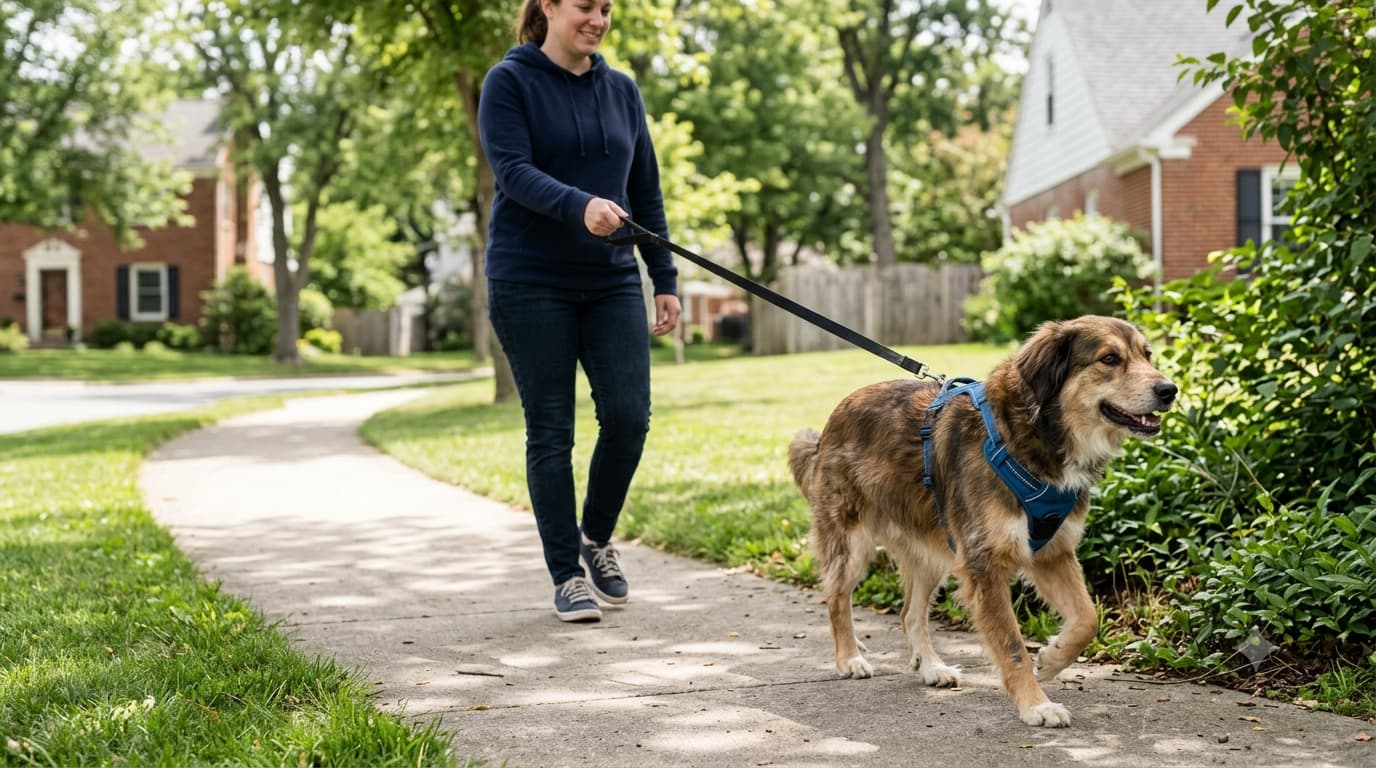
A walk with your dog is supposed to be relaxing, but if your dog constantly pulls ahead, zigzags, or tries to drag you toward every interesting smell, it can become exhausting pretty quickly.
You may find yourself asking, “Why does my dog pull on the leash even when I slow down?”
The good news is that leash pulling is extremely common, and it doesn’t necessarily mean your dog is stubborn or badly behaved. Dogs often pull because something ahead is more exciting than walking beside you.
Understanding why your dog pulls on the leash makes training much easier.
Table of Contents
Quick Answer
Why does my dog pull on the leash? Dogs commonly pull because they are excited, curious, distracted, frustrated, or haven’t learned that walking with a loose leash is rewarding.
Common triggers include:
- Interesting smells
- Other dogs
- People
- Cars or movement
- Wanting to explore
- Excess energy
- Lack of leash training
Instead of simply trying to stop the pulling, teach your dog that staying near you and keeping the leash loose leads to good things.
7 Reasons Your Dog Pulls on the Leash
1. Your Dog Wants to Explore
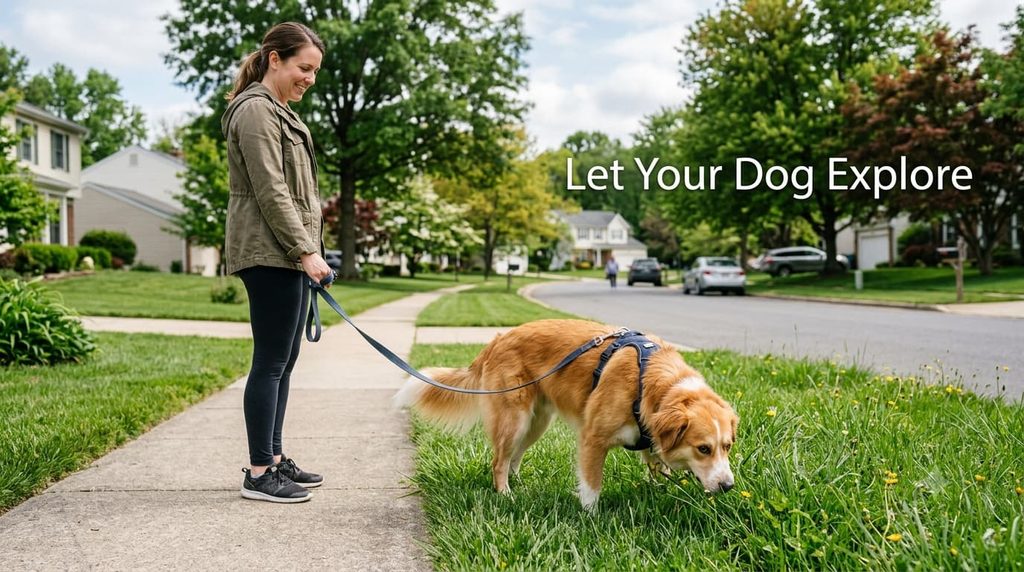
For dogs, a walk isn’t just exercise. It’s a chance to investigate an entire world through their nose.
A single patch of grass can contain dozens of interesting smells. So when your dog pulls toward a tree, bush, or sidewalk corner, they’re often trying to investigate something fascinating.
Allowing appropriate sniffing during walks can actually make walks more rewarding.
2. Your Dog Is Excited
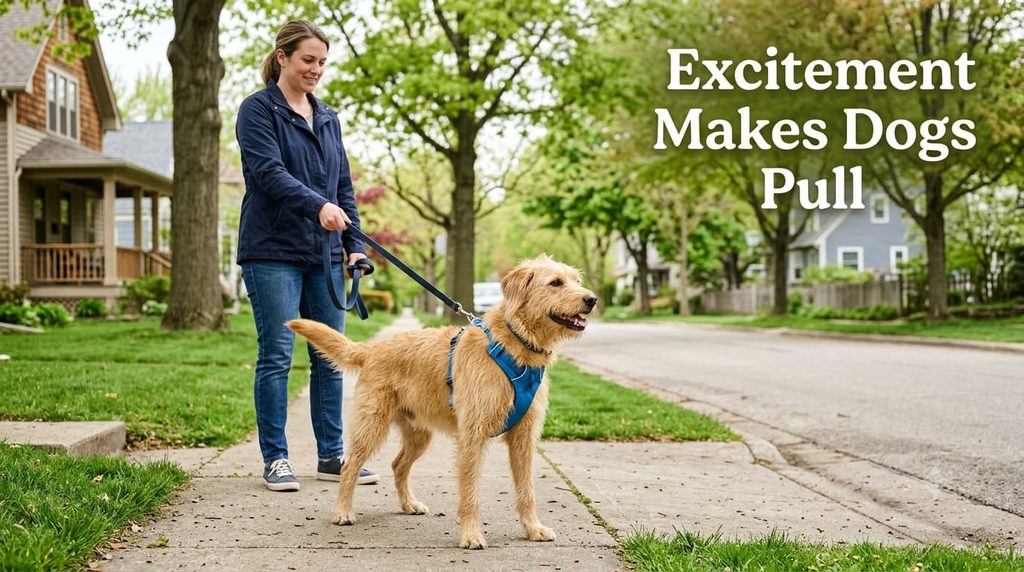
Some dogs become incredibly excited the moment they realize it’s time for a walk.
You may see:
- Jumping near the door
- Whining
- Fast pacing
- Pulling as soon as you leave
- Difficulty settling down
That excitement can carry over onto the leash.
Giving your dog a few calm minutes before leaving can sometimes make the beginning of the walk easier.
3. Your Dog Wants to Reach Something
Maybe there’s another dog across the street, a favorite park, or someone your dog wants to greet.
Your dog sees the destination and thinks, “I need to get there!”
Because dogs naturally move toward things they’re interested in, they may pull without realizing how uncomfortable it makes the person holding the leash.
If unfamiliar people are another trigger during walks, see Why Is My Dog Barking at Strangers? for practical ways to understand that reaction.
4. Your Dog Has Learned That Pulling Works
This is an important one.
If your dog pulls and you continue walking forward, your dog may learn:
Pulling = moving toward what I want.
That makes the behavior rewarding.
To change this pattern, you can stop moving when the leash becomes tight and resume walking when your dog returns closer or the leash becomes loose.
Consistency matters. If pulling sometimes works and sometimes doesn’t, learning can take longer.
5. Your Dog Is Reacting to Other Dogs
Some dogs pull because they’re excited to greet another dog. Others pull because they’re nervous or uncomfortable.
Pay attention to body language.
A loose, wiggly dog may be excited, while a stiff body, tucked tail, or intense staring may suggest discomfort or fear.
If your dog becomes highly reactive around other dogs, simply pulling them closer isn’t the solution. Giving them more space can help keep the situation manageable.
If your dog also barks or reacts when another dog approaches, read Why Does My Dog Bark at Other Dogs? to understand what’s behind that behavior.
6. Your Dog Has Too Much Energy
A dog that hasn’t had enough appropriate physical or mental activity may find it harder to settle during a walk.
Before assuming the problem is purely training, consider whether your dog is getting enough:
- Age-appropriate exercise
- Sniffing opportunities
- Short training sessions
- Mental enrichment
- Rest
The goal isn’t to exhaust your dog. It’s to give them appropriate outlets and then teach calm walking.
7. Your Dog Never Learned Loose-Leash Walking
Walking nicely on a leash isn’t something every dog automatically understands.
Your dog may simply need to learn:
Loose leash → keep walking/reward.
Tight leash → pause and reset.
Start practicing in a quiet, low-distraction area before expecting perfect behavior on a busy sidewalk.
Loose-leash walking is a skill that dogs can learn through consistent training, and the American Kennel Club has additional guidance on teaching better leash manners.
How Can You Stop Your Dog From Pulling?
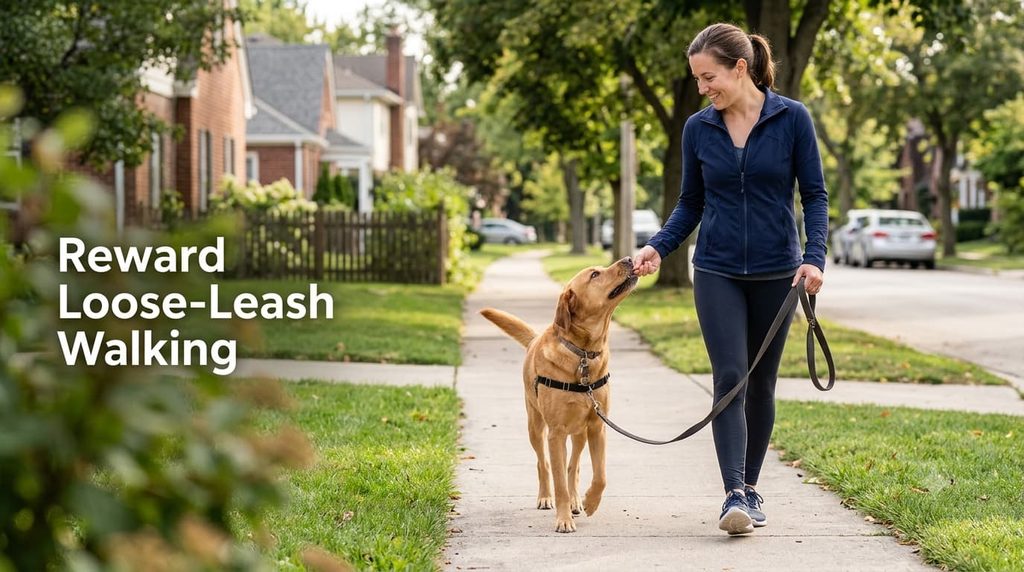
The most useful approach is to reward the behavior you want.
Try this:
- Start somewhere quiet.
- Keep your dog close enough that they can focus on you.
- Reward moments when the leash is loose.
- If the leash becomes tight, stop rather than allowing pulling to move you forward.
- Resume once your dog settles or comes closer.
- Gradually practice around bigger distractions.
Keep training sessions short. A few successful minutes can be more productive than a long walk where your dog spends the entire time pulling.
Make Yourself Worth Paying Attention To
Bring small, appropriate training treats and reward your dog for checking in with you.
You can also occasionally change direction or ask for a simple cue such as “look” when your dog is calm.
The idea isn’t to keep your dog staring at you for the entire walk. They should still have opportunities to sniff and explore.
Should You Use a Different Leash or Harness?
Equipment can make walking more comfortable and manageable, but equipment alone won’t teach loose-leash walking.
A properly fitted harness may be useful for some dogs, especially when pulling is making walks difficult. Your veterinarian or a qualified trainer can help you choose suitable equipment for your dog’s size, health, and walking style.
Avoid relying on painful or frightening corrections to stop pulling.
If you’re unsure which walking equipment is appropriate for your dog, PetMD offers veterinary-reviewed information on dog health, behavior, and care.
When Should You Get Professional Help?
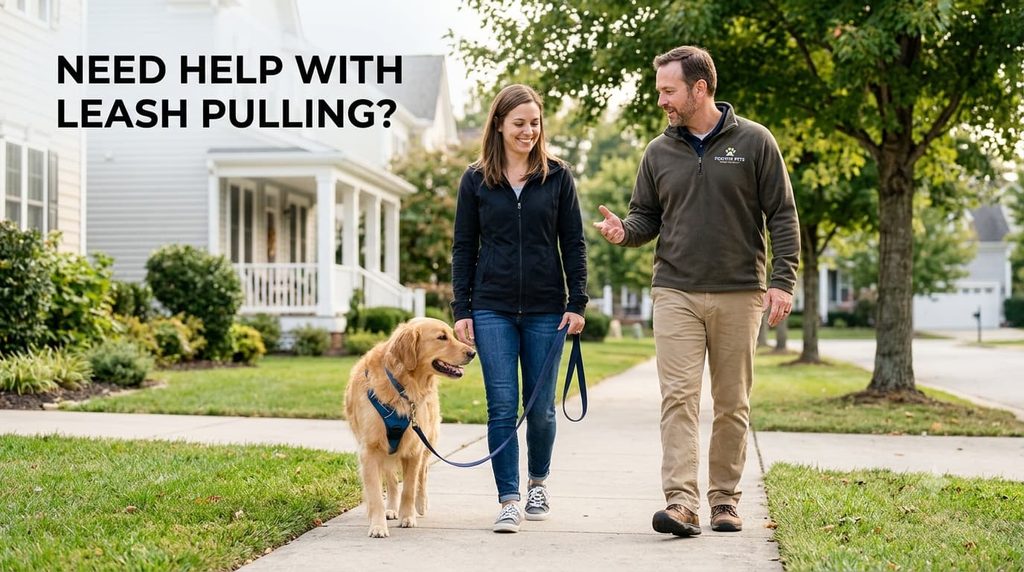
Consider getting professional guidance if your dog:
- Pulls so strongly that you struggle to control them
- Lunges at people or dogs
- Shows intense fear during walks
- Suddenly starts pulling when they previously walked calmly
- Makes walks unsafe for you or others
A qualified positive-reinforcement trainer can observe the behavior and help you build a training plan around the specific trigger.
Frequently Asked Questions
Why does my dog pull on the leash so much?
Excitement, curiosity, smells, other dogs, distractions, and lack of loose-leash training are common reasons.
Should I stop walking when my dog pulls?
Stopping can help prevent pulling from being rewarded by forward movement. Resume when the leash becomes loose and your dog is calmer.
How long does leash training take?
Every dog is different. Consistent short sessions can gradually improve leash manners, but there isn’t a fixed timeline.
Is leash pulling a sign of aggression?
Not necessarily. A dog may pull because of excitement or curiosity. However, lunging, stiff body language, or intense reactions can indicate fear or reactivity.
Can an older dog learn not to pull?
Yes. Dogs can learn new walking habits at different ages. Training may take patience, but older dogs can still learn loose-leash skills.
Conclusion
So, why does my dog pull on the leash? Usually, there’s something your dog wants to reach, investigate, or react to—or they simply haven’t learned how to walk on a loose leash yet.
Be patient, reward calm walking, stop reinforcing pulling, and gradually increase distractions. Instead of expecting your dog to walk perfectly overnight, focus on small improvements.
A few calm steps today can eventually turn into a much more enjoyable walk for both of you.