
Introduction
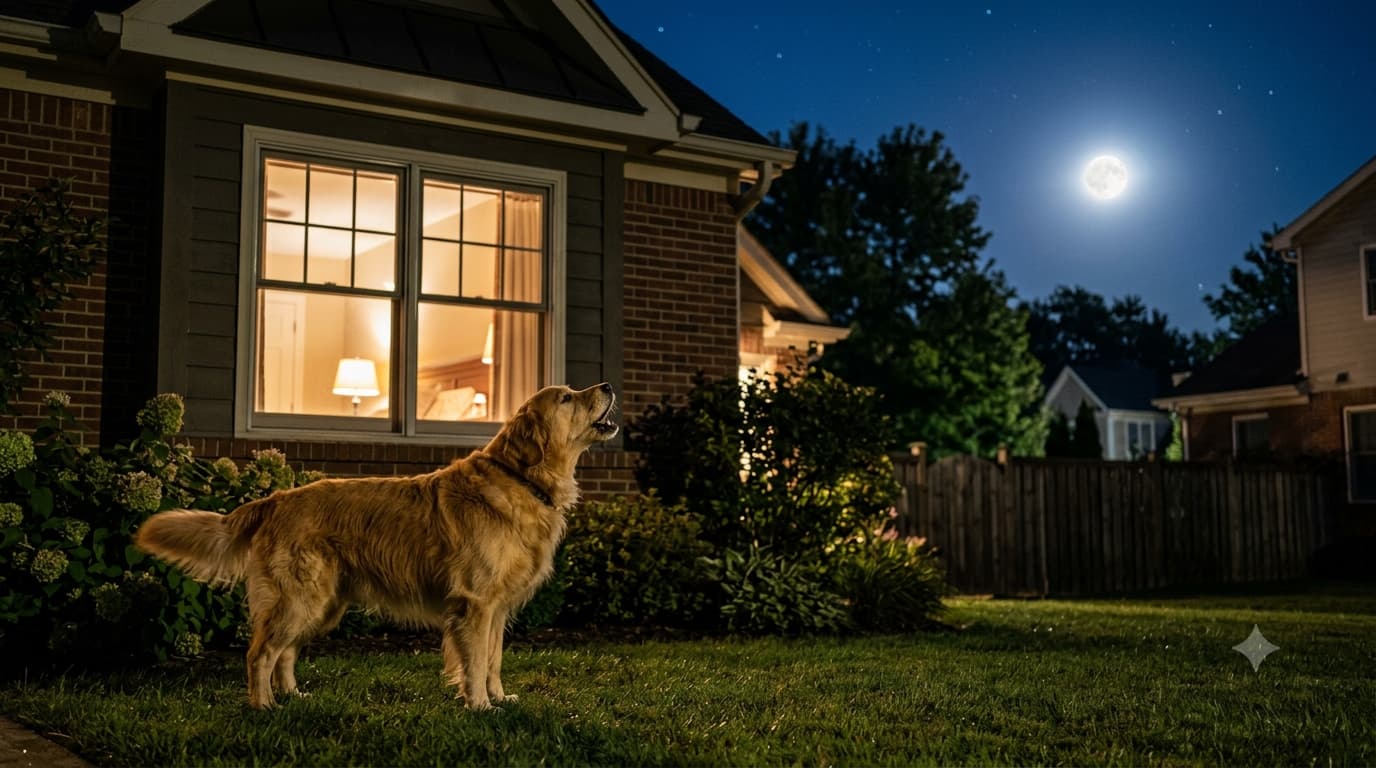
Has your dog suddenly started barking in the middle of the night, leaving you frustrated and wondering what’s wrong? If you’re asking, “Why is my dog barking at night?”, you’re not alone. Nighttime barking is one of the most common concerns among dog owners, and while an occasional bark is normal, repeated barking usually happens for a reason.
Dogs may bark at night because they hear unusual noises, feel lonely, want attention, sense wildlife outside, or experience anxiety. In some cases, persistent nighttime barking can even be an early sign of pain, illness, or age-related cognitive decline.
The good news is that once you identify the real cause, it’s often possible to reduce or even stop the barking using positive training, environmental changes, and a consistent bedtime routine.
In this guide, you’ll learn 9 common reasons why dogs bark at night, how to identify the real cause, practical ways to stop the behavior, and when it’s time to seek veterinary advice.
🌙 Quick Answer
If your dog is barking at night, the most common reasons include territorial behavior, strange outdoor noises, boredom, loneliness, separation anxiety, wildlife activity, or an underlying medical condition. Identifying the specific cause is the first step toward reducing nighttime barking and helping your dog sleep peacefully.
📊 Quick Overview
| Question | Answer |
|---|---|
| Why is my dog barking at night? | Common causes include boredom, territorial instincts, loneliness, wildlife, anxiety, or medical problems. |
| Is nighttime barking normal? | ✅ Occasional barking is normal, but frequent barking should be investigated. |
| Can anxiety cause barking at night? | ✅ Yes. Separation anxiety and fear are common behavioral causes. |
| Can illness cause nighttime barking? | ✅ Yes. Pain, cognitive decline, or other medical conditions may trigger barking. |
| When should I see a veterinarian? | If barking starts suddenly, becomes excessive, or is accompanied by other unusual symptoms. |
🌌 Why Do Dogs Bark More at Night?
Nighttime is naturally quieter than daytime, which means dogs often notice sounds and movements that people completely miss. A distant dog barking, a raccoon walking across the yard, or even strong winds can trigger your dog’s protective instincts.
Some dogs also become more alert at night because they have extra energy left over from the day or because they’re feeling lonely after the household goes to bed.
Before trying to stop the barking, ask yourself:
- 🐕 Does it happen every night or only occasionally?
- 🌙 Does your dog bark at the window or door?
- 👂 Do they react to sounds outside?
- 😟 Do they seem anxious or restless?
Answering these questions can help you identify the real reason much faster.
🛡️ Reason #1 – Territorial Behavior
One of the most common answers to why is my dog barking at night is territorial behavior. Dogs naturally want to protect their home and family, and nighttime makes unfamiliar sounds seem even more suspicious.
Your dog may bark when they hear:
- 🚶 Someone walking past your house
- 🚗 A car stopping nearby
- 🐕 Another dog barking
- 🚪 A door closing outside
How to know if this is the cause:
- ✅ Your dog runs toward the window or front door.
- ✅ Barking stops once the sound disappears.
- ✅ They appear alert rather than frightened.
What you can do:
- Close curtains or blinds before bedtime.
- Use white noise or a fan to reduce outside sounds.
- Reward calm behavior instead of shouting.
💡 Tip: Avoid yelling “Quiet!” repeatedly. Your dog may think you’re joining the barking instead of stopping it.
🌲 Reason #2 – Strange Noises Outside
Dogs have much sharper hearing than humans. At night, when everything becomes quieter, they can hear sounds that you may never notice. A distant dog barking, a cat walking across the fence, rustling leaves, or even a delivery truck can be enough to wake your dog and trigger barking.
For many dogs, barking is simply their way of saying, “I heard something unusual.”
Common nighttime noises that trigger barking include:
- 🐈 Cats roaming outside
- 🦝 Raccoons, squirrels, or other wildlife
- 🐕 Dogs barking in the neighborhood
- 🚗 Passing vehicles
- 🌬️ Strong winds or moving tree branches
How to know if this is the cause:
- ✅ Your dog suddenly wakes up and barks.
- ✅ They stare toward a window or door.
- ✅ Barking stops after a few minutes when the sound disappears.
What you can do:
- 🪟 Close curtains or blinds before bedtime.
- 🎵 Use a white noise machine or fan to mask outdoor sounds.
- 🛏️ Move your dog’s bed away from windows or the front door.
- 🌙 Keep the sleeping area quiet and comfortable.
💡 Tip: If your dog repeatedly reacts to sounds from one specific window, limiting their view of that area can often reduce nighttime barking.
🏠 Reason #3 – Loneliness or Separation Anxiety
Some dogs bark at night because they don’t like being alone. This is especially common in puppies, newly adopted dogs, or dogs that are strongly attached to their owners.
If your dog sleeps in another room or becomes anxious when everyone goes to bed, they may bark in an attempt to get your attention or bring you back.
Signs of separation anxiety include:
- 😟 Barking or whining shortly after you’re out of sight
- 🚪 Scratching at the bedroom door
- 👅 Excessive licking or pacing
- 💔 Difficulty settling down alone
- 💤 Calming down only when someone is nearby
What you can do:
- 🛏️ Create a comfortable sleeping space with their favorite bed or blanket.
- 🧸 Leave a safe chew toy or puzzle toy for bedtime.
- ⏰ Establish the same bedtime routine every night.
- ❤️ Reward calm behavior instead of responding immediately to barking.
⚠️ Warning: Avoid rushing to your dog every time they bark at night for attention. If there isn’t a medical emergency, consistently rewarding barking can accidentally teach your dog that barking brings you back

🎾 Reason #4 – Boredom and Lack of Exercise
A dog that doesn’t get enough physical activity or mental stimulation during the day often has extra energy at night. Instead of sleeping peacefully, they may bark simply because they’re bored or looking for something to do.
High-energy breeds such as Border Collies, Labrador Retrievers, German Shepherds, and Australian Shepherds are especially likely to bark at night if they don’t receive enough daily exercise.
Signs this may be the cause:
- ⚡ Your dog seems energetic at bedtime.
- 🎾 They constantly want to play late at night.
- 🚶 Barking decreases after a long walk or play session.
- 🐕 They don’t settle down easily before sleep.
What you can do:
- 🚶 Take your dog for a walk in the evening.
- 🎾 Play fetch or another active game before bedtime.
- 🧩 Use puzzle feeders or treat-dispensing toys.
- 🐾 Include short obedience training sessions during the day.
- ❤️ Maintain a consistent daily routine.
A mentally and physically tired dog is much more likely to sleep through the night without unnecessary barking.
💡 Tip: Even 20–30 minutes of quality exercise before bedtime can make a noticeable difference for many dogs.
🦝 Reason #5 – Wildlife Around Your Home
Many dogs bark at night because they detect animals moving outside. While you may not notice them, your dog’s excellent hearing and sense of smell can easily pick up wildlife activity around your yard.
Common nighttime visitors include raccoons, squirrels, foxes, stray cats, possums, or even deer, depending on where you live.
Signs wildlife may be triggering barking:
- 👀 Your dog stares toward the backyard or fence.
- 🌳 Barking mostly happens in the middle of the night.
- 🐾 They seem excited rather than frightened.
- 🚪 Barking stops once the animal leaves.
What you can do:
- 💡 Install motion-activated outdoor lights.
- 🗑️ Secure garbage bins to avoid attracting wildlife.
- 🌿 Trim bushes where animals may hide.
- 🪟 Keep curtains closed if your dog watches the yard.
- 🐕 Bring your dog inside before wildlife becomes active.
⚠️ Warning: Never allow your dog to chase wildlife at night. Wild animals can carry diseases or cause serious injuries if they feel threatened.
🎯 Reason #6 – Attention-Seeking Behavior
Some dogs quickly learn that barking gets results. If you’ve ever responded to nighttime barking by giving treats, playing, or immediately checking on your dog, they may start barking simply because it works.
While your intention is to comfort your dog, repeated attention can accidentally reinforce the behavior.
Signs your dog is barking for attention:
- 👀 They stop barking as soon as you respond.
- 🧸 They want to play in the middle of the night.
- 🐕 They appear healthy and relaxed once they get your attention.
- 🌙 Barking happens at nearly the same time every night.
What you can do:
- 💤 Make sure your dog’s needs (food, water, potty break, exercise) are met before bedtime.
- 🤫 Wait for a moment of silence before giving attention.
- 🦴 Reward quiet behavior instead of barking.
- 📅 Stick to a consistent bedtime routine.
💡 Tip: Consistency is key. If you ignore barking one night but reward it the next, your dog will take even longer to learn.

🩺 Reason #7 – Medical Problems or Pain
If your dog suddenly starts barking at night without an obvious reason, pain or an underlying medical condition could be the cause.
Dogs can’t tell us when something hurts, so they often communicate discomfort by barking, whining, pacing, or acting restless.
Medical conditions that may cause nighttime barking:
- 🤕 Arthritis or joint pain
- 👂 Ear infections
- 🤒 Dental pain
- 💩 Digestive discomfort
- 🩺 Urinary problems
How to know if this is the cause:
- 🚨 Barking started suddenly.
- 🐕 Your dog seems uncomfortable or restless.
- 🍽️ Changes in appetite or energy levels.
- 🚶 Difficulty walking or getting comfortable.
⚠️ Warning: Never assume nighttime barking is “just bad behavior” if your dog also shows signs of pain or illness. A veterinary examination is the safest option.
👴 Reason #8 – Cognitive Dysfunction (Senior Dogs)
Older dogs can develop Canine Cognitive Dysfunction (CCD), a condition similar to dementia in humans. Dogs with CCD may become confused, disoriented, or anxious at night, causing them to bark even when there’s no obvious trigger.
Common signs include:
- 🌙 Barking or whining during the night
- 🚶 Wandering aimlessly around the house
- 😕 Appearing confused in familiar places
- 💤 Sleeping more during the day and less at night
- 👨👩👧 Changes in normal behavior
If your senior dog suddenly begins barking at night, schedule a veterinary checkup to rule out cognitive decline or other age-related health problems.
😨 Reason #9 – Fear or Anxiety
Fear is another common reason dogs bark after dark. Thunderstorms, fireworks, unfamiliar sounds, or even sleeping in a new environment can make some dogs feel unsafe.
Signs of fear-related barking:
- 😰 Trembling or shaking
- 👂 Flattened ears
- 👅 Excessive panting or drooling
- 🛋️ Hiding under furniture
- 🐾 Pacing around the room
How to help:
- ❤️ Stay calm and avoid punishment.
- 🛏️ Create a quiet, safe sleeping area.
- 🎵 Use calming music or white noise.
- 🧸 Provide a favorite blanket or toy.
💡 Tip: If anxiety is severe or happens frequently, speak with your veterinarian or a certified dog behaviorist for personalized guidance.
🏡 How to Stop Your Dog From Barking at Night
Once you’ve identified the cause, these practical tips can help reduce nighttime barking:
- ✅ Give your dog enough exercise before bedtime.
- ✅ Feed dinner at a consistent time each evening.
- ✅ Take your dog outside for a final potty break before bed.
- ✅ Block outside distractions by closing curtains or blinds.
- ✅ Use positive reinforcement to reward quiet behavior.
- ✅ Avoid rewarding attention-seeking barking.
- ✅ Keep a consistent bedtime routine every night.
Small daily changes often lead to big improvements over time.
🚨 When Should You See a Veterinarian?
Occasional barking is normal, but professional advice is recommended if your dog:
- 🚨 Suddenly starts barking every night.
- 🤕 Shows signs of pain or illness.
- 💤 Can’t settle down despite enough exercise.
- 😣 Appears confused or disoriented.
- 🌙 Develops severe separation anxiety or persistent nighttime distress.
Early diagnosis can help identify medical or behavioral problems before they become more serious.

❓ Frequently Asked Questions (FAQs)
1. Is it normal for dogs to bark at night?
Yes. Occasional barking is normal, especially if your dog hears unfamiliar sounds. However, frequent nighttime barking usually has an underlying cause that should be identified.
2. Why does my dog bark at night but not during the day?
Nighttime is quieter, making dogs more aware of sounds, wildlife, or movement outside. Anxiety, boredom, or medical issues can also contribute.
3. Should I ignore my dog’s nighttime barking?
It depends on the cause. Attention-seeking barking can often be managed by rewarding quiet behavior, but barking caused by pain, illness, or fear should never be ignored.
4. Can lack of exercise cause nighttime barking?
Yes. Dogs with excess physical or mental energy are more likely to stay awake and bark during the night.
5. When is nighttime barking considered an emergency?
Seek veterinary care if barking is sudden, excessive, accompanied by signs of pain, difficulty breathing, collapse, confusion, or other unusual symptoms.
📝 Conclusion
If you’ve been wondering why is my dog barking at night, remember that barking is your dog’s way of communicating that something needs attention. Whether it’s territorial instincts, strange noises, boredom, anxiety, wildlife, or an underlying medical condition, identifying the root cause is the key to finding the right solution.
With a consistent bedtime routine, enough daily exercise, positive reinforcement, and prompt veterinary care when needed, most dogs can learn to sleep more peacefully through the night. If the barking becomes persistent or your dog shows signs of illness or distress, don’t hesitate to consult your veterinarian for professional advice.
https://kinshippet.com/how-to-cancel-fetch-pet-insurance-in-2026-step-by-step-guide-for-pet-owners