
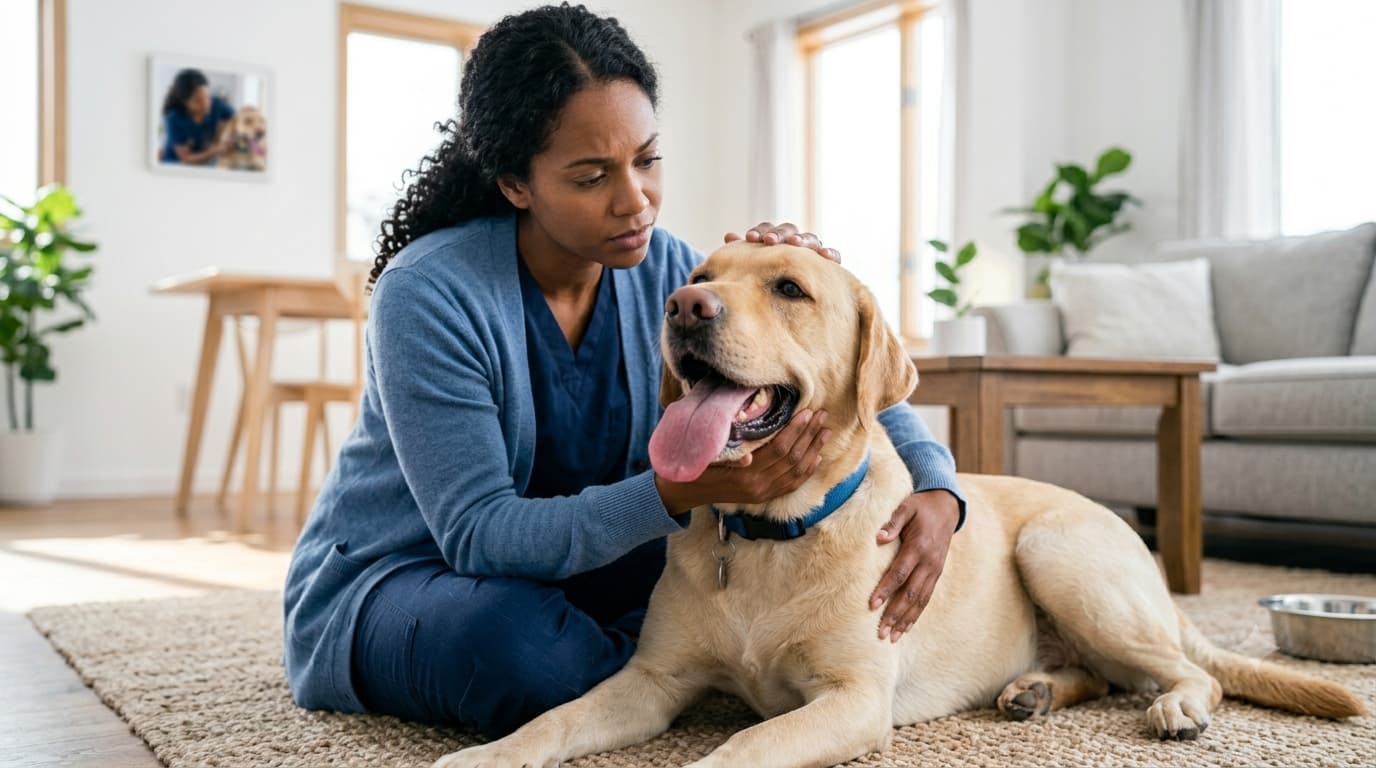
Have you ever looked at your dog resting quietly on the floor and suddenly wondered:
“Why is my dog panting so much?”
As a dog owner, this can be a scary moment.
I still remember one summer evening when my dog was lying in the living room after dinner. The weather wasn’t particularly hot, and he hadn’t been running around. Yet he was panting heavily. At first, I assumed he was just tired. But after watching him for several minutes, I became concerned and started wondering, “why is my dog panting so much?” Was he overheating, stressed, or trying to tell me something was wrong?
Was he overheating?
Was he stressed?
Could he be sick?
The truth is that dogs pant for many different reasons. Some are completely normal, while others may signal a health problem that shouldn’t be ignored.
In this guide, you’ll learn the most common causes of excessive panting in dogs, when it’s normal, when it’s dangerous, and what you can do to help your furry friend.
Table of Contents
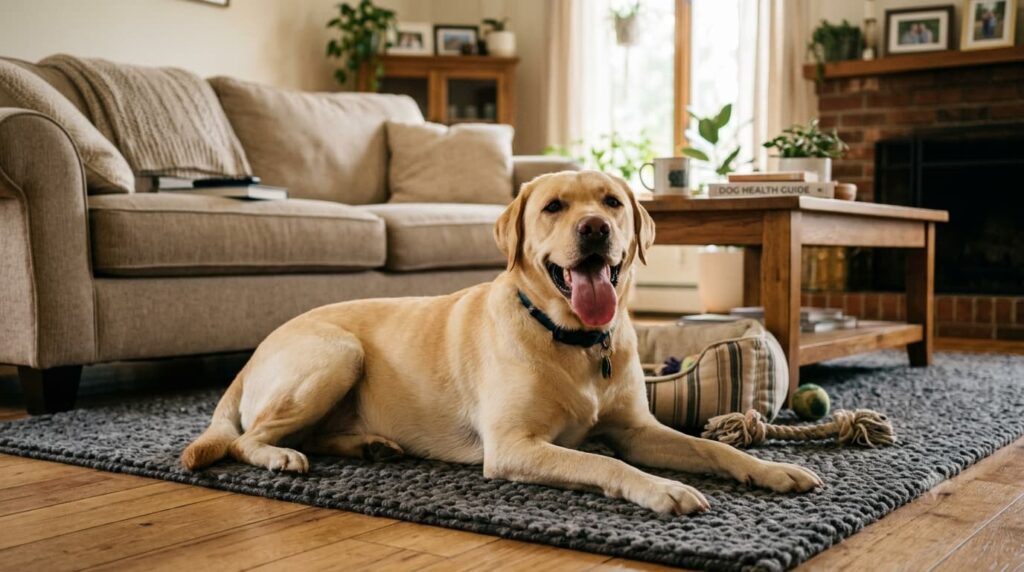
What Is Panting and Why Do Dogs Do It?
Before understanding why your dog is panting so much, it’s important to understand why dogs pant at all.
Unlike humans, dogs don’t sweat through their skin.
Instead, they cool their bodies by:
- Panting
- Releasing heat through their tongue
- Breathing rapidly
- Sweating slightly through their paw pads
Panting is basically your dog’s natural air-conditioning system.
In many cases, panting is completely normal.
However, excessive panting can sometimes indicate a deeper issue.
1. Your Dog Is Too Hot
One of the most common reasons for excessive panting is overheating.
Dogs can become hot quickly when:
- Playing outside
- Walking in warm weather
- Staying in direct sunlight
- Spending time in poorly ventilated spaces
Common Signs of Overheating
- Heavy panting
- Bright red tongue
- Excessive drooling
- Lethargy
- Restlessness
What To Do
Move your dog to a cool place immediately.
Provide fresh water and allow them to relax.
If symptoms continue, contact your veterinarian.
2. Exercise and Physical Activity
After a long walk, game of fetch, or play session, it’s perfectly normal for your dog to pant heavily.
The harder the activity, the more panting you’ll notice.
Healthy dogs usually recover within a short period after resting.
If your dog continues panting for a long time after exercise, it may be worth monitoring.
3. Anxiety and Stress
Many dog owners don’t realize that emotional stress can cause excessive panting.
Dogs may pant when they’re feeling:
- Nervous
- Anxious
- Scared
- Overwhelmed
Common Anxiety Triggers
- Thunderstorms
- Fireworks
- Vet visits
- Car rides
- Separation anxiety
In these situations, panting is often accompanied by:
- Pacing
- Trembling
- Hiding
- Whining
If your dog pants heavily during stressful situations, anxiety may be the reason.
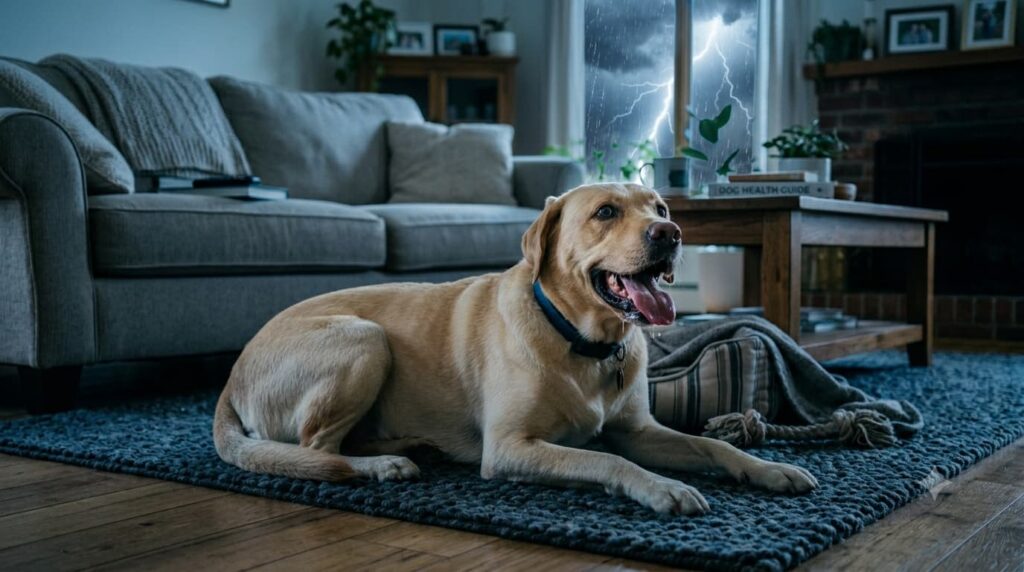
4. Why Is My Dog Panting While Resting?
This is one of the most searched dog health questions online.
If your dog is lying down, sleeping, or relaxing and still panting heavily, pay attention.
Possible causes include:
- Pain
- Anxiety
- Heart disease
- Respiratory issues
- Medication side effects
- Overheating
Occasional panting while resting isn’t always dangerous.
However, persistent panting should never be ignored.
5. Pain or Injury
Dogs are surprisingly good at hiding pain.
Sometimes panting is one of the earliest warning signs.
A dog may pant excessively due to:
- Joint pain
- Arthritis
- Muscle injuries
- Internal discomfort
Additional Signs
- Limping
- Reluctance to move
- Changes in behavior
- Loss of appetite
If panting appears alongside these symptoms, schedule a veterinary visit.
6. Heart Problems
Heart disease can make it harder for the body to circulate oxygen effectively.
When this happens, dogs may compensate by breathing faster.
Symptoms of Heart Problems
- Excessive panting
- Coughing
- Weakness
- Reduced exercise tolerance
- Fatigue
Senior dogs are particularly at risk.
If your older dog suddenly starts panting more than usual, it’s worth discussing with your veterinarian.
7. Respiratory Issues
Your dog’s lungs and airways play a critical role in breathing.
Conditions affecting these systems may cause excessive panting.
Examples include:
- Respiratory infections
- Asthma-like conditions
- Pneumonia
- Collapsing trachea
These conditions often require professional treatment.
8. Medication Side Effects
Certain medications can increase panting.
Common examples include:
- Steroids
- Some pain medications
- Hormonal treatments
If your dog recently started a new medication and suddenly began panting excessively, consult your veterinarian.
9. Obesity
Extra weight places additional strain on a dog’s body.
Overweight dogs often:
- Pant more
- Tire easily
- Struggle with heat
Maintaining a healthy weight can significantly improve breathing and overall health.
10. Why Is My Dog Panting for No Reason?
Sometimes owners feel there is absolutely no explanation.
But there is usually an underlying cause.
Common hidden causes include:
- Mild pain
- Anxiety
- Early illness
- Heat exposure
- Medication reactions
If the panting feels unusual, trust your instincts and monitor your dog closely.
11. Heatstroke: A Serious Emergency
Heatstroke is one of the most dangerous causes of excessive panting.
Warning Signs
- Extreme panting
- Bright red gums
- Vomiting
- Collapse
- Confusion
- Weakness
Heatstroke can become life-threatening very quickly.
Immediate veterinary care is essential.
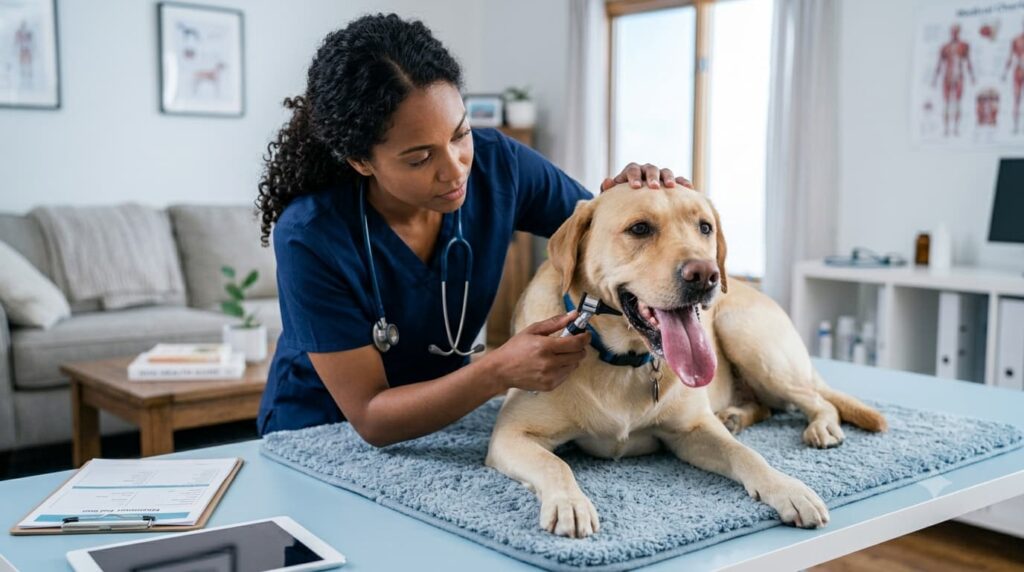
When Should You Call a Vet?
Seek veterinary help immediately if your dog experiences:
- Difficulty breathing
- Blue or pale gums
- Collapse
- Extreme weakness
- Severe lethargy
- Excessive drooling
- Signs of heatstroke
These symptoms should never be ignored.
How To Help a Dog That’s Panting Too Much
1. Provide Fresh Water
Hydration is critical.
2. Move to a Cool Environment
Reduce body temperature naturally.
3. Limit Physical Activity
Allow your dog to rest and recover.
4. Reduce Stress
Create a calm environment if anxiety is involved.
5. Monitor Symptoms
Pay attention to changes in behavior, appetite, and breathing patterns.
My Personal Experience
One of the biggest lessons I learned as a dog owner is that panting isn’t always about heat.
The first time my dog panted heavily indoors, I assumed he was just tired.
Later, I realized he was anxious because of a nearby thunderstorm.
That experience taught me something important:
Panting is your dog’s way of communicating.
Sometimes it’s normal.
Sometimes it’s a signal that something isn’t right.
The key is learning when to pay attention.
Final Thoughts
So, why is your dog panting so much?
The answer depends on the situation.
Your dog may simply be:
- Hot
- Excited
- Exercising
Or panting could indicate:
- Anxiety
- Pain
- Illness
- Heart disease
- Heatstroke
Understanding the difference can help you protect your dog’s health and avoid unnecessary worry.
Whenever excessive panting feels unusual, don’t hesitate to consult your veterinarian.
Your dog’s health is always worth it.
Frequently Asked Questions (FAQ)
1. When to worry about your dog panting?
You should worry if the panting is sudden and unprovoked by heat or exercise, or if it is accompanied by pale/blue gums, lethargy, or visible signs of distress.
2. Why is my dog panting so much at night?
Many owners ask why is my dog panting so much at night. This can happen due to stress, warm temperatures, discomfort, or underlying health conditions that become more noticeable when your dog is trying to sleep.
3. Why is my dog panting so much after exercise?
If you’re asking why is my dog panting so much after a walk or play session, the answer is usually simple. Dogs pant to cool themselves down. However, excessive panting that lasts a long time may indicate overexertion or dehydration.
4. Why is my dog panting so much for no reason?
When owners ask why is my dog panting so much for no reason, there is often an underlying cause such as mild pain, anxiety, medication side effects, or an early health issue that isn’t immediately obvious.
5. Why is my senior dog panting so much?
A common question is why is my dog panting so much as it gets older. Senior dogs may pant more because of arthritis, heart disease, respiratory problems, or age-related discomfort.
6. Should I worry if my dog is panting so much indoors?
If you’re concerned about why is my dog panting so much indoors, check the room temperature, activity level, and overall behavior. Heavy panting without an obvious reason may require veterinary attention.
7. Can anxiety explain why my dog is panting so much?
Yes. Anxiety is one of the most common reasons behind why is my dog panting so much. Fireworks, thunderstorms, travel, and separation anxiety can all trigger excessive panting.
8. Why is my dog panting so much and drinking lots of water?
If you’re wondering why is my dog panting so much and drinking excessive amounts of water, it could be related to heat, dehydration, medication effects, or certain medical conditions that should be evaluated by a vet.
9. When should I call a vet if my dog is panting so much?
You should contact a veterinarian if why is my dog panting so much is accompanied by symptoms such as weakness, collapse, pale gums, difficulty breathing, vomiting, or signs of heatstroke.
10. What is the 3-3-3 rule for dog anxiety?
You should worry if the panting is sudden and unprovoked by heat or exercise, or if it is accompanied by pale/blue gums, lethargy, or visible signs of distress.
For additional information about dog health and excessive panting, pet owners can refer to resources from the American Kennel Club (AKC).
https://kinshippet.com/how-to-cancel-fetch-pet-insurance-in-2026-step-by-step-guide-for-pet-owners