

If you’ve ever leaned in to cuddle your dog and suddenly noticed an unpleasant smell, you may have wondered, “Why does my dog have bad breath?” A little doggy breath can be normal, but persistent or unusually strong bad breath shouldn’t always be ignored.
In many dogs, bad breath is linked to dental problems such as plaque and tartar. However, there can be other reasons too. Understanding the possible cause can help you decide what to do next.
Table of Contents
Quick Answer
Why does my dog have bad breath? The most common reason is poor oral health, especially plaque, tartar, or gum problems. Dogs can also develop bad breath from something they ate, trapped food, dental infection, or certain health problems.
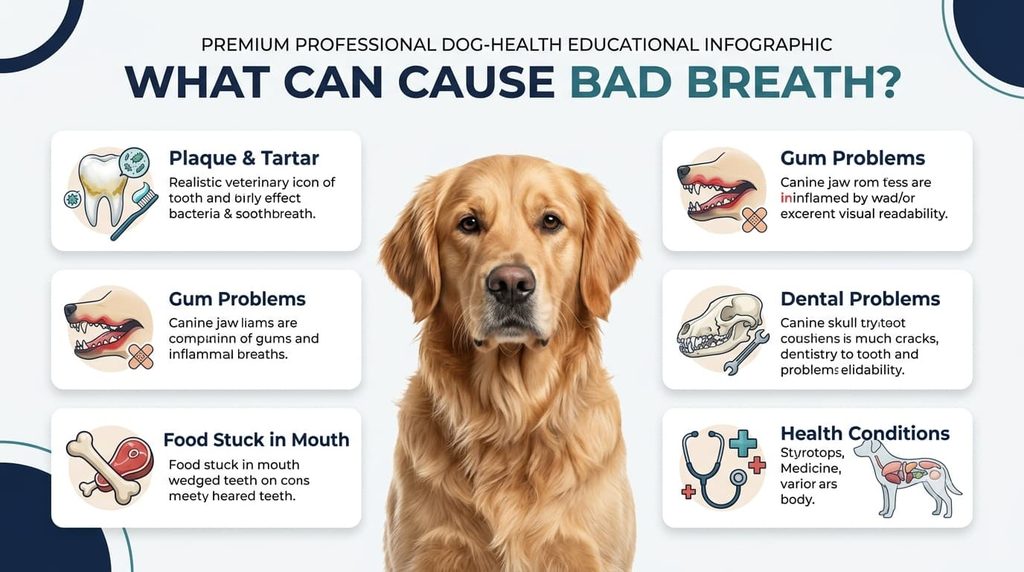
If the smell keeps returning despite regular dental care, it’s a good idea to have your veterinarian check your dog.
7 Common Causes of Bad Breath in Dogs
1. Plaque and Tartar Buildup
One of the biggest answers to why does my dog have bad breath is plaque buildup.
Plaque is a sticky film that develops on teeth. If it isn’t removed regularly, it can harden into tartar. This creates an environment where bacteria can multiply and produce an unpleasant smell.
You may also notice:
- Yellow or brown buildup on teeth
- Red-looking gums
- Increased drooling
- Difficulty chewing
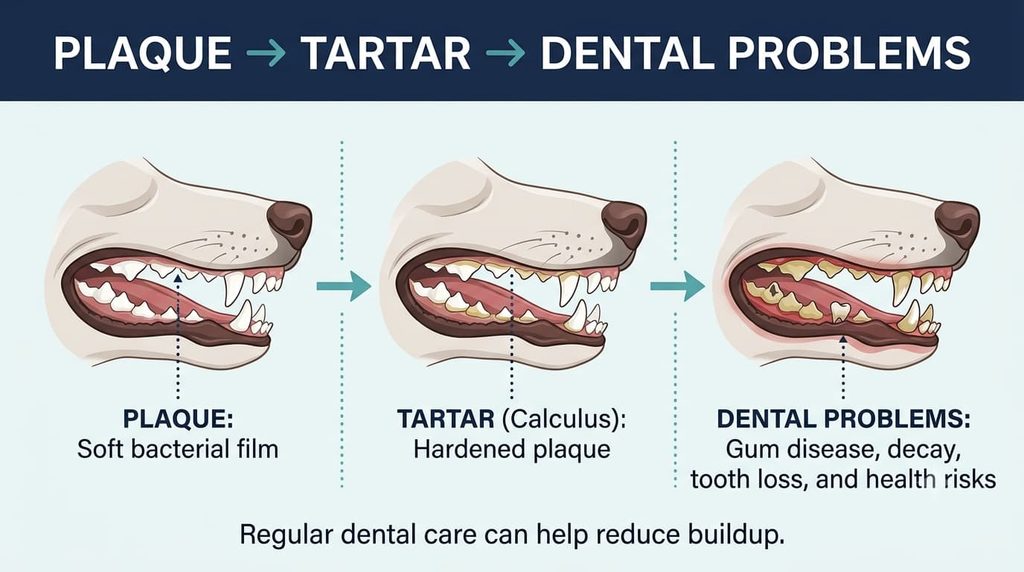
Good dental care can help reduce plaque, but established tartar may require professional cleaning.
If your dog also has other unusual mouth-related habits, read Why Does My Dog Keep Pawing at Me? to learn what that behavior may mean.
2. Gum Disease
If you’re asking why does my dog have bad breath and your dog’s gums look swollen, red, or irritated, gum disease could be involved.
Periodontal disease is common in dogs, particularly when dental buildup is left untreated. Bad breath may be one of the first things owners notice.
Don’t wait for severe symptoms before paying attention to your dog’s dental health.
3. Something Is Stuck in Your Dog’s Mouth
Sometimes the explanation for why does my dog have bad breath is surprisingly simple.
A small piece of food, plant material, or another object can become trapped around the teeth or gums. Bacteria can then cause an unpleasant odor.
If your dog suddenly develops bad breath after chewing something unusual, gently check the visible parts of their mouth if they’re comfortable with it. Don’t force their mouth open if they’re resisting.
4. Your Dog Ate Something Smelly
Dogs aren’t exactly famous for having sophisticated food preferences. 😄
If your dog has recently eaten garbage, something rotten, or another strongly smelling substance, their breath may temporarily smell terrible.
In these cases, the odor may disappear once the food passes and normal mouth hygiene returns.
5. Dental Infection or a Damaged Tooth
Another important possibility when wondering why does my dog have bad breath is a dental infection.
A damaged or infected tooth can create a strong odor and may also cause discomfort.
Watch for:
- Chewing on one side
- Dropping food
- Excessive drooling
- Swelling around the mouth
- Avoiding hard food
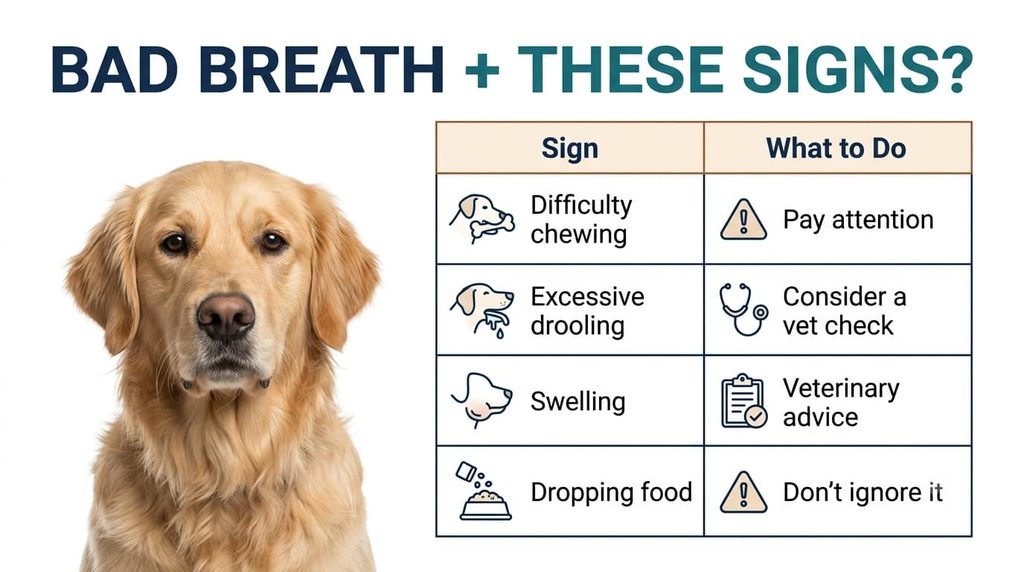
These signs deserve veterinary attention.
6. Your Dog Needs Better Dental Care
If why does my dog have bad breath is becoming a regular question, look at their current dental routine.
Depending on your veterinarian’s advice, helpful habits may include:
- Regular tooth brushing with dog-safe dental products
- Veterinary dental checkups
- Appropriate dental-care products
- Monitoring the condition of the teeth and gums
Never use human toothpaste for your dog unless your veterinarian specifically recommends it.
7. An Underlying Health Problem
Sometimes why does my dog have bad breath cannot be explained by the mouth alone.
Certain medical conditions can contribute to unusual breath odors. That’s why persistent bad breath shouldn’t automatically be treated as a cosmetic problem.
If the smell is new, unusually strong, or accompanied by changes in eating, drinking, energy, weight, or general behavior, contact your veterinarian.
What Can You Do About Dog Bad Breath?
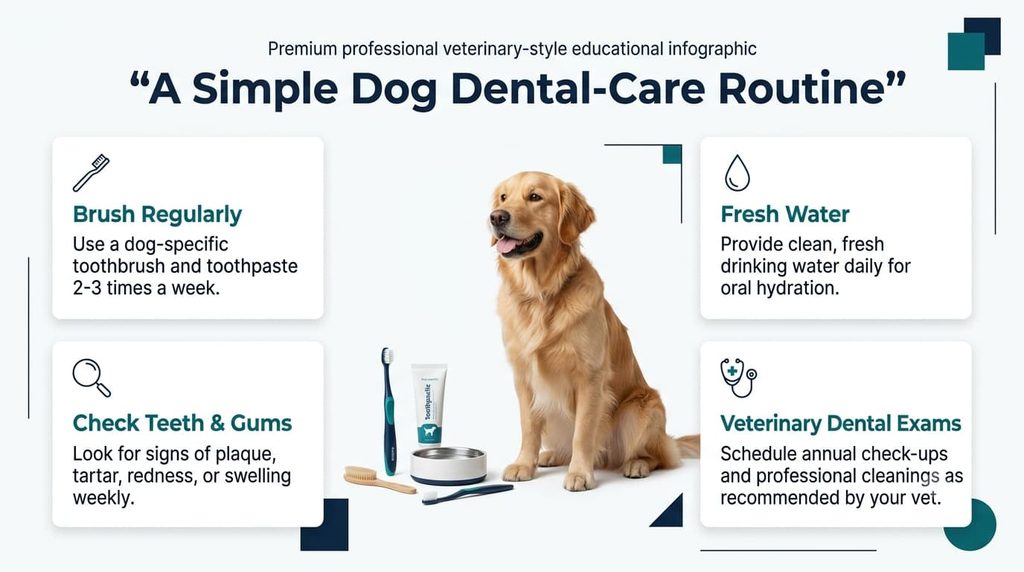
If you’re still wondering why does my dog have bad breath, start with their oral health.
A simple routine can make a difference:
- Check their teeth and gums regularly.
- Establish consistent dental care.
- Provide fresh drinking water.
- Don’t ignore persistent bad breath.
- Schedule veterinary dental examinations when recommended.
The goal isn’t simply to make your dog’s breath smell better. Healthy teeth and gums are the real priority.
For more guidance on caring for your dog’s teeth, check the American Kennel Club’s dog dental-care resources.
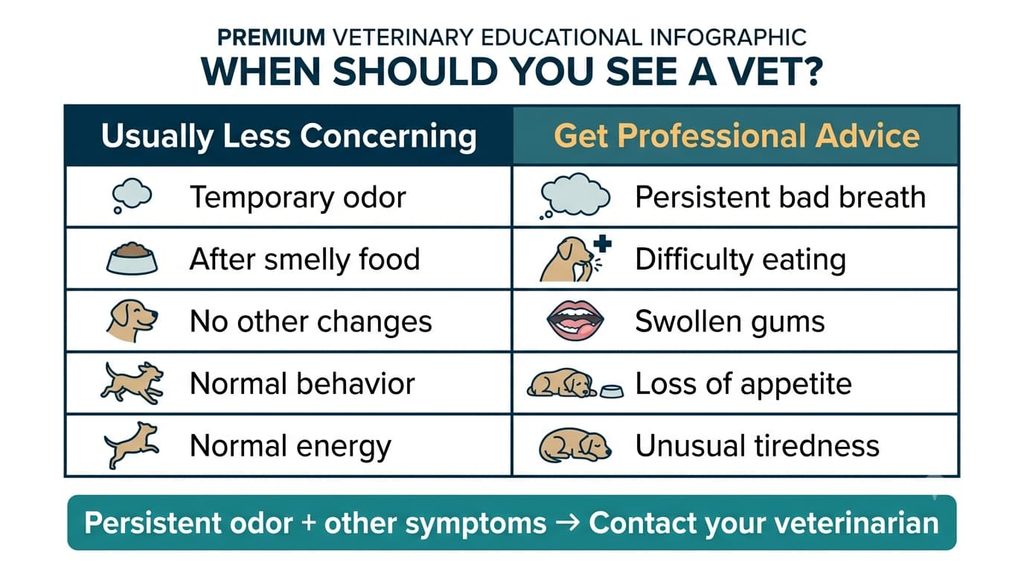
When Should You See a Vet?
If why does my dog have bad breath has become a recurring concern, especially when the odor is persistent, speak with your veterinarian.
Get professional advice if you notice bad breath along with:
- Bleeding or swollen gums
- Difficulty eating
- Facial swelling
- Excessive drooling
- Loss of appetite
- Unusual tiredness
- Other sudden changes
Frequently Asked Questions
1. Why does my dog have bad breath?
Why does my dog have bad breath? The most common cause is plaque, tartar, or gum problems. Persistent bad breath may need a veterinary check.
2. How can I get rid of my dog’s bad breath?
Regular dog dental care, brushing with dog-safe dental products, fresh water, and veterinary dental checkups can help maintain better oral health.
3. When is dog bad breath a concern?
If bad breath is persistent or comes with swollen gums, difficulty eating, excessive drooling, loss of appetite, or unusual tiredness, contact your veterinarian.
Conclusion
So, why does my dog have bad breath? Most often, the answer involves plaque, tartar, or gum disease, but trapped food, something smelly your dog ate, damaged teeth, and other health problems can also contribute.
Don’t focus only on covering up the smell. Pay attention to your dog’s dental health and overall well-being. With regular care and veterinary attention when needed, you can help keep those teeth healthier—and make cuddle time much more pleasant. 🐶🦷