
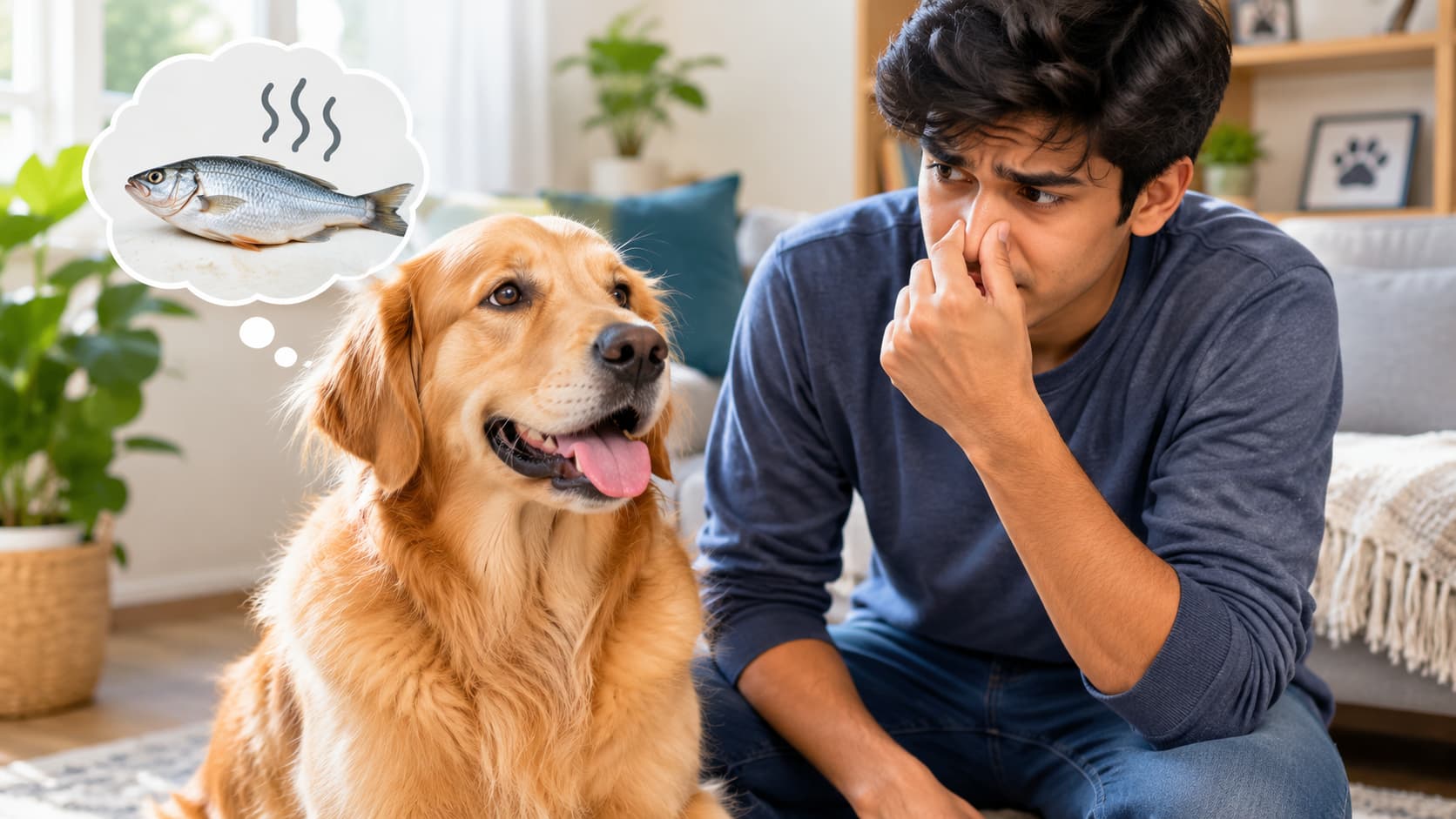
Have you noticed a strong fishy smell coming from your dog, even after a bath? If you’re wondering, why does my dog smell like fish, the answer often depends on where the odor is coming from.
A fishy smell can sometimes be caused by full or irritated anal glands. However, dental problems, ear infections, and skin issues can also create unpleasant odors.
The key is to identify the source instead of simply masking the smell with shampoo or perfume.
Table of Contents
Quick Answer: Why Does My Dog Smell Like Fish?
Common reasons your dog may smell fishy include:
- Full or leaking anal glands
- Dental disease or infected gums
- Ear infections
- Skin infections or irritation
- Urine or genital-area problems
- Rolling in something smelly
- Contaminated fur or bedding
If the smell is sudden, persistent, or accompanied by pain, swelling, discharge, or changes in behavior, contact your veterinarian.
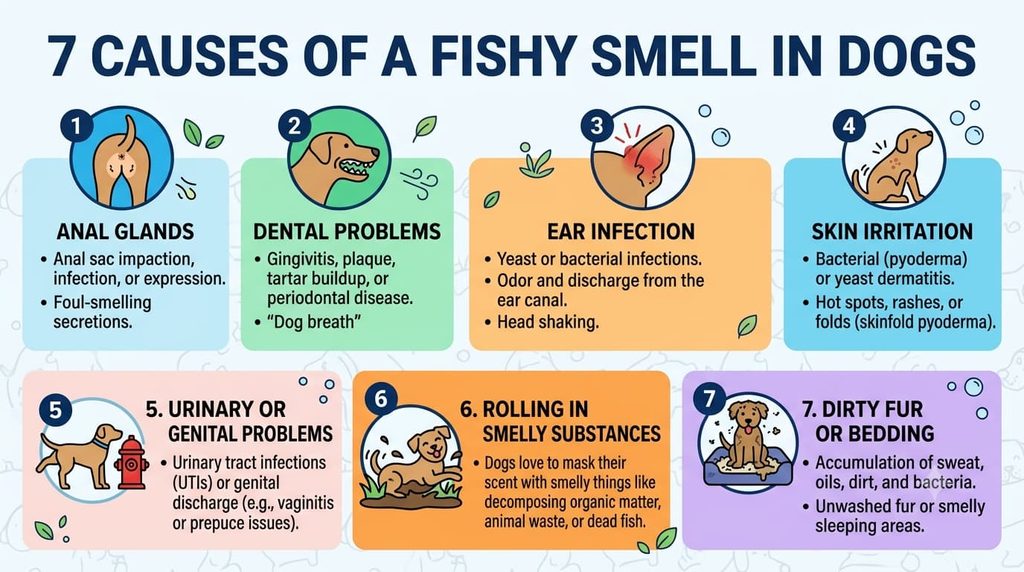
7 Reasons Your Dog May Smell Like Fish
1. Anal Gland Problems
Anal glands are small sacs located on either side of a dog’s anus. They release a strong-smelling substance that normally comes out during bowel movements.
For more information about common dog health problems, read this guide from the American Kennel Club (AKC).
Sometimes these glands don’t empty properly, causing discomfort or a fishy odor.

Look for these signs:
- Scooting across the floor
- Licking or biting the rear end
- A sudden, strong fishy smell
- Discomfort when sitting or passing stool
If you’re asking why does my dog smell like fish, especially around the rear end, anal glands are an important possibility.
Don’t squeeze the glands yourself unless a veterinarian has specifically trained you to do so. Pain, infection, or an abscess may require professional treatment.
2. Dental Disease or Gum Problems
Sometimes the odor comes from your dog’s mouth rather than the skin or rear end.
Plaque buildup, inflamed gums, damaged teeth, and oral infections can cause persistent bad breath.
If your dog’s odor seems to come from their mouth, learn more about the common causes of bad breath in dogs.
Watch for:
- Strong or unusual breath
- Red or bleeding gums
- Dropping food while eating
- Chewing on one side
- Reduced appetite
A persistent unusual mouth odor deserves a veterinary dental examination.
3. Ear Infection
Ear infections can cause unpleasant odors, itching, and discomfort. Some dogs also shake their heads or scratch their ears repeatedly.
Check for:
- Redness or swelling
- Dark or unusual discharge
- Frequent head shaking
- Sensitivity when the ears are touched
If these signs appear, arrange a veterinary examination. Avoid putting home remedies or unprescribed medication into your dog’s ears.
4. Skin Infection or Irritation
Moisture, allergies, and certain skin infections can lead to an unpleasant odor.
You may notice greasy fur, redness, excessive scratching, or irritated areas around skin folds, paws, and the belly.
A bath may temporarily reduce the smell, but the odor can return if the underlying problem remains.
5. Urine or Genital-Area Problems
Sometimes the smell comes from urine-soaked fur or a problem affecting the urinary or genital area.
Watch for frequent urination, straining, excessive licking, unusual discharge, or blood in the urine.
Straining to urinate with little or no urine requires emergency veterinary care.
6. Rolling in Something Smelly
Dogs sometimes roll in fish scraps, animal waste, or other strong-smelling substances outdoors.
If the smell started immediately after a walk or outdoor play and your dog seems otherwise comfortable, check the coat and paws for the source.
Use a dog-safe shampoo if needed, and prevent your dog from licking any unknown substance off the fur.
7. Dirty Fur, Bedding, or Moisture
Sometimes the source is simpler: damp fur, a dirty collar, or bedding that needs washing.
Check your dog’s:
- Collar and harness
- Blankets and bed
- Paws and fur
- Areas that stay damp after bathing
If cleaning these items doesn’t resolve the smell, consider a medical cause.
What Should You Do?
If you’re still wondering why does my dog smell like fish, start with these steps:

- Identify the source: Check whether the odor is strongest around the mouth, ears, skin, or rear end.
- Look for other symptoms: Notice itching, scooting, redness, discharge, or changes in eating and bathroom habits.
- Keep your dog clean: Wash dirty bedding and gently clean the coat with a dog-safe product when appropriate.
- Avoid home treatments: Don’t squeeze anal glands or apply human creams, essential oils, or household products.
- Contact your veterinarian: Arrange an examination if the odor persists, returns repeatedly, or comes with other symptoms.
Seek prompt veterinary care if you notice severe pain, significant swelling, bleeding, or pus. A dog that seems very unwell should be assessed urgently.
FAQs
Why does my dog smell like fish all of a sudden?
A sudden fishy odor may come from anal gland fluid, something on the coat, or another source. Check where the smell is strongest and watch for additional symptoms.
Why does my dog smell like fish but has no other symptoms?
Anal gland fluid or something on the fur may be responsible. If the smell continues or keeps returning, ask your veterinarian to check your dog.
Can anal glands make a dog smell fishy?
Yes. Anal gland secretions can have a strong fishy odor. Scooting, rear-end licking, or discomfort can indicate a problem.
Will bathing my dog remove the fishy smell?
Bathing may remove odors from dirty fur, but it won’t treat an anal gland problem, dental disease, or an infection.
When should I take my dog to the vet?
Seek veterinary advice if the odor persists, repeatedly returns, or comes with pain, swelling, discharge, itching, or changes in behavior.

Conclusion
So, why does my dog smell like fish? Anal gland problems are a common explanation, but the source could also be the mouth, ears, skin, or genital area.
Pay attention to where the odor originates and whether other symptoms are present. Rather than covering up a persistent smell, have your veterinarian identify and treat the underlying cause.