If you’ve noticed that your dog’s nose feels dry instead of cool and moist, it’s understandable to wonder if something is wrong. Many dog owners have heard that a wet nose means a healthy dog, but that isn’t always true.
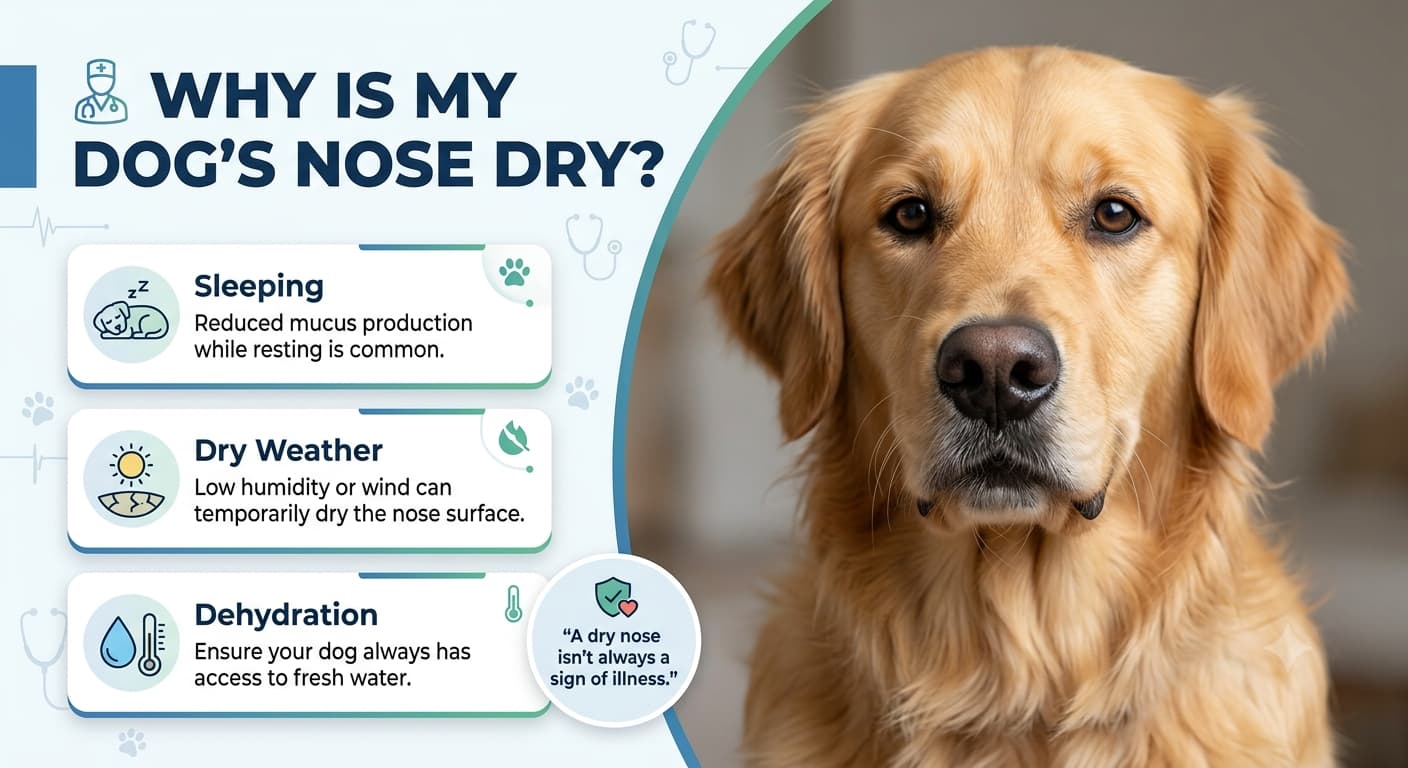
So, why is my dog’s nose dry? A dry nose can happen for several simple reasons, including sleeping, weather changes, dehydration, or irritation. In some cases, though, it can be linked to a health problem.
Here’s what you should know before assuming the worst.
Table of Contents
Quick Answer: Why Is My Dog’s Nose Dry?
A dog’s nose may become dry temporarily because of:
- Sleeping or resting
- Dry or hot weather
- Dehydration
- Indoor heating or air conditioning
- Excessive sun exposure
- Allergies or skin irritation
- Certain illnesses or medical conditions
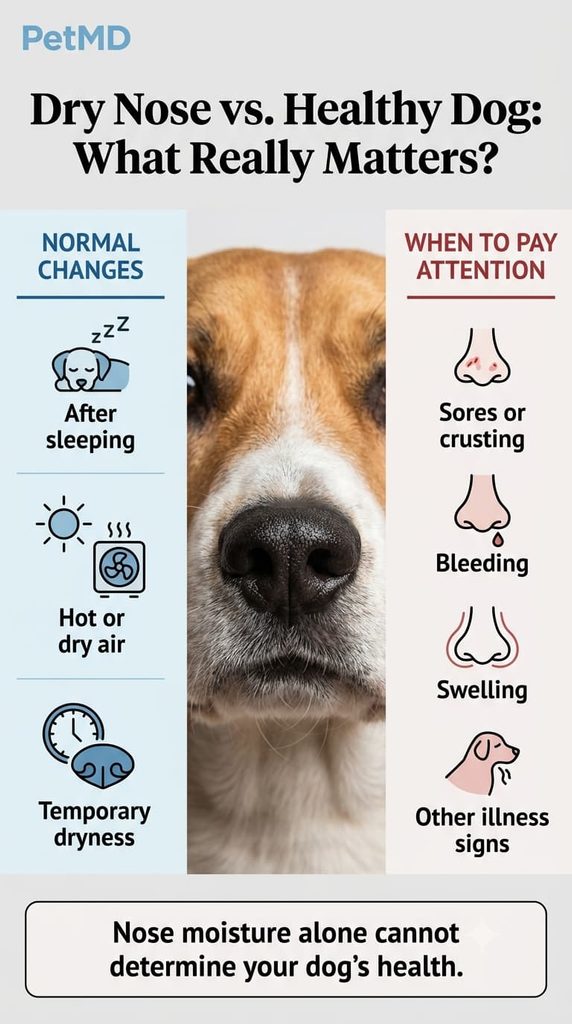
A dry nose by itself usually isn’t enough to tell whether a dog is sick. Your dog’s overall behavior, appetite, energy, and other symptoms matter much more.
If you’ve also noticed changes in your dog’s appetite, it may help to understand why your dog is not eating and what other signs to watch for.
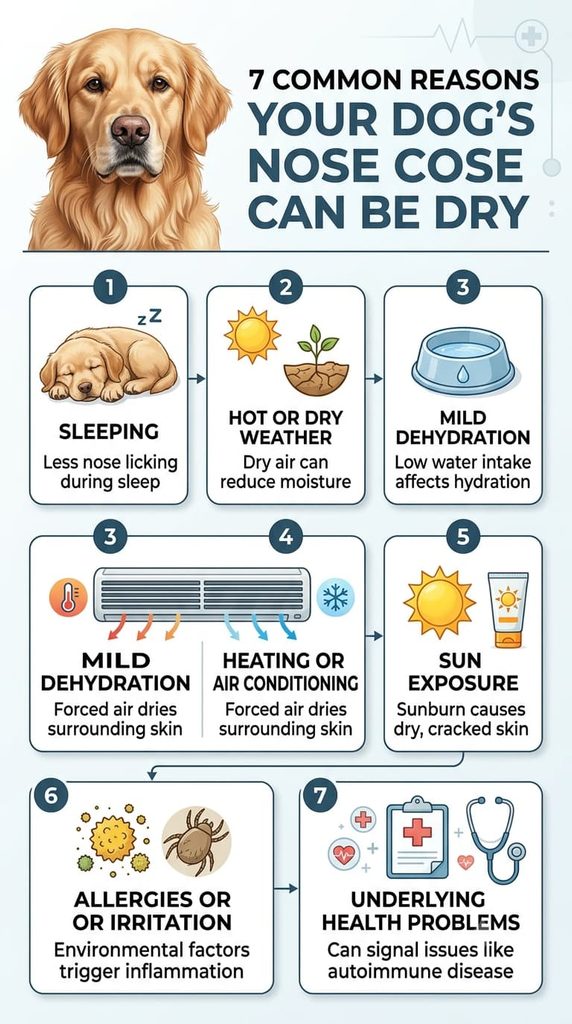
Why Is My Dog’s Nose Dry? 7 Common Reasons
1. Your Dog Just Woke Up
One of the most harmless reasons for a dry nose is simply sleeping.
Dogs often lick their noses throughout the day, which helps keep them moist. While sleeping, they obviously aren’t doing this as frequently. As a result, their nose may feel dry when they wake up.
It often becomes moist again after your dog gets up, drinks water, or starts moving around.
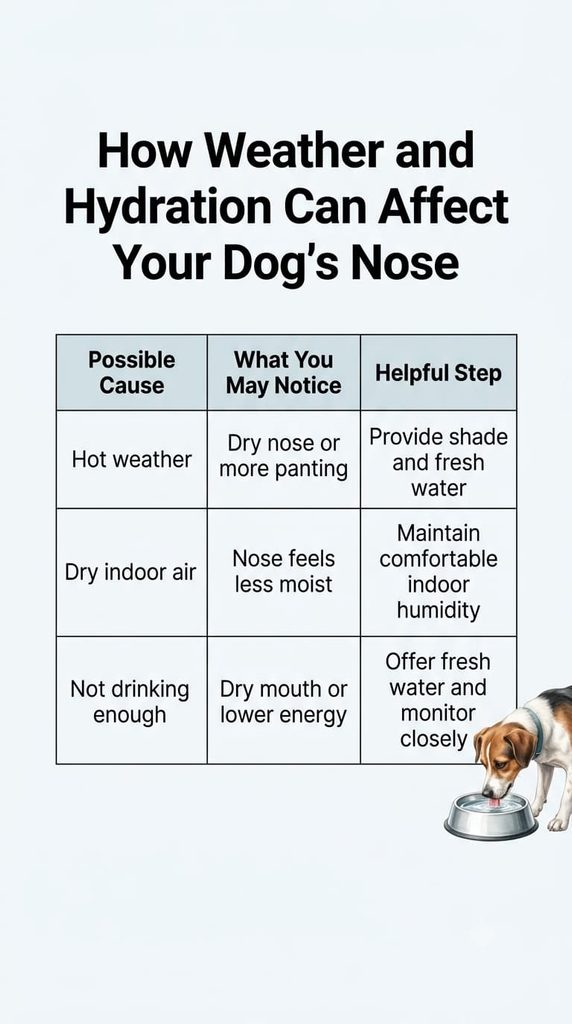
2. Hot or Dry Weather
Weather can have a noticeable effect on your dog’s nose.
Hot temperatures, low humidity, strong winds, and spending time outdoors can all contribute to temporary dryness. Dogs living in homes with constant air conditioning or heating may also experience drier skin and noses.
Make sure your dog always has access to fresh drinking water, especially during warm weather.
3. Mild Dehydration
Dehydration can sometimes cause a dog’s nose to feel dry, particularly if they haven’t been drinking enough water.
Watch for other changes such as:
- Less energy than usual
- Excessive panting
- Dry or sticky gums
- Reduced interest in food or water
- Weakness
If you suspect significant dehydration, especially after vomiting, diarrhea, or prolonged heat exposure, contact your veterinarian.
4. Sun Exposure
Your dog’s nose can be affected by sunlight just like other exposed areas of skin.
Dogs that spend a lot of time outside may develop dryness or irritation around the nose. Dogs with lightly pigmented noses can be particularly sensitive to sun exposure.
Providing shade and limiting prolonged exposure during intense sunlight can help protect your dog.
5. Allergies or Skin Irritation
Sometimes a dry nose is related to irritation rather than simple dryness.
Environmental allergens, dust, pollen, or contact with irritating substances can cause changes around the nose. You may also notice licking, rubbing, redness, or irritation elsewhere on the face.
If the dryness keeps returning or your dog seems uncomfortable, a veterinarian can help determine the underlying cause.
6. Your Dog’s Nose Naturally Changes
Not every dog has a nose that stays wet all day.
A dog’s nose can naturally become wetter or drier depending on activity, temperature, hydration, age, and the time of day. A healthy dog can occasionally have a dry nose without having any underlying problem.
This is why judging your dog’s health based only on whether the nose is wet isn’t reliable.
7. An Underlying Health Problem
In less common cases, persistent nose dryness can occur alongside a medical condition.
Pay closer attention if the dryness is accompanied by crusting, sores, bleeding, swelling, significant color changes, discharge, or changes in your dog’s normal behavior.
These signs don’t automatically mean something serious, but they are good reasons to have your dog checked by a veterinarian.
For more guidance on recognizing unusual changes in your dog’s health, the American Kennel Club’s dog health resources can also be helpful.
When Should You Worry About a Dry Dog Nose?
A dry nose usually isn’t an emergency on its own. However, you should contact your veterinarian if your dog has persistent nose changes along with symptoms such as:
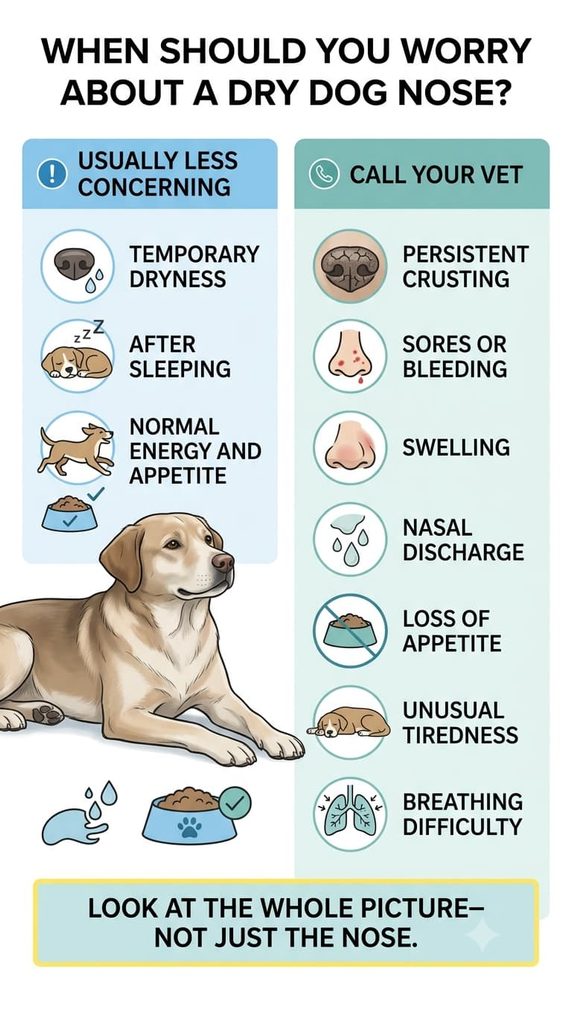
- Loss of appetite
- Unusual tiredness or weakness
- Vomiting or diarrhea
- Difficulty breathing
- Nasal discharge
- Bleeding or sores
- Significant swelling
- Obvious pain or discomfort
The important thing is to look at the whole dog, rather than focusing on the nose alone.
FAQs
Is a dry nose a sign that my dog is sick?
Not necessarily. A dry nose can be completely normal, especially after sleeping or during hot, dry weather. Other symptoms are more important when judging your dog’s health.
Should I put something on my dog’s dry nose?
Avoid applying human creams, lotions, or medications unless your veterinarian recommends them. Some ingredients may irritate your dog or be unsafe if licked.
Why is my dog’s nose dry after sleeping?
Dogs don’t lick their noses as frequently while sleeping, so the nose can temporarily become dry. It often becomes moist again after waking.
Conclusion
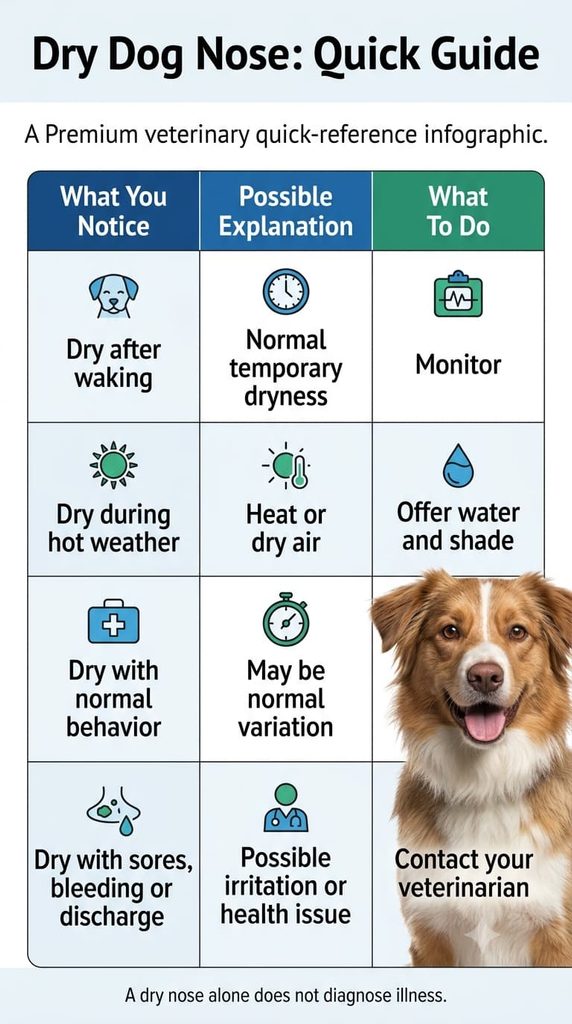
So, why is my dog’s nose dry? In many cases, there’s a simple explanation such as sleeping, weather, indoor air, or normal variation. A dry nose alone doesn’t necessarily mean your dog is sick.
Instead of relying on the nose as a health test, pay attention to your dog’s energy, appetite, drinking, behavior, and any other unusual symptoms. If something doesn’t seem right or the nose develops persistent changes, getting veterinary advice is the safest choice.