
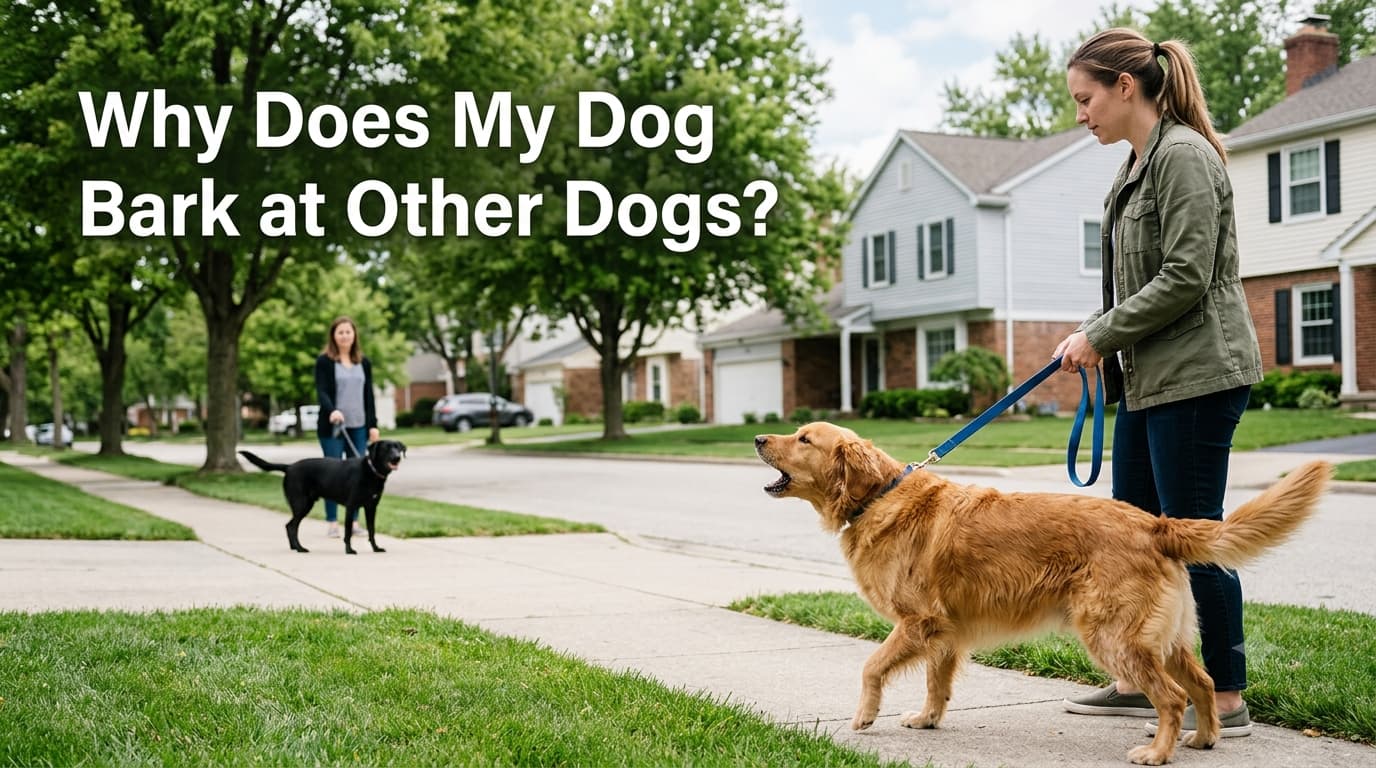
You’re out for a perfectly normal walk when another dog appears—and suddenly your dog starts barking, pulling, whining, or jumping toward them.
If this happens regularly, you may find yourself wondering, “Why does my dog bark at other dogs?”
It can be embarrassing and frustrating, especially when your dog is completely calm at home. But barking at another dog doesn’t automatically mean your dog is aggressive. Often, the behavior comes from excitement, fear, frustration, poor socialization, or simply not knowing how to respond.
The good news is that once you understand what’s behind the reaction, you can start working on it.
Table of Contents
Quick Answer
Why does my dog bark at other dogs? Dogs commonly bark at other dogs because they are excited, fearful, frustrated, territorial, or trying to communicate. Some dogs also learn that barking makes another dog move away, which can reinforce the behavior over time.
Pay attention to your dog’s body language:
- A loose, wiggly body may suggest excitement.
- A stiff body can indicate tension.
- A tucked tail may point toward fear.
- Pulling toward the other dog may indicate frustration or excitement.
- Hiding behind you can suggest discomfort.
The barking itself is only part of the story.
7 Reasons Your Dog May Bark at Other Dogs
1. Your Dog Is Excited
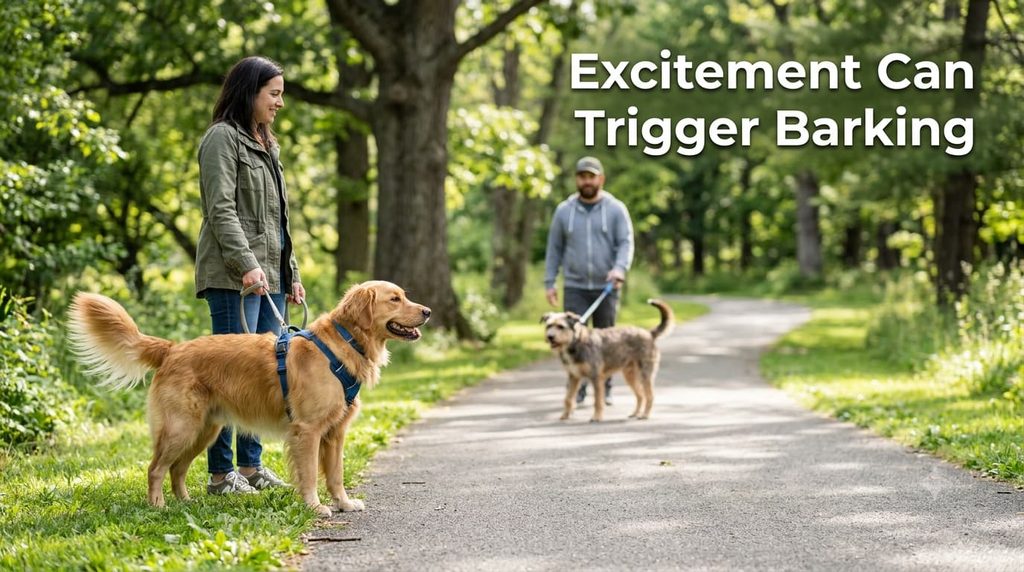
Some dogs simply get incredibly excited when they see another dog.
You might notice your dog:
- Wagging their tail
- Pulling toward the dog
- Jumping around
- Whining between barks
- Trying to get closer
In this situation, your dog may not be trying to threaten the other dog at all. They may simply be struggling to control their excitement.
2. Your Dog Feels Afraid
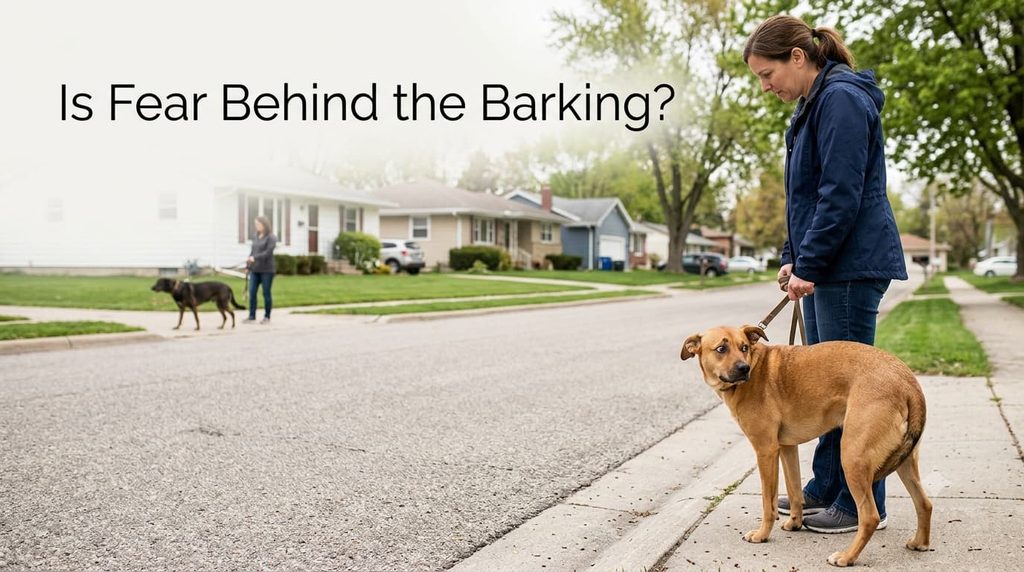
Fear is another major reason dogs react to other dogs.
A dog that has had a frightening encounter before—or simply feels uncomfortable around unfamiliar dogs—may bark to create distance.
Look for signs such as:
- Backing away
- Tucked tail
- Ears held back
- Avoiding eye contact
- Trying to hide behind you
If your dog is scared, forcing them to approach another dog can make the problem worse.
3. Your Dog Is Frustrated on the Leash
This one is easy to misunderstand.
Your dog may actually want to approach another dog, but the leash prevents them from doing so. That restriction can create frustration, which comes out as barking, pulling, and lunging.
It’s sometimes called leash reactivity.
The dog isn’t necessarily saying, “I want to fight.” They may be saying, “I want to get over there, but I can’t!”
4. Your Dog Didn’t Get Enough Socialization
Dogs learn how to behave around other animals through repeated, positive experiences.
If your dog had limited exposure to different dogs while growing up, unfamiliar dogs may feel unpredictable or overwhelming.
That doesn’t mean your dog is permanently antisocial.
With patient training and controlled exposure, many dogs can gradually become more comfortable around other dogs.
Positive and gradual socialization can help dogs become more comfortable in different situations. The American Kennel Club also provides helpful guidance on socializing dogs.
5. Your Dog Is Protecting You
Some dogs become particularly reactive when another dog gets close to their owner.
Your dog may perceive the approaching dog as a potential threat and try to create distance through barking.
This behavior can be stronger in dogs that are naturally protective or anxious.
Instead of assuming your dog is being “dominant,” look at the entire situation and their body language.
If your dog also reacts strongly to unfamiliar people, you may want to read our guide on Why Is My Dog Barking at Strangers?
6. Your Dog Is Protecting Their Space
Dogs can also bark when another dog enters an area they consider theirs.
This might happen:
- In the yard
- Near the house
- Inside the car
- At a favorite resting area
Territorial barking can become a habit if the dog repeatedly discovers that barking makes the other animal disappear.
7. Barking Has Worked Before
Dogs learn from what happens after they behave a certain way.
Imagine your dog sees another dog, starts barking, and the other dog eventually walks away.
Your dog may make a simple connection:
“I barked, and that dog went away.”
Even if the other dog was leaving anyway, your dog doesn’t know that. Repeating this experience can make the barking more persistent.
Understanding this is important because simply telling your dog “No!” doesn’t teach them what to do instead.
How Can You Stop Your Dog From Barking at Other Dogs?
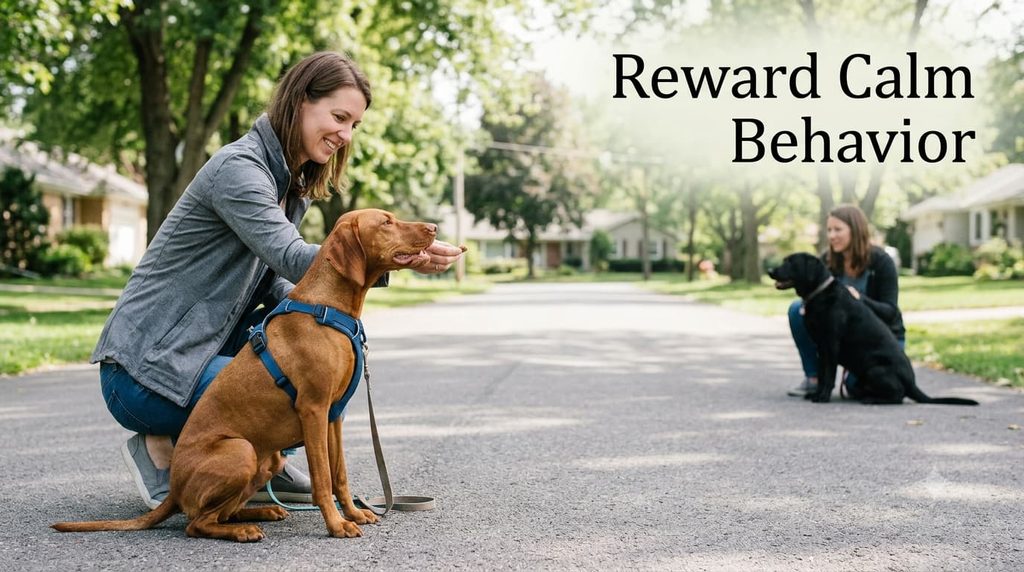
Once you understand why your dog barks at other dogs, the next step is teaching them a calmer response.
Don’t expect the barking to disappear after one or two walks. In my experience with dog behavior topics, the biggest difference usually comes from small, consistent training rather than trying to force a quick fix.
1. Create More Distance
If your dog starts barking whenever another dog gets close, don’t wait until they’re already overwhelmed.
Instead:
- Cross the street.
- Change your walking direction.
- Move behind a parked car or other visual barrier.
- Give your dog enough space to notice the other dog without reacting.
The goal is to keep your dog under their reaction threshold, where they can still listen to you and accept a reward.
2. Reward Calm Behavior
This is one of the most useful things you can practice.
When your dog notices another dog but stays calm:
- Say a calm marker such as “yes.”
- Give a small treat.
- Continue walking normally.
- Repeat whenever your dog remains relaxed.
You’re teaching your dog that seeing another dog doesn’t automatically mean barking is necessary.
3. Don’t Force Your Dog to Say Hello
A common mistake is assuming every dog needs to greet every dog they meet.
They don’t.
Some dogs are perfectly happy walking past other dogs without interacting. If your dog looks uncomfortable, don’t pull them closer just to make them “get used to it.”
Give them an appropriate amount of space and let them move on.
4. Practice Before the Walk Gets Difficult
Training doesn’t have to begin when another dog is already standing a few feet away.
Start somewhere quiet and practice simple skills such as:
- Looking at you when called
- Walking beside you
- Sitting calmly
- Turning around with you
- Taking a treat gently
These skills become much easier to use later when distractions appear.
5. Stay Calm Yourself
Dogs can notice changes in our body language and behavior.
If you see another dog and immediately tighten the leash, panic, or shout, your dog may become even more alert.
Try to:
- Keep the leash controlled but not constantly tense.
- Use a calm voice.
- Move away before your dog becomes overwhelmed.
- Focus on guiding rather than punishing.
You don’t need to pretend nothing is happening. Just avoid adding more excitement to the situation.
For more practical training strategies, check out our complete guide on How to Stop a Dog From Barking.
Should You Let Your Dog Meet Other Dogs?
Not necessarily.
Whether a greeting is appropriate depends on the dogs, the environment, and their body language. A dog that barks at other dogs may not be ready for a close interaction.
If your dog is tense, fearful, lunging, or difficult to control, distance is usually the safer choice.
A calm parallel walk with a suitable dog can sometimes be more useful than forcing a face-to-face greeting.
What Should You Avoid?
When dealing with dog-to-dog barking, punishment can be tempting, especially after a difficult walk.
But yelling, jerking the leash, or forcing your dog toward another dog can increase fear or frustration in some dogs.
Avoid:
- Forcing greetings
- Repeatedly yelling “No!”
- Punishing fearful reactions
- Allowing uncontrolled close encounters
- Getting too close too quickly
Instead, focus on prevention, distance, rewards, and gradual training.
When Should You Get Professional Help?

Some dogs need more support than basic training can provide.
Consider speaking with your veterinarian or a qualified positive-reinforcement behavior professional if:
- Your dog’s reactions are becoming stronger.
- Your dog lunges aggressively toward other dogs.
- You struggle to control them safely.
- Your dog appears extremely fearful.
- The behavior suddenly changed.
- Your training attempts aren’t improving the situation.
A professional can help determine whether the reaction is mainly caused by fear, frustration, excitement, or another issue and create a training plan around your dog’s individual needs.
If your dog’s reaction is severe or suddenly changes, PetMD provides veterinary-reviewed information about dog behavior and health concerns.
Frequently Asked Questions
Why does my dog bark at other dogs but not people?
Dogs can react differently to animals and humans. Your dog may be excited, fearful, frustrated, or uncertain around other dogs while feeling completely comfortable with people.
Why does my dog bark at other dogs on walks?
Leashes can increase frustration because dogs can’t freely move away or approach. Your dog may also be reacting to fear, excitement, or previous experiences.
Should I punish my dog for barking at other dogs?
Punishment isn’t usually the best starting point. Understanding the trigger and rewarding calm behavior can help teach your dog a more appropriate response.
Can socialization stop my dog from barking at other dogs?
Positive, gradual socialization can help some dogs become more comfortable around other dogs. However, socialization doesn’t mean forcing your dog into close interactions.
Will my dog ever stop barking at other dogs?
Many dogs can improve significantly with consistent training, appropriate distance, and patience. The goal doesn’t necessarily have to be greeting every dog—it can simply be calmly walking past them.
Conclusion
So, why does my dog bark at other dogs? The answer could be excitement, fear, frustration, territorial behavior, limited socialization, or a learned response.
The most helpful approach is to stop thinking of every bark as bad behavior and start looking at what your dog is trying to communicate.
Give your dog space, reward calm reactions, avoid forced greetings, and practice consistently. If the behavior is intense or difficult to manage safely, professional guidance can make the process much easier.
With patience, even a dog that once reacted loudly to every dog on the sidewalk can learn that another dog passing by doesn’t always require a big reaction.