
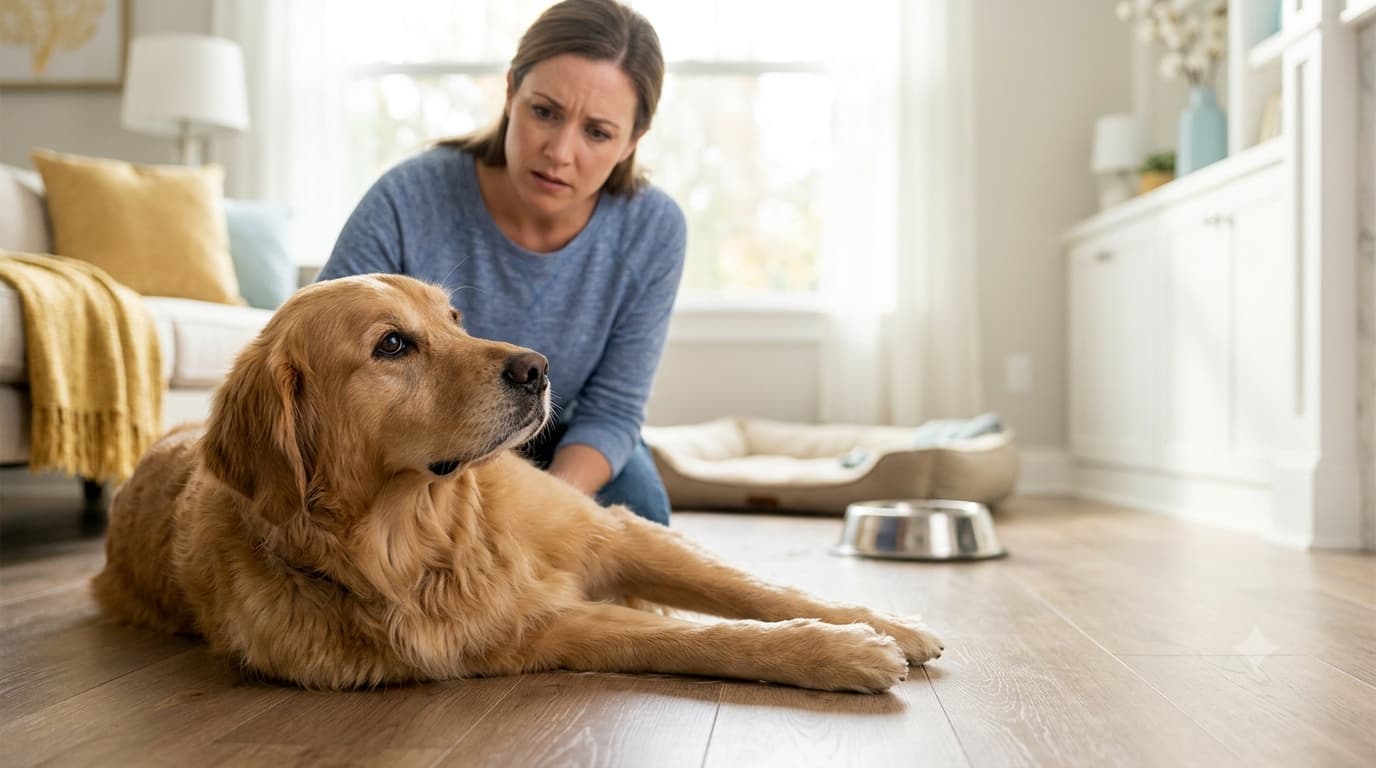
Have you ever looked at your dog while they were resting and suddenly noticed their chest moving much faster than usual?
Your first thought was probably:
“Why is my dog breathing fast? Is this normal, or should I call a vet?”
If that’s exactly why you’re here, you’re asking one of the most important questions a dog owner can ask.
Fast breathing in dogs isn’t a disease—it’s a symptom. Sometimes it’s completely harmless, like after an exciting game of fetch or a long walk on a hot summer day. In other cases, why is my dog breathing fast could be your dog’s way of warning you about pain, fever, heart disease, lung problems, heatstroke, or another medical emergency.
The difficult part is knowing when fast breathing is normal and when it becomes dangerous.
Many pet owners make the mistake of assuming their dog is simply tired, only to discover later that the rapid breathing was an early warning sign of a serious health condition. On the other hand, some owners panic over normal panting that doesn’t require emergency treatment.
This guide will help you understand the difference.
In this complete article, you’ll learn why is my dog breathing fast, the 11 most common causes, warning signs that should never be ignored, simple home care tips, and exactly when your dog needs immediate veterinary attention.
By the end, you’ll feel much more confident about deciding whether your dog simply needs rest—or whether it’s time to call your veterinarian.
Table of Contents
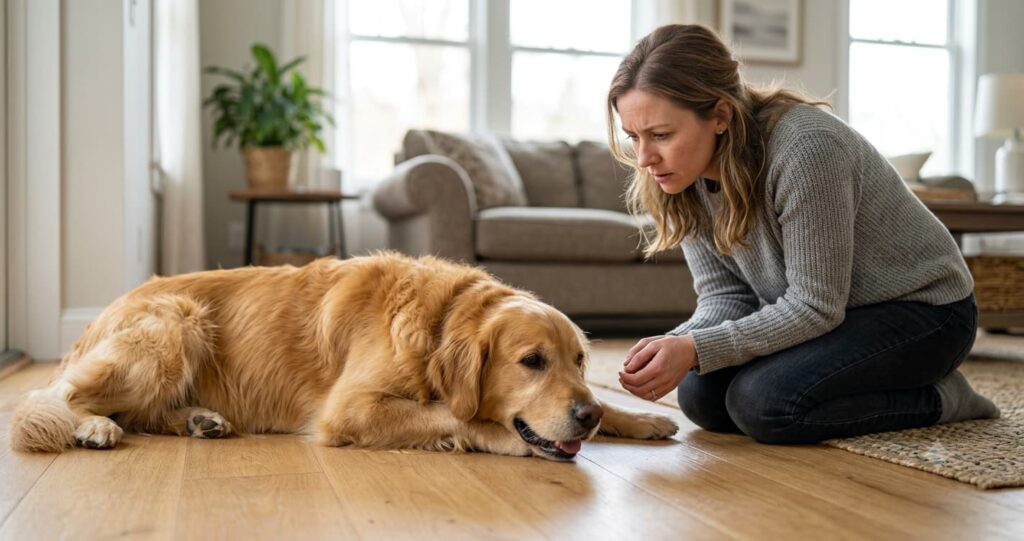
What Is Considered Fast Breathing in Dogs?
Before answering why is my dog breathing fast, it’s important to know what “normal” actually looks like.
A healthy adult dog resting comfortably at home usually breathes between 15 and 30 breaths per minute. Puppies may naturally breathe a little faster because of their higher metabolism.
The easiest way to check your dog’s breathing rate is while they’re sleeping or completely relaxed.
How to Count Your Dog’s Breaths
- Wait until your dog is resting quietly.
- Watch the chest rise and fall.
- One rise and one fall equals one breath.
- Count for 30 seconds and multiply by two.
If your dog’s breathing remains consistently above 30 breaths per minute while resting, it’s worth monitoring closely. If it rises above 40 breaths per minute at rest, especially with coughing, weakness, blue gums, or difficulty breathing, seek veterinary advice promptly.
Vet Insight: Never count your dog’s breathing immediately after running, playing, or during hot weather. Always measure it when your dog has been calm for several minutes.
1. Exercise or Excitement (Usually Normal)
One of the most common answers to why is my dog breathing fast is simply physical activity.
Just like humans breathe harder after exercise, dogs naturally increase their breathing rate after running, playing, or becoming excited.
Fast breathing helps cool the body because dogs don’t sweat the way humans do.
Normal Signs
- Breathing slows within 10–20 minutes
- Dog remains alert and happy
- Drinking water normally
- No coughing
- Pink gums
If your dog’s breathing returns to normal after resting, there’s usually no reason to worry.
2. Hot Weather or Heat Exposure
Dogs rely heavily on panting to regulate body temperature.
On warm days, especially during summer, your dog may breathe rapidly simply because they’re trying to cool down.
However, prolonged exposure to heat can quickly become dangerous.
Early Signs of Heat Stress
- Heavy, rapid breathing
- Excessive panting
- Bright red gums
- Drooling
- Seeking shade
If rapid breathing is accompanied by weakness, collapse, vomiting, or confusion, heatstroke becomes a medical emergency.
Move your dog to a cool place immediately and contact a veterinarian without delay.
3. Anxiety, Fear, or Stress
Sometimes the answer to why is my dog breathing fast has nothing to do with physical illness.
Dogs experiencing stress may breathe much faster during situations like:
- Thunderstorms
- Fireworks
- Veterinary visits
- Car rides
- Separation anxiety
- Loud unfamiliar noises
Stress-related breathing usually improves once your dog feels safe again.
If it happens frequently, identifying and reducing the source of anxiety is important.
If your dog is breathing fast while shaking, this could indicate pain, fear, fever, or another underlying condition.
👉 Read our complete guide:
Why Is My Dog Shaking? 11 Common Causes, Warning Signs & When to Call a Vet
✅ Quick Owner Checklist
Ask yourself these questions:
- Is my dog breathing fast only after exercise?
- Has the breathing slowed after resting?
- Is my dog eating and drinking normally?
- Are the gums pink instead of blue or pale?
- Is my dog alert and responsive?
If the answer is yes to all of these, the cause may be temporary. Continue monitoring your dog over the next several hours.
If the answer is no to any of them, keep reading—the next causes become more serious and may require veterinary attention.
4. Pain or Injury
One of the most overlooked answers to why is my dog breathing fast is pain.
Dogs are incredibly good at hiding discomfort. Instead of crying or whining, many dogs simply breathe faster than usual when they’re in pain.
Pain may come from:
- Arthritis
- Broken bones
- Muscle injuries
- Dental infections
- Abdominal pain
- Surgery recovery
Signs Your Dog May Be in Pain
- Rapid breathing while resting
- Reluctance to move
- Limping
- Hunched posture
- Whining or hiding
- Aggressive behavior when touched
Vet Insight: If your dog is breathing fast without recent exercise and also appears uncomfortable, pain should always be considered a possible cause.
5. Fever or Infection
If you’ve been wondering why is my dog breathing fast, an infection could also be responsible.
When a dog’s body fights bacteria or viruses, its temperature often rises. As body temperature increases, breathing becomes faster to help cool the body and deliver more oxygen.
Common infections include:
- Respiratory infections
- Pneumonia
- Tick-borne diseases
- Severe skin infections
- Urinary tract infections
Warning Signs
- Fever
- Loss of appetite
- Low energy
- Shivering
- Coughing
- Nasal discharge
Never give human fever medicine to your dog without veterinary advice.
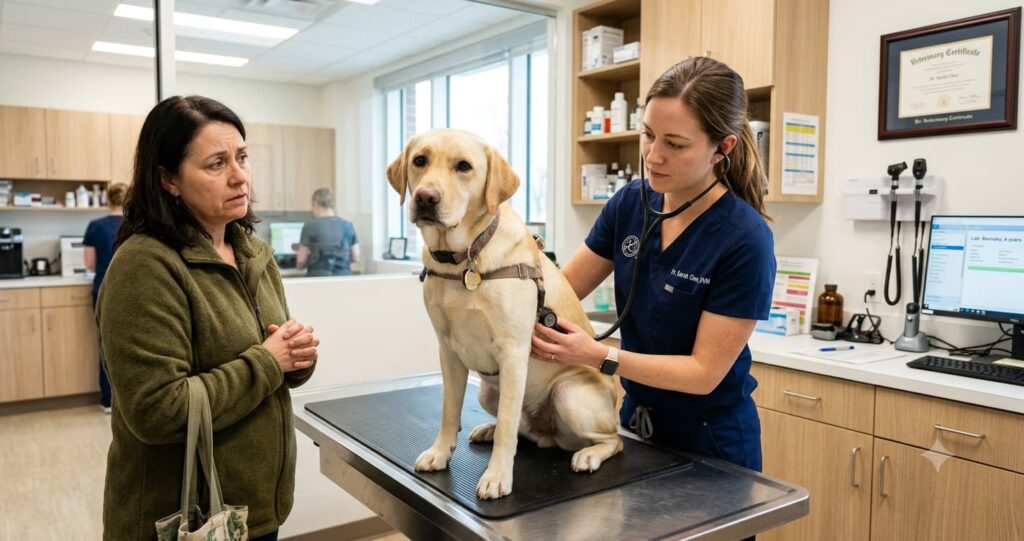
6. Heart Disease
Heart disease is one of the most serious reasons why is my dog breathing fast, especially in senior dogs.
When the heart cannot pump blood efficiently, fluid may begin collecting in the lungs. This forces the lungs to work harder, causing rapid breathing even while resting.
Symptoms That May Appear Together
- Fast breathing during sleep
- Persistent coughing
- Exercise intolerance
- Weakness
- Fainting episodes
- Reduced appetite
Dogs with heart disease often breathe faster at night while lying down.
If you notice your dog’s resting breathing rate increasing over several days, schedule a veterinary examination as soon as possible.
7. Lung Disease or Pneumonia
Healthy lungs deliver oxygen efficiently.
When lungs become inflamed or filled with fluid due to pneumonia or chronic lung disease, your dog has to breathe much harder just to get enough oxygen.
Possible causes include:
- Bacterial infections
- Viral infections
- Fungal disease
- Aspiration pneumonia
- Chronic bronchitis
Common Symptoms
- Rapid breathing
- Wet or dry cough
- Fever
- Weakness
- Difficulty exercising
Unlike normal panting, breathing problems caused by lung disease usually don’t improve with rest.
8. Anemia
Another possible explanation for why is my dog breathing fast is anemia.
Anemia means there aren’t enough healthy red blood cells to carry oxygen throughout the body.
To compensate, the body increases breathing speed in an attempt to deliver more oxygen.
Other Symptoms
- Pale gums
- Weakness
- Sleeping more than usual
- Poor appetite
- Fast heartbeat
Anemia can result from blood loss, parasites, immune disorders, or chronic disease.
Normal Fast Breathing vs Emergency Breathing
| Situation | Usually Normal | Needs Veterinary Care |
|---|---|---|
| After exercise | ✅ Yes | ❌ No |
| During hot weather | ✅ Sometimes | ⚠️ If it doesn’t improve |
| Sleeping and breathing over 40/min | ❌ No | ✅ Yes |
| Blue or gray gums | ❌ Never | 🚨 Emergency |
| Difficulty standing | ❌ No | 🚨 Emergency |
| Fast breathing with coughing | ⚠️ Monitor | ✅ Yes |
| Fast breathing with collapse | ❌ No | 🚨 Emergency |
🚨 Emergency Decision Box
Seek Immediate Veterinary Care If Your Dog:
- Is struggling to breathe
- Has blue, gray, or very pale gums
- Collapses or faints
- Breathes rapidly while completely resting
- Cannot lie down comfortably
- Breathes with an open mouth continuously
- Makes wheezing or choking sounds
These symptoms should never be ignored.
If your dog is breathing fast and coughing at the same time, read our detailed guide:
👉 Why Is My Dog Coughing? 11 Common Causes, Warning Signs & When to Call a Vet
If your dog is breathing fast and refusing food, also check:
👉 Why Is My Dog Not Eating? 11 Common Causes, Warning Signs & When to Call a Vet
Common Mistake Dog Owners Make
Many owners assume rapid breathing always means their dog is simply hot.
While that’s often true after exercise, fast breathing during rest is never something to ignore.
Monitoring your dog’s resting respiratory rate is one of the simplest ways to detect serious heart or lung problems before they become emergencies.
9. Allergic Reactions
Another possible answer to why is my dog breathing fast is an allergic reaction.
Some allergies cause only mild itching, while others can become life-threatening within minutes.
Common triggers include:
- Insect stings
- Certain foods
- Medications
- Vaccines
- Environmental allergens
Signs of an Allergic Reaction
- Rapid breathing
- Swollen face or muzzle
- Hives
- Excessive scratching
- Vomiting
- Difficulty breathing
🚨 Emergency Warning: If your dog’s face begins swelling or breathing becomes difficult, seek emergency veterinary care immediately.
10. Heatstroke (A Life-Threatening Emergency)
Many owners underestimate how quickly heatstroke can develop.
One of the most dangerous reasons why is my dog breathing fast is overheating.
Dogs cool themselves primarily through panting. During extreme heat, this cooling system may fail.
Heatstroke Warning Signs
- Extremely rapid breathing
- Heavy panting that doesn’t slow down
- Bright red or pale gums
- Drooling
- Vomiting
- Weakness or collapse
What You Should Do
✔ Move your dog to a cool, shaded area.
✔ Offer small amounts of cool (not ice-cold) water.
✔ Use cool, damp towels on the paws and body.
✔ Contact your veterinarian immediately.
❌ Never place your dog in ice water, as sudden cooling may worsen the situation.
11. Emergency Medical Conditions
Sometimes why is my dog breathing fast has no simple explanation.
Rapid breathing can occur with serious medical emergencies such as:
- Internal bleeding
- Blood clots
- Chest injuries
- Poisoning
- Shock
- Severe trauma
These situations require immediate professional treatment.
If your dog is breathing rapidly and also appears weak, confused, or unable to stand, don’t wait to see if the symptoms improve.
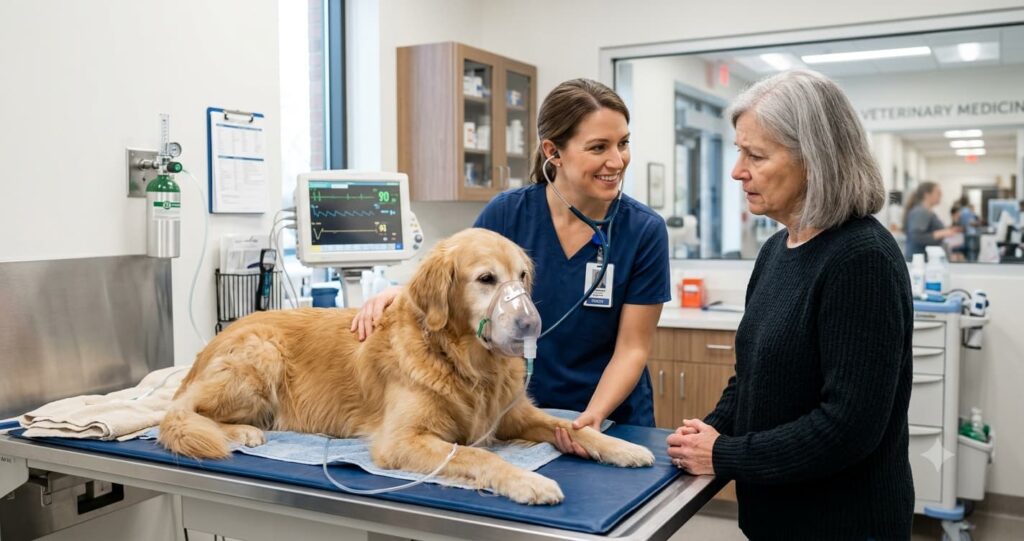
What Should You Do If Your Dog Is Breathing Fast?
If your dog is breathing rapidly, stay calm and observe carefully before taking action.
Monitor Your Dog If:
✅ Fast breathing happened after exercise.
✅ Breathing slows after resting.
✅ Your dog remains active.
✅ Eating and drinking normally.
Contact Your Veterinarian If:
- Breathing remains fast while resting.
- Your dog refuses food.
- Coughing develops.
- Breathing becomes noisy.
- Symptoms last longer than 30–60 minutes.
Seek Emergency Care Immediately If:
🚨 Blue, gray, or white gums
🚨 Collapse
🚨 Open-mouth breathing that won’t stop
🚨 Difficulty standing
🚨 Severe weakness
🚨 Suspected poisoning
How to Help Prevent Rapid Breathing
Although not every cause can be prevented, these habits greatly reduce your dog’s risk.
✔ Maintain a healthy weight.
✔ Provide fresh drinking water at all times.
✔ Avoid exercising during the hottest part of the day.
✔ Schedule annual veterinary checkups.
✔ Keep vaccinations and parasite prevention up to date.
✔ Feed a balanced, high-quality diet.
✔ Watch your dog’s resting breathing rate regularly.
Early detection often leads to easier treatment and better outcomes.

Frequently Asked Questions (FAQs)
Why is my dog breathing fast while sleeping?
Dogs may breathe slightly faster during dreaming (REM sleep). However, consistently rapid breathing while sleeping—especially above about 30 breaths per minute—should be discussed with your veterinarian.
Is fast breathing always an emergency?
No. Exercise, excitement, and warm weather commonly cause temporary rapid breathing. However, fast breathing at rest or accompanied by weakness, coughing, or blue gums requires prompt veterinary evaluation.
Why is my dog breathing fast but acting normal?
If your dog is otherwise eating, drinking, and behaving normally, the cause may be temporary. Continue monitoring, but if rapid breathing continues or becomes more frequent, contact your veterinarian.
How many breaths per minute are normal?
Most healthy adult dogs breathe approximately 15–30 breaths per minute while resting. Rates consistently above this range should be monitored, especially if other symptoms are present.
Should I Worry If My Dog Is Breathing Fast?
Fast breathing can be normal after exercise, excitement, or heat, but persistent or sudden rapid breathing at rest may indicate a problem. If it comes with coughing, weakness, pale or blue gums, or breathing difficulty, contact a veterinarian promptly.
Why Is My Dog Breathing Heavy While Resting?
Heavy breathing at rest can be caused by heat, stress, pain, or an underlying health problem. If it is sudden, persistent, or accompanied by coughing, weakness, or difficulty breathing, contact a veterinarian promptly.
Why Is My Dog Breathing Very Fast While Laying Down?
Fast breathing while resting can be caused by heat, stress, pain, or illness. If it continues while your dog is calm or comes with coughing, weakness, pale or blue gums, or breathing difficulty, contact a veterinarian promptly.
Final Thoughts
If you’ve been asking “Why Is My Dog Breathing Fast?”, remember that rapid breathing is a symptom—not a diagnosis.
Sometimes it’s completely normal after exercise or excitement. In other situations, it may be your dog’s earliest warning sign of heart disease, lung disease, pain, infection, heatstroke, or another serious medical condition.
The safest approach is to observe your dog’s breathing while resting, watch for additional symptoms, and never ignore breathing problems that persist or worsen.
When in doubt, contacting your veterinarian early is always better than waiting until your dog’s condition becomes an emergency.
🔗 Trusted Veterinary Resource
For more reliable information about canine breathing problems and overall dog health, visit the PetMD Dog Health Center.