
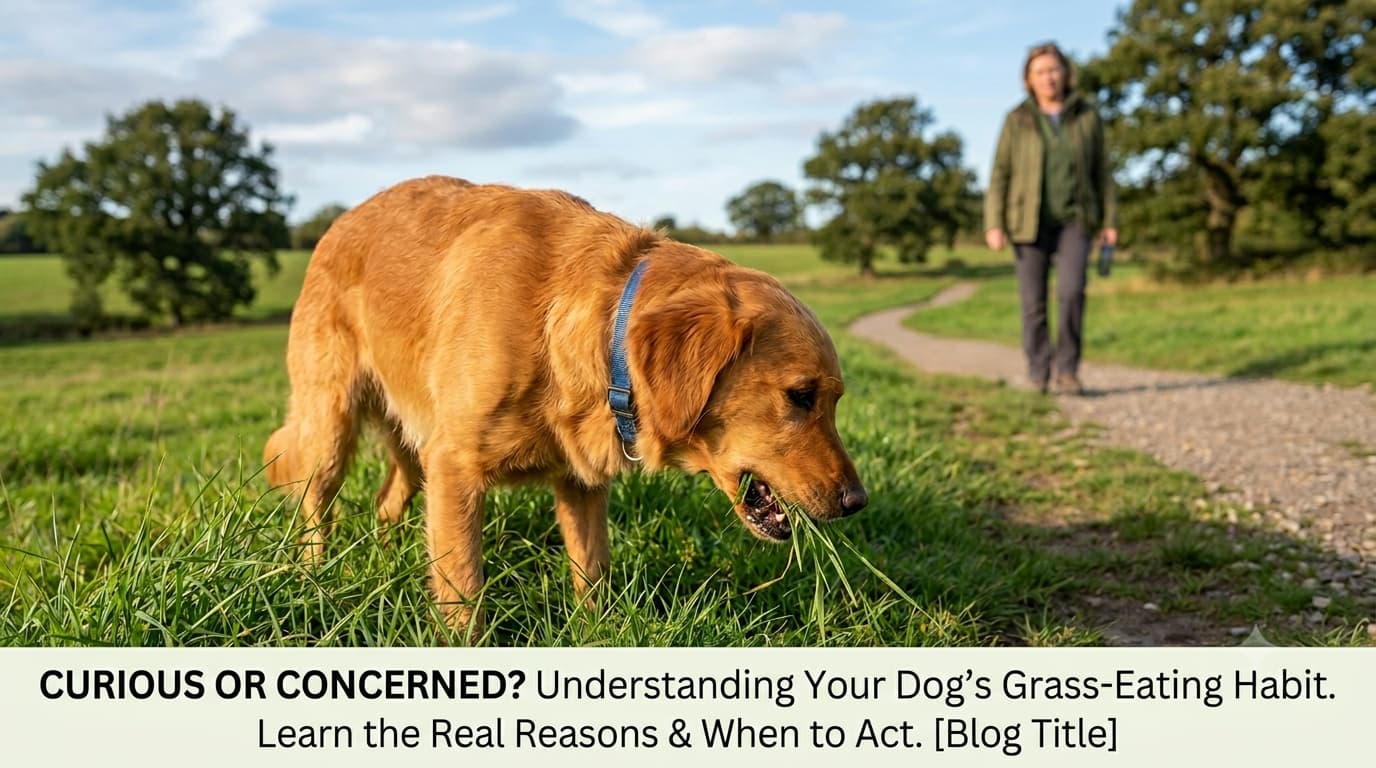
Have you ever been walking your dog when they suddenly stopped, lowered their head, and started eating grass like a cow?
If you’re like most dog owners, your first reaction was probably confusion.
“Why does my dog eat grass?”
I remember the first time my dog started doing this. We were enjoying our usual morning walk when he began chewing grass enthusiastically. Within minutes, I started wondering if he was sick, hungry, or trying to tell me something.
The good news is that grass-eating is actually very common among dogs.
The bad news?
Sometimes it can signal an underlying problem that shouldn’t be ignored.
In this complete guide, you’ll learn why dogs eat grass, when it’s completely normal, when it could indicate a health issue, and what you should do as a responsible pet owner.
Table of Contents
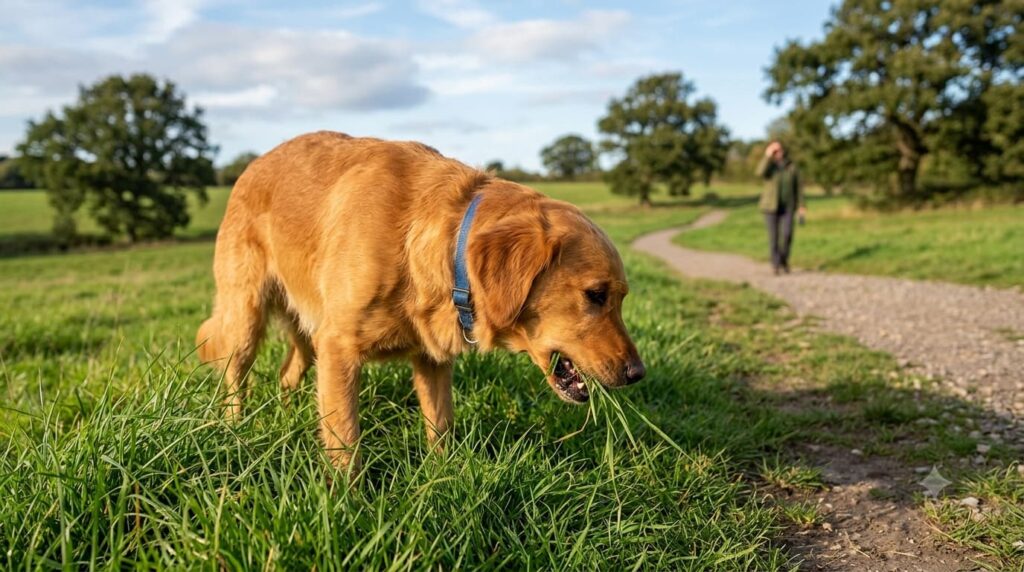
Is It Normal for Dogs to Eat Grass?
Yes.
In fact, many veterinarians consider grass eating a normal canine behavior.
Studies suggest that a large percentage of dogs eat grass at least occasionally.
Most dogs that eat grass:
- Show no signs of illness
- Continue acting normally
- Maintain a healthy appetite
- Experience no digestive problems
So if you’re wondering why does my dog eat grass, the answer is often simple:
Because many dogs naturally do.
However, there are several possible explanations.
1. Your Dog Simply Likes the Taste
Sometimes the simplest explanation is the correct one.
Many dogs genuinely enjoy:
- Fresh grass
- Young grass shoots
- Certain textures
- Natural plant flavors
Just like some people enjoy different foods, dogs may simply enjoy chewing grass.
This is especially common during spring and early summer when grass is fresh and tender.
2. Natural Instincts From Their Ancestors
One reason why does my dog eat grass may be linked to evolution.
Wild dogs and wolves often consume plant material indirectly when eating prey animals.
As a result, domestic dogs may still possess natural instincts that encourage occasional plant consumption.
Grass eating may simply be a behavior inherited from their ancestors.
3. Boredom
Many dogs eat grass simply because they have nothing better to do.
This is especially common among dogs that:
- Spend long hours alone
- Lack mental stimulation
- Receive limited exercise
- Have excess energy
A bored dog will often create activities to entertain itself.
Grass chewing can become one of those activities.
Signs of Boredom
- Excessive barking
- Digging
- Chewing furniture
- Pacing
- Eating grass frequently
Increasing exercise and enrichment often helps reduce this behavior.
4. They May Have Mild Digestive Discomfort
One of the most common theories behind why does my dog eat grass involves digestion.
Some experts believe dogs may eat grass when they experience:
- Mild stomach upset
- Indigestion
- Gas
- Digestive discomfort
Grass may provide temporary relief for some dogs.
However, research remains mixed on whether dogs intentionally eat grass to settle their stomachs.
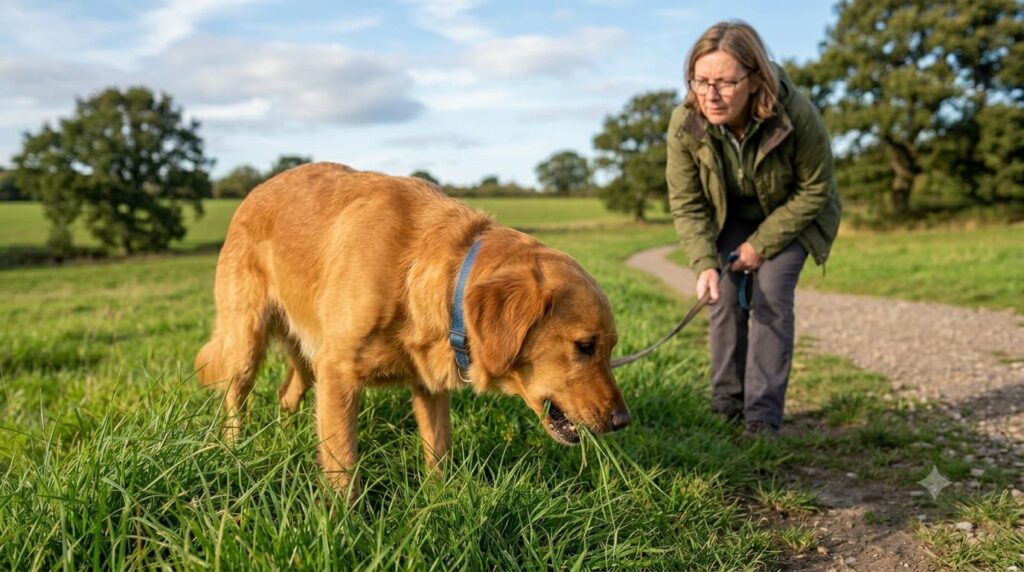
5. Nutritional Deficiencies
Another possible reason why does my dog eat grass is a nutritional imbalance.
Although less common today due to high-quality dog foods, some dogs may seek additional nutrients through plant material.
Possible deficiencies include:
- Fiber
- Minerals
- Micronutrients
If your dog constantly eats grass, it may be worth reviewing their diet.
6. They Need More Fiber
Fiber plays an important role in digestion.
Dogs that don’t receive enough fiber may seek alternative sources.
Grass naturally contains fiber, which may explain why some dogs are attracted to it.
Adding veterinarian-approved fiber sources to the diet may help reduce excessive grass consumption.
7. Anxiety or Stress
Just like humans develop nervous habits, dogs do too.
Some dogs eat grass when they feel:
- Stressed
- Nervous
- Anxious
- Frustrated
If your dog eats grass primarily during stressful situations, emotional factors may be contributing to the behavior.
Common Anxiety Triggers
- Separation anxiety
- Loud noises
- Changes in routine
- New environments
8. Curiosity and Exploration
Dogs explore the world using:
- Their nose
- Their mouth
- Their sense of taste
Young puppies especially investigate everything around them.
Sometimes grass eating is simply part of that exploration process.
This explanation is particularly common among younger dogs.
9. They Enjoy the Texture
Believe it or not, some dogs simply enjoy chewing grass.
The texture can provide:
- Sensory stimulation
- Mild entertainment
- Oral satisfaction
Many healthy dogs eat grass occasionally without experiencing any problems whatsoever.
Why Does My Dog Eat Grass and Then Vomit?
This is one of the most common concerns among pet owners.
Many people assume dogs eat grass specifically to make themselves vomit.
The truth is more complicated.
Most dogs that eat grass:
- Do not vomit afterward
- Continue behaving normally
However, some dogs may vomit because:
- Grass irritates the stomach lining
- They consumed too much grass
- An existing digestive issue is present
Occasional vomiting isn’t always a reason to panic.
Frequent vomiting requires veterinary attention.
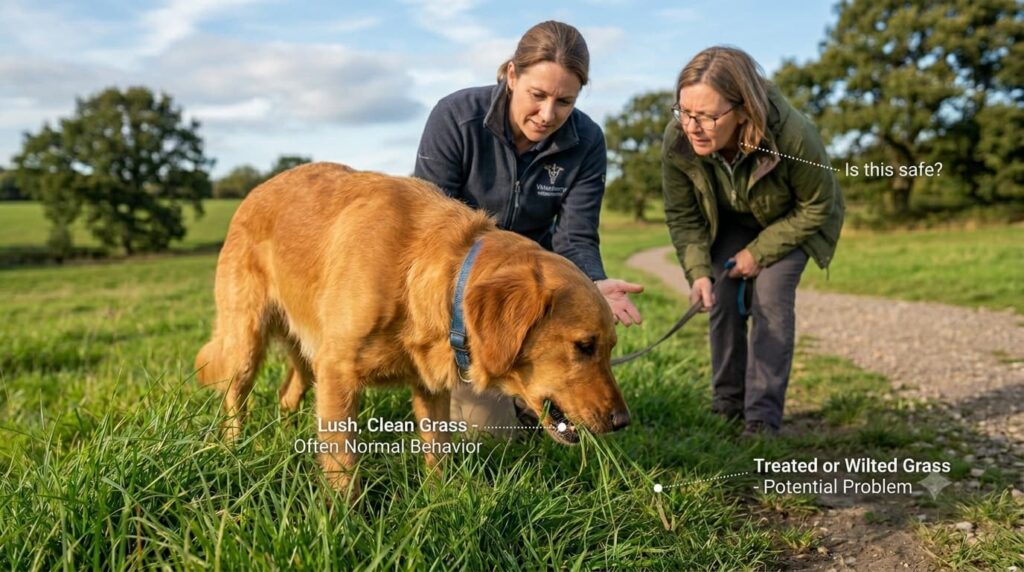
When Should You Worry?
Contact your veterinarian if grass eating is accompanied by:
- Frequent vomiting
- Diarrhea
- Loss of appetite
- Weight loss
- Lethargy
- Blood in stool
- Signs of pain
These symptoms may indicate an underlying health condition.
Is Eating Grass Dangerous for Dogs?
Usually, no.
The biggest concern isn’t the grass itself.
The concern is what may be on the grass.
Potential dangers include:
- Pesticides
- Herbicides
- Fertilizers
- Toxic chemicals
Always try to prevent your dog from eating grass in areas treated with chemicals.
How To Stop Your Dog From Eating Grass
1. Increase Exercise
A tired dog is less likely to seek entertainment through grass eating.
2. Provide Mental Stimulation
Use:
- Puzzle toys
- Training sessions
- Interactive games
3. Review Diet Quality
Ensure your dog receives complete and balanced nutrition.
4. Add Fiber If Recommended
Speak with your veterinarian before changing your dog’s diet.
5. Address Anxiety
Reducing stress often helps reduce repetitive behaviors.
My Personal Experience
The first time my dog ate grass, I immediately assumed something was wrong.
Like many owners, I worried he was sick.
After speaking with my veterinarian and monitoring his behavior, I learned that he simply enjoyed chewing fresh grass during walks.
Years later, he still occasionally grabs a few blades of grass, remains perfectly healthy, and experiences no digestive issues.
That experience taught me an important lesson:
Not every unusual dog behavior is a sign of illness.
Sometimes it’s simply part of being a dog.
Final Thoughts
If you’ve been asking yourself why does my dog eat grass, the answer may be surprisingly simple.
Dogs eat grass for many reasons, including:
- Natural instincts
- Curiosity
- Boredom
- Taste preferences
- Digestive discomfort
- Fiber needs
- Stress
In most cases, occasional grass eating is completely normal.
However, if the behavior is excessive or accompanied by symptoms such as vomiting, diarrhea, weight loss, or lethargy, it’s time to consult your veterinarian.
Understanding your dog’s behavior helps you make better decisions and keep your furry companion healthy, happy, and safe.
Frequently Asked Questions (FAQ)
What is a dog lacking when he eats grass?
While often thought to indicate a dietary lack of fiber or micronutrients, most dogs actually eat grass simply because they like the taste/texture, out of boredom, or to help soothe a mild upset stomach.
Do dogs eating grass mean they have worms?
No, eating grass is rarely a direct sign of worms—it is usually driven by boredom, taste, or mild stomach upset—though a vet can test for parasites if you notice symptoms like weight loss, vomiting, or diarrhea.
Why does my dog eat grass every day?
Many dogs eat grass daily because they enjoy the taste, texture, or natural behavior.
Why does my dog eat grass and throw up?
Grass may irritate the stomach and trigger vomiting in some dogs.
Should I stop my dog from eating grass?
Occasional grass eating is usually safe unless chemicals are present.
Why does my dog eat grass all of a sudden?
Changes in diet, boredom, stress, or digestive discomfort may contribute.
Can grass make dogs sick?
Grass itself usually isn’t harmful, but pesticides and chemicals can be dangerous.
Why does my puppy eat grass?
Puppies often eat grass out of curiosity while exploring their environment.
Is grass eating a sign of worms?
Not necessarily, but persistent digestive issues should be evaluated by a veterinarian.
Why does my dog eat grass when stressed?
Some dogs develop grass-eating habits as a coping mechanism for anxiety.
Do dogs eat grass when they are sick?
Sometimes, but many healthy dogs eat grass as well.
When should I call a vet?
If grass eating is accompanied by vomiting, diarrhea, lethargy, or appetite loss.
For additional information about dog nutrition and behavior, pet owners can refer to resources from the American Kennel Club (AKC).
https://kinshippet.com/how-to-cancel-fetch-pet-insurance-in-2026-step-by-step-guide-for-pet-owners