
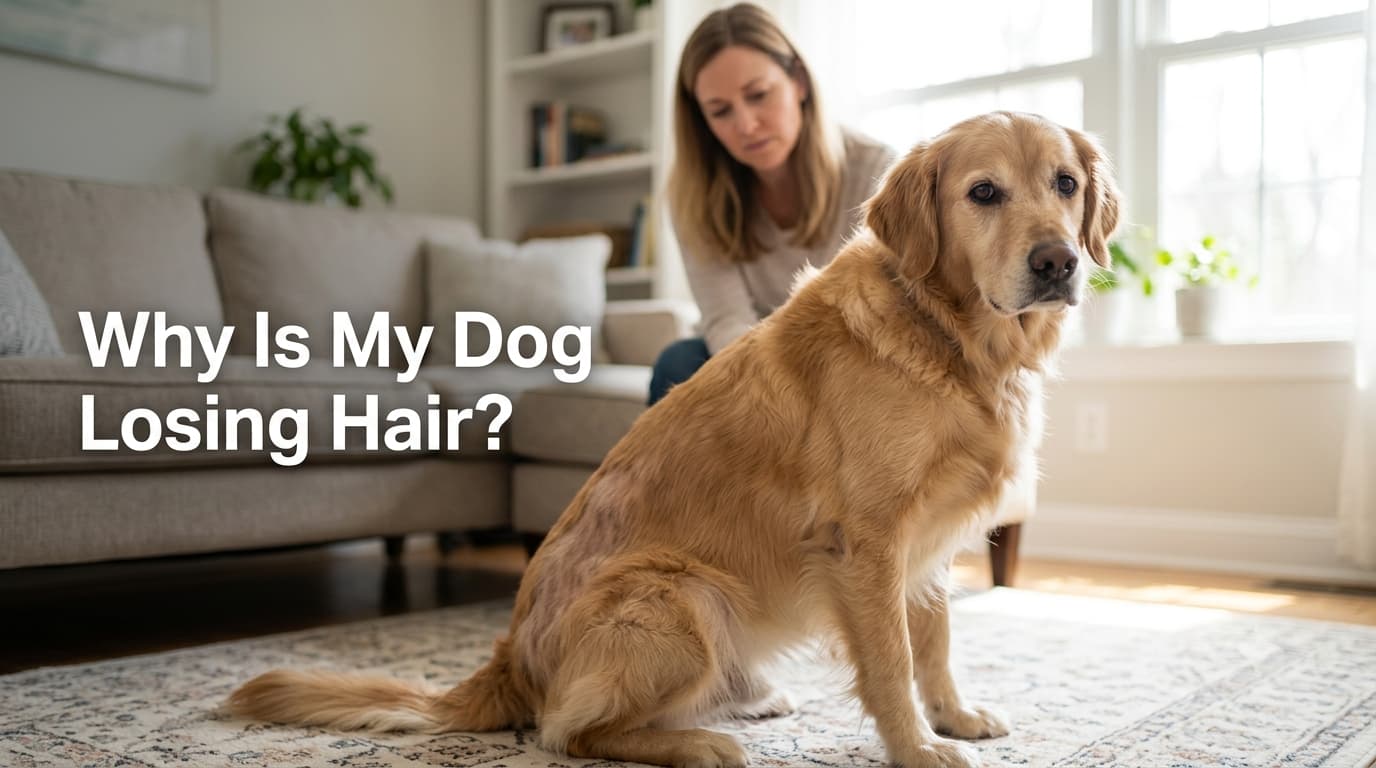
Finding little piles of fur around the house is pretty normal when you have a dog. But there’s a big difference between normal shedding and actual hair loss.
If you’re noticing bald patches, thinning fur, exposed skin, or your dog constantly scratching and chewing at their coat, you may start wondering, “Why is my dog losing hair?”
The answer isn’t always obvious. Hair loss can happen because of something as simple as seasonal shedding, but it can also be connected to fleas, allergies, skin infections, hormonal problems, poor nutrition, or other health issues.
The first thing I’d do is look closely at where the hair is disappearing and what the skin underneath looks like.
Table of Contents
Quick Answer
Why is my dog losing hair? Common causes include normal shedding, fleas and other parasites, allergies, skin infections, excessive scratching, stress, nutritional problems, hormonal disorders, and certain inherited conditions. If your dog’s hair loss is unusual, worsening, or accompanied by irritated skin or other symptoms, a veterinarian should help identify the underlying cause.
Look for these clues:
- Bald or thinning areas
- Red or irritated skin
- Excessive scratching
- Scabs or flaky skin
- Fleas or other parasites
- Changes in appetite or energy
- Hair loss that keeps getting worse
9 Common Reasons Your Dog May Be Losing Hair
1. Normal Shedding
Before assuming something is wrong, remember that shedding is normal for dogs.
Some dogs shed year-round, while others shed more heavily during seasonal coat changes. Breed, coat type, genetics, and environment can all affect how much fur you see around your home.
Normal shedding usually doesn’t create obvious bald patches or severely irritated skin.
2. Fleas and Other Parasites
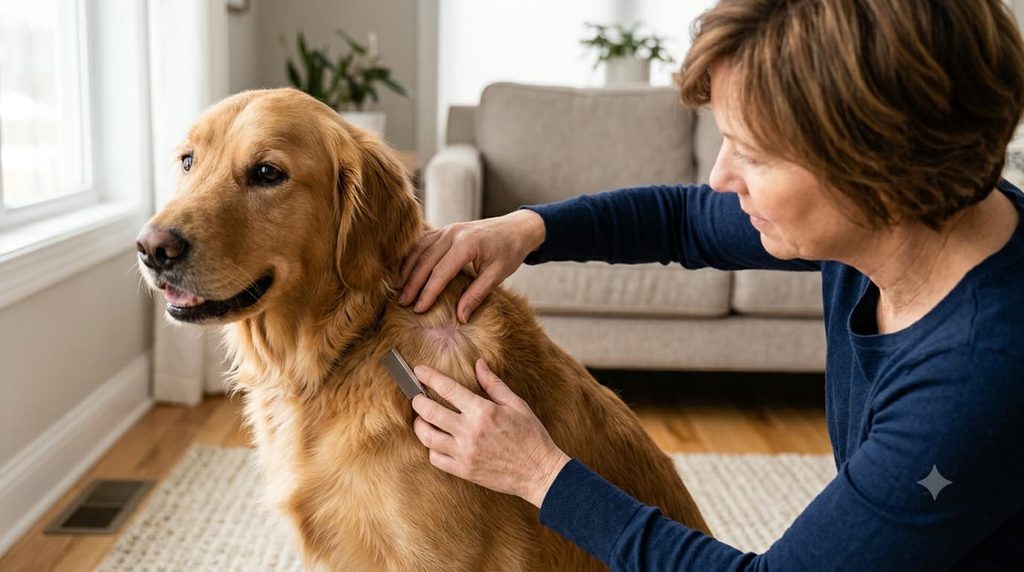
Fleas can cause much more than an annoying itch.
A dog reacting to flea bites may scratch, lick, or chew their skin repeatedly, eventually damaging the hair and creating areas of hair loss.
Other parasites, including mites, can also contribute to hair loss and skin problems.
3. Allergies
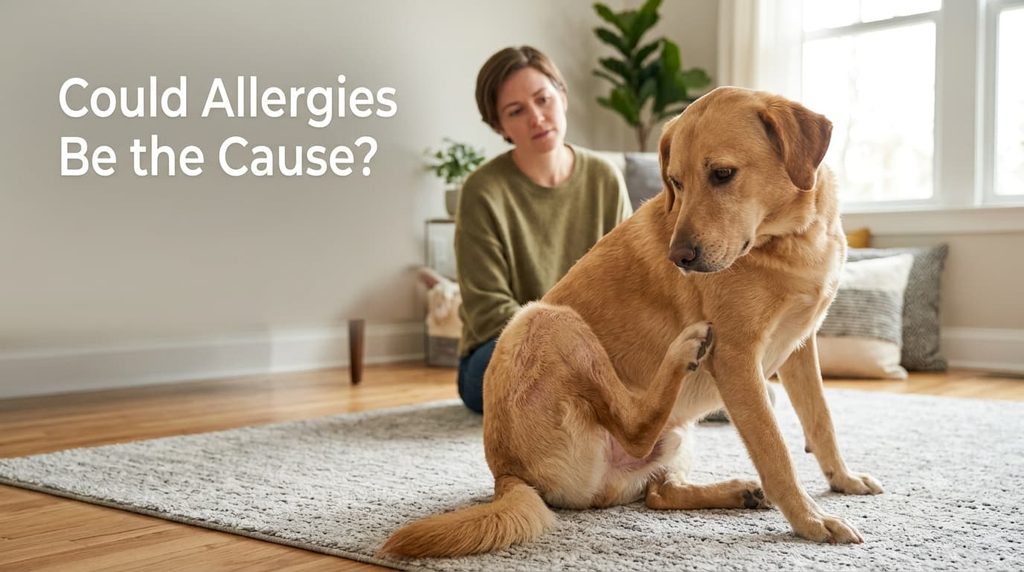
Allergies are another common reason dogs develop skin irritation and lose fur.
Triggers can include:
- Flea bites
- Environmental allergens
- Certain foods
- Grooming products
If your dog is constantly scratching their paws, ears, belly, or another particular area, allergies could be part of the problem.
4. Skin Infection
Bacterial and fungal infections can affect both the skin and hair follicles.
You might notice:
- Redness
- Scabs
- Flaky skin
- Unusual odor
- Circular patches
- Discharge or irritated areas
Ringworm and other fungal infections can cause noticeable hair loss, so unusual bald spots shouldn’t automatically be blamed on shedding.
5. Too Much Scratching or Licking
Sometimes the hair isn’t falling out on its own.
Your dog may be removing it through constant scratching, licking, or chewing because something is irritating their skin.
This can create a frustrating cycle: irritation causes scratching, scratching damages the skin, and damaged skin can make the problem even worse.
6. Hormonal Problems
Certain hormonal or endocrine conditions can cause thinning fur or hair loss.
For example, hypothyroidism and Cushing’s disease are among the conditions associated with hair loss in dogs.
This type of hair loss may look different from the patchy hair loss caused by scratching or infection, which is one reason a proper veterinary examination matters.
Because some medical conditions can cause hair loss, PetMD provides veterinary-reviewed information about the causes, symptoms, and treatment of hair loss in dogs.
7. Poor Nutrition
Your dog’s coat reflects their overall health.
An incomplete or unbalanced diet can contribute to poor coat condition and, in some cases, hair loss. Nutritional causes are recognized among the possible contributors to canine alopecia.
Rather than randomly adding supplements, it’s better to make sure your dog’s regular diet is complete and appropriate for them.
8. Stress or Anxiety
Stress doesn’t always look like obvious nervousness.
Some dogs respond to stress by licking or chewing themselves excessively, which can eventually contribute to hair loss.
Think about whether the hair loss started around the same time as a major change, such as moving, a new pet, unusual household activity, or another stressful event.
Stress can sometimes change a dog’s behavior, including making them withdraw or hide more often. If you’ve noticed this too, read our guide on Why Is My Dog Hiding?
9. Breed or Genetic Conditions
Some dogs are more prone to particular types of hair loss because of their genetics or breed.
One example is Alopecia X, a non-inflammatory hair-loss condition that can cause progressive thinning and bald areas in some dogs. Diagnosing it generally involves ruling out other causes first.
So if your dog otherwise seems perfectly comfortable but gradually develops symmetrical thinning, don’t assume it’s simply normal shedding.
How Can You Tell If Your Dog’s Hair Loss Is a Problem?
The easiest way to judge whether your dog’s shedding is normal is to look at the pattern of hair loss and the condition of the skin underneath.
Normal shedding generally doesn’t create obvious bald patches or irritated skin. Hair loss accompanied by redness, scaling, itching, or other skin changes is more concerning.
Pay attention to:
- Bald patches instead of general shedding
- Red, flaky, thickened, or darkened skin
- Constant scratching, licking, or chewing
- Scabs, odor, or discharge
- Hair loss that keeps spreading
- Changes in your dog’s energy or appetite
The pattern can also give your veterinarian useful clues. For example, some hormonal problems cause relatively symmetrical thinning, while itching-related problems may cause hair loss where your dog repeatedly scratches or chews.
What Should You Do About Dog Hair Loss?
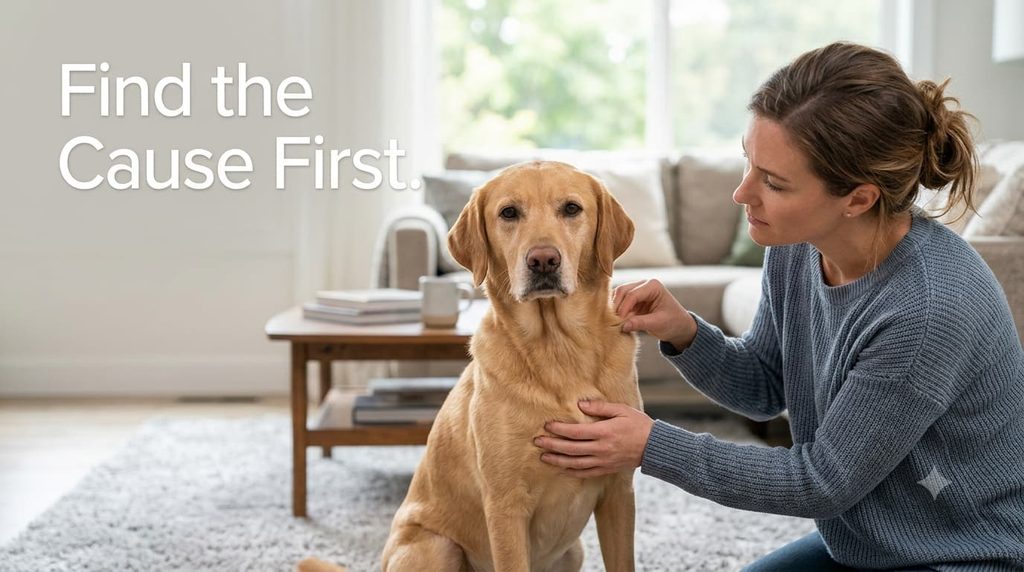
There’s no single treatment for every case because hair loss is a symptom, not one specific disease. The right treatment depends on what’s causing it.
For now, you can:
- Check your dog’s coat and skin regularly.
- Keep up with your veterinarian-recommended parasite prevention.
- Make sure your dog’s regular diet is complete and balanced.
- Avoid randomly applying human creams or medications.
- Don’t aggressively scratch or pick at irritated skin.
- Take a clear photo if the bald area is changing.
If your dog is constantly scratching or the hair loss is getting worse, it’s better to have the underlying cause identified rather than simply trying different shampoos or supplements.
If your dog is also unusually nervous or fearful, our guide Why Is My Dog Afraid of Everything? explains some common causes of fear and anxiety.
How Do Vets Find the Cause?
When a dog is losing hair, a veterinarian will usually look at where the hair is missing, whether your dog is itchy, and what the skin looks like. They may also ask when the problem started and whether anything changed recently.
Depending on what they find, testing may be needed to look for things such as parasites, infections, or hormonal problems. Skin scrapings and other diagnostic tests can sometimes help identify the cause.
This is important because two dogs can have very similar-looking bald spots but completely different underlying problems.
When Should You Worry About Your Dog Losing Hair?

You don’t necessarily need to panic when you notice extra fur around your home. But new or unexplained hair loss deserves attention, particularly when your dog also seems uncomfortable.
Contact your veterinarian if you notice:
- Sudden or rapidly worsening hair loss
- Large or multiple bald patches
- Severe itching or constant licking
- Red, painful, or infected-looking skin
- Bleeding, discharge, or a strong odor
- Hair loss together with unusual tiredness or appetite changes
- Repeated skin problems that keep returning
The American Kennel Club also recommends veterinary evaluation when a dog develops thinning fur, bald spots, or irritated skin rather than assuming it’s simply excessive shedding.
Quick Guide to Dog Hair Loss
| What you notice | Possible clue | Best next step |
|---|---|---|
| Fur everywhere but no bald spots | Normal shedding may be likely | Regular grooming |
| Bald patches + itching | Parasites or allergies may be involved | Veterinary evaluation |
| Red or flaky skin | Skin disease or infection is possible | Contact your vet |
| Symmetrical thinning | Hormonal or other non-itchy causes possible | Veterinary examination |
| Sudden hair loss + other symptoms | Underlying illness may need investigation | Contact your vet |
A simple rule to remember
Shedding is usually about losing loose fur. Hair loss is about losing the coat in an unusual pattern.
If you’re looking at your dog and thinking, “This doesn’t look like normal shedding,” trust that observation and get the skin and coat checked.
Frequently Asked Questions
Why is my dog losing hair but not itching?
Hair loss without itching can sometimes be linked to hormonal conditions, genetics, nutritional issues, or certain skin disorders. The pattern of hair loss is important, so unexplained bald or thinning areas should be checked by a veterinarian.
Why is my dog losing hair in patches?
Patchy hair loss can happen with fleas, mites, allergies, fungal infections, or repeated scratching and licking. Because several different problems can look similar, it’s better not to assume the cause from appearance alone.
Why is my dog losing hair and getting bald spots?
Bald spots aren’t usually the same as normal seasonal shedding. Parasites, infections, allergies, hormonal problems, and other skin conditions can cause noticeable bald areas.
Can stress cause a dog to lose hair?
Stress can contribute to hair loss when a dog repeatedly licks, chews, or scratches their coat. However, medical causes should also be considered if the hair loss is persistent.
Will my dog’s hair grow back?
In many cases, hair can grow back once the underlying problem is identified and treated. However, regrowth depends on the cause and whether the hair follicles have been affected.
Conclusion
If you’re wondering why is my dog losing hair, don’t immediately assume it’s just normal shedding. Look at the pattern, check the skin underneath, and pay attention to whether your dog is scratching, licking, or showing other changes.
Sometimes the cause is relatively simple, such as seasonal shedding or fleas. Other times, hair loss can point toward allergies, infections, hormonal problems, or another underlying condition.
The important thing is to treat the cause rather than just the missing fur. If the hair loss is sudden, spreading, creating bald patches, or happening alongside irritated skin or other symptoms, getting your dog checked by a veterinarian is the safest next step.