
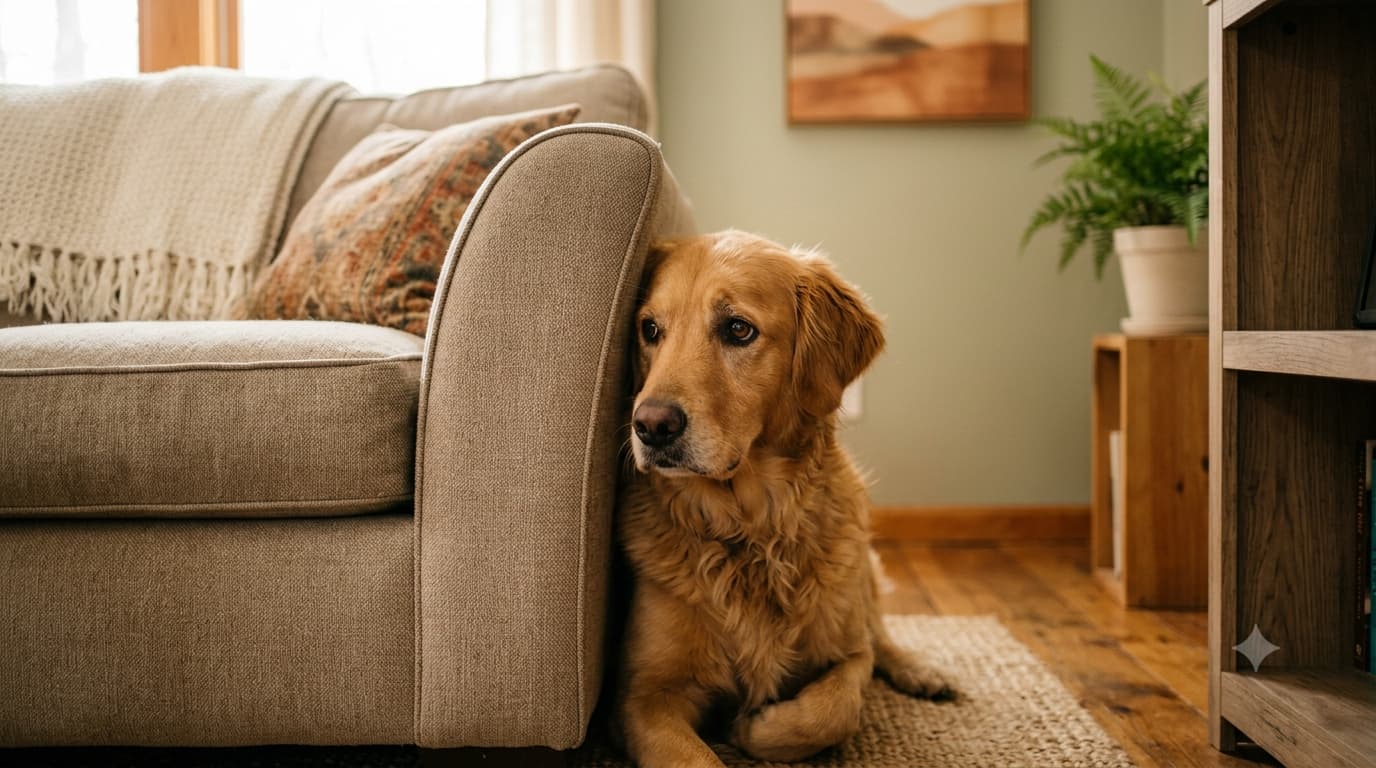
If your dog suddenly disappears under the bed, hides behind the sofa, or quietly stays in another room, it’s natural to wonder what happened.
I’ve seen how worrying this can feel for a dog owner. You start thinking, “Why is my dog hiding? Is something wrong?”
Sometimes, your dog simply wants some quiet time. But sudden hiding can also happen because of fear, stress, pain, or a change in their surroundings.
The key is to notice when your dog hides and what else has changed.
Table of Contents
Quick Answer
Why is my dog hiding? Dogs may hide because they feel scared, stressed, anxious, tired, or uncomfortable. Loud noises, unfamiliar people, changes at home, illness, or pain can all cause hiding. If hiding is sudden or continues alongside other unusual symptoms, it’s worth paying closer attention.
First, think about:
- When did the hiding start?
- Did anything change at home?
- Is your dog eating and drinking normally?
- Are they acting normally when they come out?
- Are there any signs of pain or illness?
7 Common Reasons Your Dog May Be Hiding
1. Your Dog Is Feeling Scared
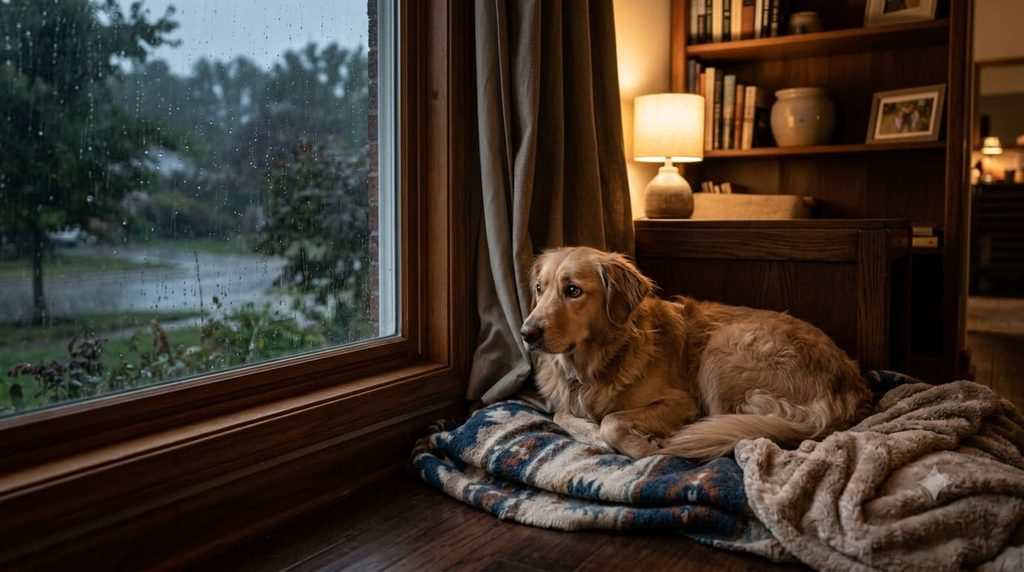
A frightened dog may look for a quiet, enclosed place where they feel protected.
Thunderstorms, fireworks, construction sounds, or even a new loud appliance can make some dogs retreat.
You may notice:
- Trembling
- Pacing
- Ears held back
- Tail tucked
- Trying to stay close to hiding spots
If you know what frightened your dog, remove the trigger when possible and give them a calm, safe area.
For more information about recognizing fear and anxiety in dogs, the American Kennel Club has helpful resources on dog behavior and body language.
2. Something Has Changed at Home
Dogs often notice changes that we barely think about.
A new piece of furniture, visitors, a new pet, moving homes, or changes in your daily routine can make a sensitive dog feel unsettled.
If the hiding started after a recent change, give your dog time to adjust.
3. Your Dog Wants Some Alone Time
Not every hiding episode means something is wrong.
Sometimes dogs simply want a peaceful place to rest, especially after a busy day.
If your dog comes out normally, eats well, plays, and behaves like themselves, occasional hiding may simply be their way of finding a quiet spot.
4. Your Dog May Be Stressed or Anxious
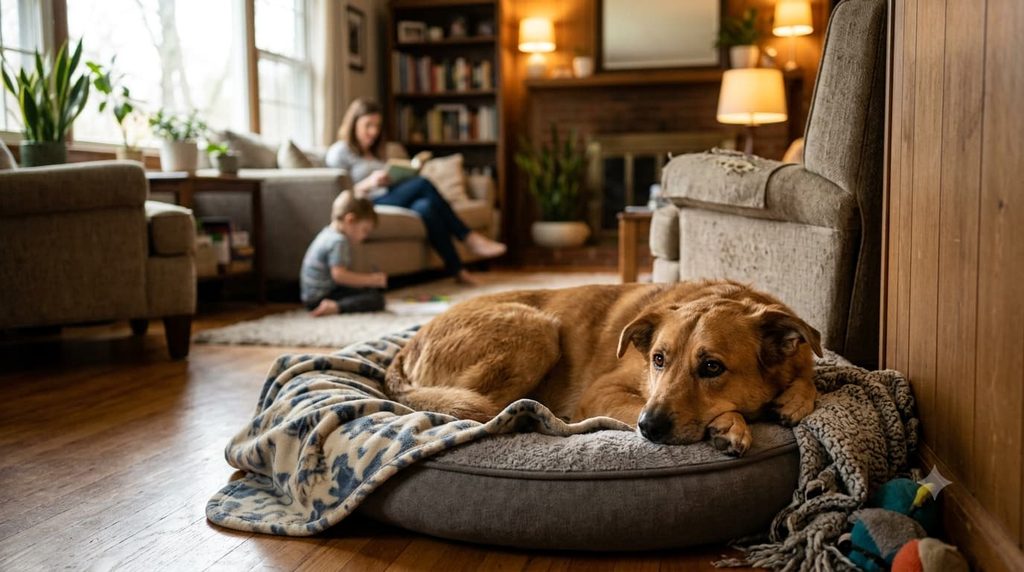
Stress can show up in many different ways, and hiding is one of them.
Your dog may also:
- Whine or bark more than usual
- Lick their lips frequently
- Pace around the house
- Avoid certain people
- Have trouble settling down
Try keeping their daily routine predictable and giving them a comfortable place where they can relax without being disturbed.
Stress can also show up through whining, especially when a dog feels unsettled or anxious. If your dog is doing this too, read our guide on Why Is My Dog Whining?
5. Your Dog Could Be in Pain
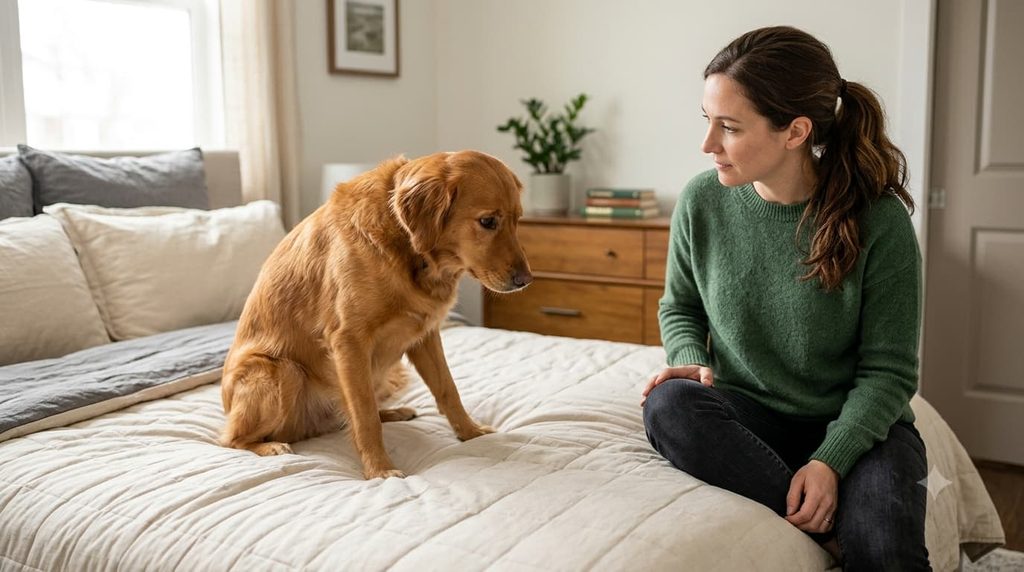
This is one reason I wouldn’t ignore sudden hiding.
Dogs sometimes become quiet or isolate themselves when they’re uncomfortable. They may hide because they don’t feel like interacting.
Pay attention to signs such as:
- Limping
- Difficulty getting up
- Changes in appetite
- Whining when touched
- Unusual posture
- Sleeping much more than normal
If hiding is accompanied by these changes, contacting your veterinarian is a good idea.
If hiding is happening along with restlessness or unusual nighttime behavior, our guide on Why Is My Dog Panting at Night? may help you understand what else to watch for.
6. Your Dog Doesn’t Feel Well
Dogs can behave differently when they’re sick.
Hiding may happen alongside changes in eating, drinking, energy, bathroom habits, or general behavior.
Don’t focus only on the hiding itself. Look at the whole picture.
7. Your Dog Is Looking for a Safe Place
Dogs naturally seek places where they feel secure.
A quiet corner, crate, space under furniture, or another familiar area can become their personal retreat.
There’s nothing wrong with allowing your dog to have a safe space as long as they’re otherwise healthy and behaving normally.
Not every hiding dog is experiencing the same thing. This quick table can help you compare the most common reasons and what you can do next.
Common Reasons Dogs Hide
| Reason | Common Signs | What You Can Do |
|---|---|---|
| Fear | Trembling, tucked tail, avoiding noise | Give your dog a quiet, safe space |
| Change at home | Hiding after visitors, moving, or a new pet | Keep their routine calm and predictable |
| Need for quiet | Otherwise eating, playing, and acting normally | Let your dog rest without disturbing them |
| Stress or anxiety | Pacing, whining, licking, avoiding people | Reduce triggers and provide a calm area |
| Pain | Limping, appetite changes, sensitivity to touch | Monitor closely and contact your vet if needed |
| Illness | Low energy, appetite or bathroom changes | Watch for other symptoms and seek veterinary advice |
| Seeking safety | Frequently choosing a familiar enclosed spot | Allow access to a safe, comfortable retreat |
In short, dog hiding isn’t always a sign that something is wrong. Your dog may simply want a quiet place, but sudden or persistent hiding—especially with changes in appetite, energy, movement, or behavior—deserves closer attention.
Should You Pull Your Dog Out of Hiding?
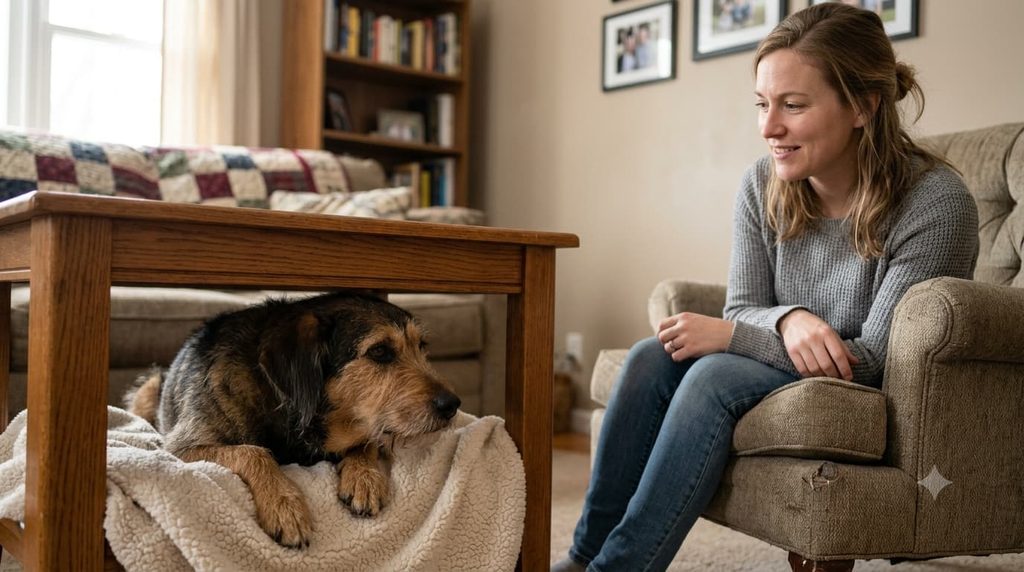
Usually, don’t force your dog out unless there’s an immediate safety concern.
Instead:
- Give them some space.
- Speak calmly.
- Remove obvious stress triggers.
- Keep food and water accessible.
- Let them come out on their own when possible.
- Watch for other unusual symptoms.
Trying to drag a frightened or uncomfortable dog from their hiding place can make them feel even less secure.
What Should You Do If Your Dog Is Hiding?
The best response depends on why your dog is hiding. If they’re frightened, giving them a quiet place may be much more helpful than repeatedly calling them out.
Try these simple steps:
- Keep your voice calm and gentle.
- Give your dog access to a comfortable safe space.
- Reduce loud noises or other obvious triggers.
- Keep their normal feeding and walking routine.
- Put fresh water nearby.
- Let your dog approach you rather than forcing interaction.
If your dog comes out after some time and returns to their normal behavior, that’s generally reassuring.
Don’t Punish Your Dog for Hiding
If you’re wondering why is my dog hiding, punishment should not be part of the solution.
Hiding is often a sign that your dog doesn’t feel completely comfortable in that moment. Scolding them can increase their fear and make them more likely to hide again.
Instead, try to make their environment feel predictable and safe.
When Should You Worry About Your Dog Hiding?
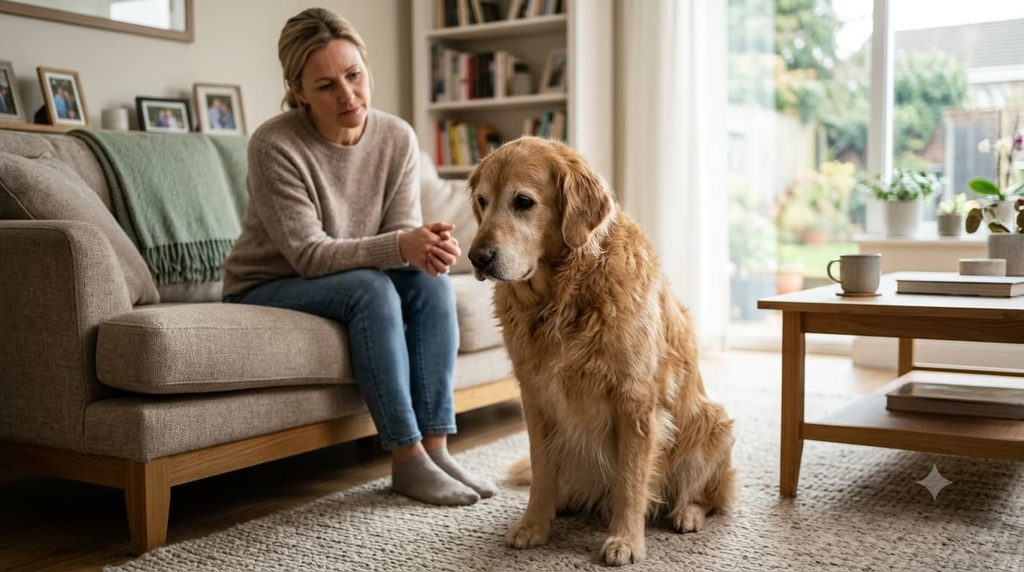
Occasional hiding isn’t necessarily a problem. Sudden or persistent hiding, however, deserves more attention.
It’s especially important to contact your veterinarian if your dog is hiding and you also notice:
- Refusing food or water
- Vomiting or diarrhea
- Limping or difficulty moving
- Unusual tiredness
- Whining or crying
- Trouble breathing
- Signs of pain
- A major change in normal behavior
A dog that suddenly isolates themselves after being social and active may be telling you that something has changed.
What If My Dog Is Hiding All of a Sudden?
If your dog is hiding all of a sudden, first think about anything that happened shortly before the behavior started.
For example:
- Was there a loud noise?
- Did a stranger visit?
- Did you move something around the house?
- Was your dog recently handled or groomed?
- Did you notice any physical symptoms?
Finding the trigger can give you a much better idea of what your dog needs.
Frequently Asked Questions
Why is my dog hiding under the bed?
Your dog may see the space under the bed as a quiet, protected place. Fear, stress, tiredness, or discomfort can also make dogs seek enclosed spaces.
Why is my dog hiding from me?
A dog may hide from someone because they’re scared, stressed, uncomfortable, or simply looking for quiet time. If this behavior is sudden, watch for other changes.
Should I let my dog hide?
Yes, if the area is safe and your dog is otherwise healthy. Giving them a calm retreat can help them feel secure.
Why is my dog hiding and not eating?
Hiding combined with a loss of appetite is more concerning than hiding alone. If your dog refuses food or shows other symptoms, contact your veterinarian.
Why is my dog suddenly hiding in another room?
A new noise, change in the home, stress, fear, or physical discomfort could be responsible. Look for what changed around the time the hiding began.
Conclusion
So, why is my dog hiding? Sometimes your dog simply needs a quiet place to relax. Other times, hiding can be a sign of fear, stress, pain, or illness.
The most useful thing you can do is look at the whole behavior, not just the hiding.
Give your dog space, look for possible triggers, and pay attention to any other changes. If the hiding is sudden, persistent, or accompanied by concerning symptoms, getting veterinary advice is the safest choice.
3 thoughts on “Why Is My Dog Hiding? 7 Common Reasons & Important Warning Signs”