
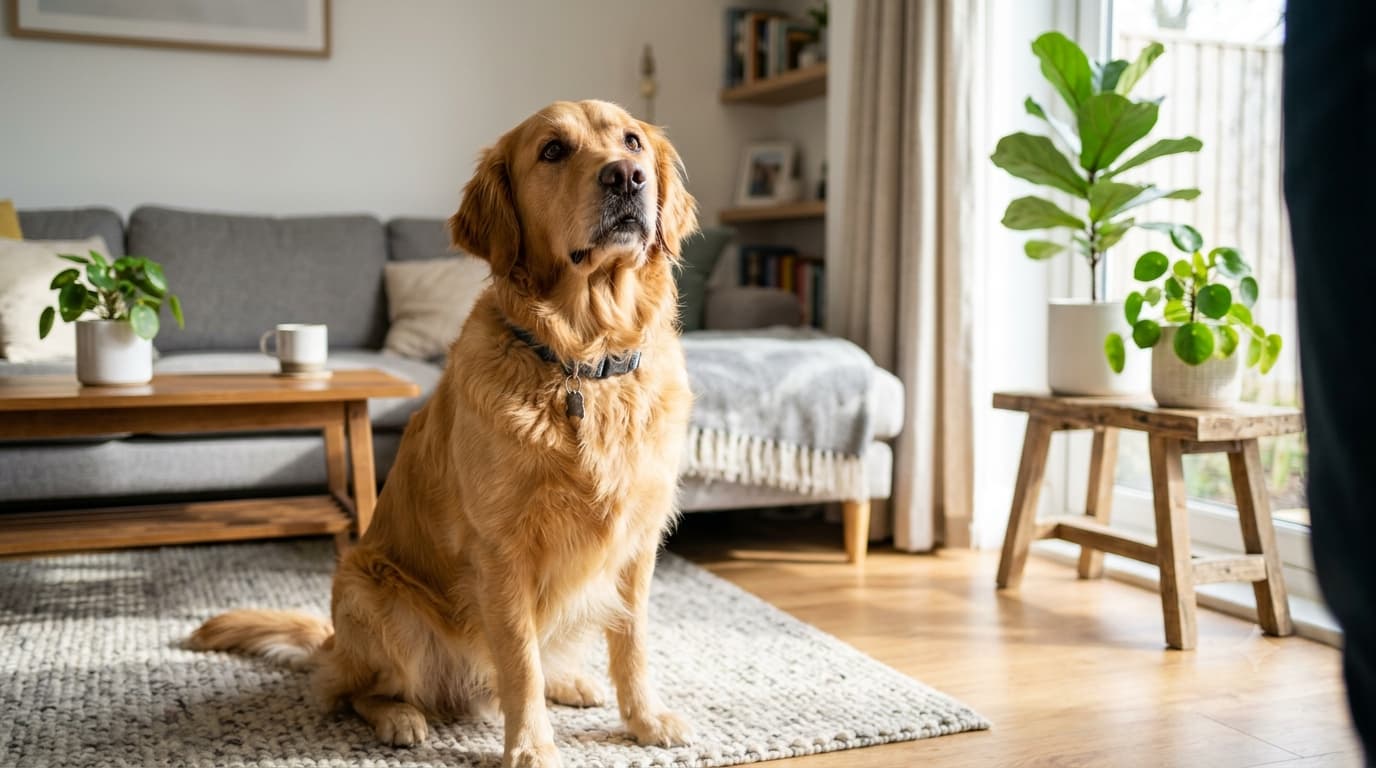
Dogs cannot speak with words, so they communicate through body language, barking, and whining. While occasional whining is completely normal, frequent or sudden whining can leave many dog owners worried.
If you’ve been asking yourself, “Why is my dog whining?”, you’re not alone. Whining is one of the most common ways dogs express their emotions, physical discomfort, or unmet needs. Sometimes your dog simply wants attention, while other times whining may signal pain, anxiety, fear, or an underlying medical issue.
The good news is that most causes of whining can be identified by observing your dog’s behavior and understanding the context in which it occurs.
In this guide, you’ll learn the most common reasons dogs whine, when it’s normal, when it’s a medical emergency, and how you can help your furry friend feel better.
Table of Contents
Quick Overview
| Situation | Possible Cause | What You Should Do |
|---|---|---|
| Whining while looking at you | Wants attention | Spend quality time together |
| Whining before meals | Hungry | Feed on a regular schedule |
| Whining near the door | Needs bathroom | Take your dog outside |
| Whining after exercise | Pain or injury | Monitor closely or visit a veterinarian |
| Whining during storms | Anxiety | Create a calm, safe environment |
| Whining at night | Fear, loneliness, illness | Identify the cause before comforting |
| Senior dog whining | Aging or cognitive decline | Schedule a veterinary checkup |
1. Your Dog Wants Attention
One of the most common answers to why is my dog whining is that it simply wants your attention.
Dogs are social animals that thrive on interaction. If they feel ignored or lonely, they may whine while staring at you, pawing at your leg, or following you around the house.
This behavior often develops because whining has worked before. If you’ve been asking why is my dog whining, consider whether your dog receives attention, treats, or playtime immediately after whining. Dogs quickly learn that whining gets results.
Signs
- Looking directly at you
- Wagging tail
- Bringing toys
- Pawing your leg
- Stops whining once you respond
What You Should Do
Instead of rewarding whining immediately, wait until your dog becomes calm before giving attention. This teaches that calm behavior—not whining—earns rewards.
📌 Related Reading
Related: Why Is My Dog Staring at Me?
Your dog may stare and whine at the same time because both are ways of communicating a need or emotion.
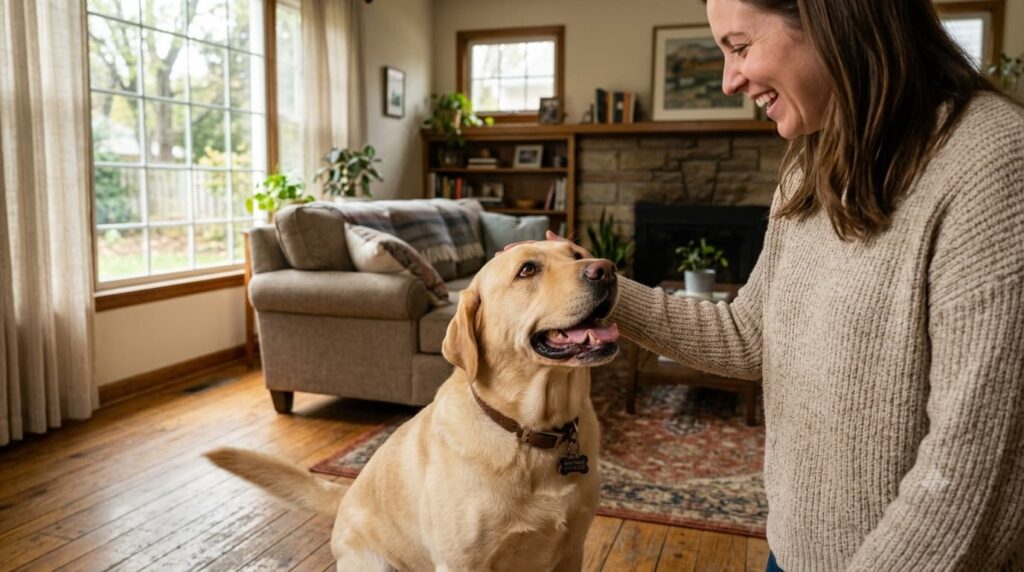
2. Your Dogs Needs to Go outside
Sometimes the answer is surprisingly simple. If you’re wondering, why is my dog whining, it may simply need to go outside for a bathroom break.
Your dog may be whining because it urgently needs to urinate or have a bowel movement.
Many house-trained dogs learn to communicate by standing near the door, pacing, scratching, or whining when they need a bathroom break. If you’ve been asking why is my dog whining every time it stands near the door, this is often the most common and easiest explanation.
If this behavior happens around the same times every day, it’s likely a normal bathroom request rather than a behavioral problem.
Signs
- Standing near the door
- Walking in circles
- Sniffing the floor
- Restlessness
- Sudden whining
Solution
Take your dog outside promptly and reward successful bathroom behavior. Maintaining a consistent potty schedule can reduce unnecessary whining.
3. Hunger or Thirst
Dogs may also whine when they’re hungry or thirsty, especially if mealtime is delayed. If you’re wondering, why is my dog whining, hunger or thirst could be one of the simplest explanations.
Puppies, active breeds, and dogs with high energy levels often become vocal when they expect food.
Before assuming your dog is simply begging, make sure fresh water is always available and meals are served on a consistent schedule. If you frequently ask why is my dog whining around feeding time, try following a consistent meal routine before offering extra treats.
Avoid feeding extra treats every time your dog whines, as this can reinforce unwanted behavior.
4. Anxiety or Stress
Just like humans, dogs experience anxiety. If you’re wondering, why is my dog whining, anxiety caused by changes in their environment or daily routine could be the reason.
Changes such as moving to a new home, loud fireworks, thunderstorms, travel, or being left alone can all trigger excessive whining.
An anxious dog may also pant, pace, tremble, or hide.
Helping your dog feel safe through routine, gentle reassurance, and gradual desensitization can significantly reduce anxiety-related whining.
📍Expert Tip
Whining that occurs together with limping, vomiting, difficulty breathing, weakness, or sudden behavior changes should never be ignored. Contact your veterinarian as soon as possible, as these signs may indicate pain or a serious medical condition.
5. Pain or Injury Could Be the Reason
If you’re wondering, why is my dog whining all of a sudden, pain should always be one of the first possibilities to consider. Even calm dogs may begin whining constantly when they are uncomfortable.
Pain can result from a sprain, arthritis, dental disease, stomach discomfort, or an injury that isn’t immediately visible. Some dogs hide pain very well, making dog whining due to pain one of the earliest warning signs.
Watch for These Symptoms
- Limping or avoiding movement
- Difficulty standing or climbing stairs
- Crying when touched
- Loss of appetite
- Excessive licking of one area
- Sudden personality changes
If your dog keeps whining along with any of these symptoms, contact your veterinarian as soon as possible instead of trying home remedies.
6. Separation Anxiety
Another common answer to why is my dog whining is separation anxiety.
Dogs form strong emotional bonds with their families. When left alone, some become anxious and express their stress through whining, barking, pacing, or destructive behavior.
Signs include:
- Whining immediately after you leave
- Scratching at doors
- Excessive barking
- Chewing furniture
- Restlessness
To help reduce anxiety:
- Practice short departures and gradually increase the time away.
- Leave interactive toys or puzzle feeders.
- Avoid making departures and arrivals overly emotional.
📌 Related Reading
Related: Why Is My Dog Follow Me Everywhere?
Dogs that follow their owners everywhere often develop separation anxiety more easily, so reading both articles helps you better understand your dog’s behavior.
7. Excitement or Anticipation
Not every case of dog whining is caused by fear or illness.
Many dogs whine when they’re excited about:
- Going for a walk
- Meeting visitors
- Playing fetch
- Seeing another dog
- Riding in the car
In these situations, whining is simply an expression of excitement.
The best approach is to wait until your dog calms down before rewarding them with the activity they want. This prevents excitement from turning into a long-term habit.
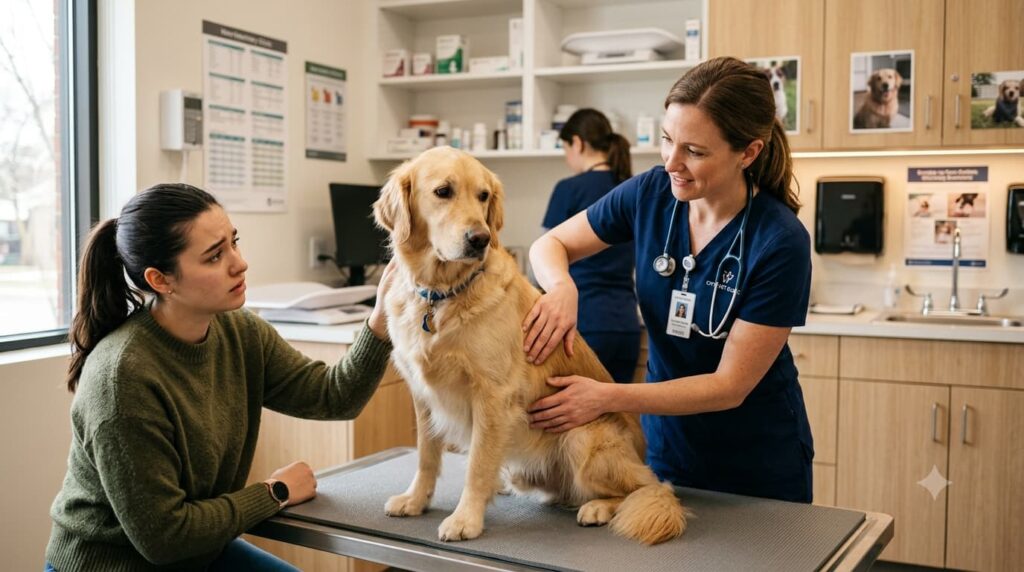
8. Why Is My Puppy Whining?
If you’re asking, why is my puppy whining, remember that puppies are still learning how to communicate.
Puppies commonly whine because they are:
- Missing their mother or littermates
- Hungry or thirsty
- Overtired
- Afraid of a new environment
- Learning crate training
Most puppies gradually outgrow excessive whining as they become comfortable with their new home and routine.
9. Senior Dog Whining
Senior dog whining is fairly common as dogs age.
Older dogs may develop:
- Arthritis
- Vision or hearing loss
- Cognitive Dysfunction Syndrome (similar to dementia)
- Chronic pain
If your senior dog has recently started whining more often, schedule a veterinary examination. Early diagnosis can improve your dog’s comfort and quality of life.
10. Dog Whining at Night
Many owners ask, why is my dog whining at night?
Nighttime whining may occur because your dog:
- Needs a bathroom break
- Feels lonely
- Hears unfamiliar sounds
- Has anxiety
- Is experiencing pain
If dog whining at night becomes frequent or is accompanied by other unusual symptoms, don’t ignore it.
When Should You See a Veterinarian?
Although occasional whining is usually normal, seek veterinary care immediately if your dog has:
- Continuous whining that lasts for hours
- Difficulty breathing
- Vomiting or diarrhea
- Refusal to eat or drink
- Severe lethargy
- Swollen abdomen
- Trouble walking
- Crying when touched
These symptoms may indicate a medical emergency requiring prompt treatment.
Frequently Asked Questions (FAQs)
Why is my dog whining all of a sudden?
Sudden whining can be caused by pain, anxiety, hunger, excitement, illness, or the need to go outside. Observe your dog’s behavior and contact your veterinarian if the whining is persistent or accompanied by other symptoms.
Should I ignore my dog’s whining?
Not always. If your dog is whining for attention, rewarding calm behavior is often helpful. However, never ignore whining if you suspect pain, illness, or distress.
Why does my dog keep whining even after eating?
If your dog keeps whining after eating, they may be anxious, uncomfortable, seeking attention, or experiencing an underlying medical issue. Persistent whining should be evaluated by a veterinarian.
Is dog whining normal?
Yes. Occasional whining is a normal form of communication. Excessive or sudden whining, however, should be investigated.
Why Is My Dog Whining for Seemingly No Reason?
Dogs may whine because they’re seeking attention, feeling anxious, bored, uncomfortable, or trying to communicate a need. If the whining is sudden or persistent, consider checking with a veterinarian.
Is My Dog Crying or Just Whining?
Dogs don’t usually cry tears because of emotions like humans do. Whining is a vocal behavior dogs use to express needs, discomfort, anxiety, or excitement.
How Do I Tell If My Dog Is Whining Because of Pain?
Pain-related whining may occur with limping, restlessness, reduced appetite, or avoiding touch. If the whining is sudden or persistent, a veterinarian should check your dog.
When Should I Worry About Dog Whining?
Worry if whining is sudden, persistent, or accompanied by pain, illness, anxiety, or unusual behavior. If you notice these changes, it’s best to consult a veterinarian.
Conclusion
If you’ve been asking, why is my dog whining, remember that whining is your dog’s way of communicating rather than simply making noise.
Whether it’s dog whining for attention, dog whining at night, why is my puppy whining, or senior dog whining, the key is to observe your dog’s overall behavior, identify possible triggers, and respond appropriately.
Most cases improve with proper training, routine, and understanding. However, if your dog keeps whining, shows signs of pain, or experiences sudden behavioral changes, don’t delay seeking professional veterinary care.
By understanding why is my dog whining, you’ll be better prepared to meet your dog’s emotional and physical needs, helping them live a happier, healthier life.
3 thoughts on “Why Is My Dog Whining All of a Sudden? 10 Common Reasons and What You Should Do”