
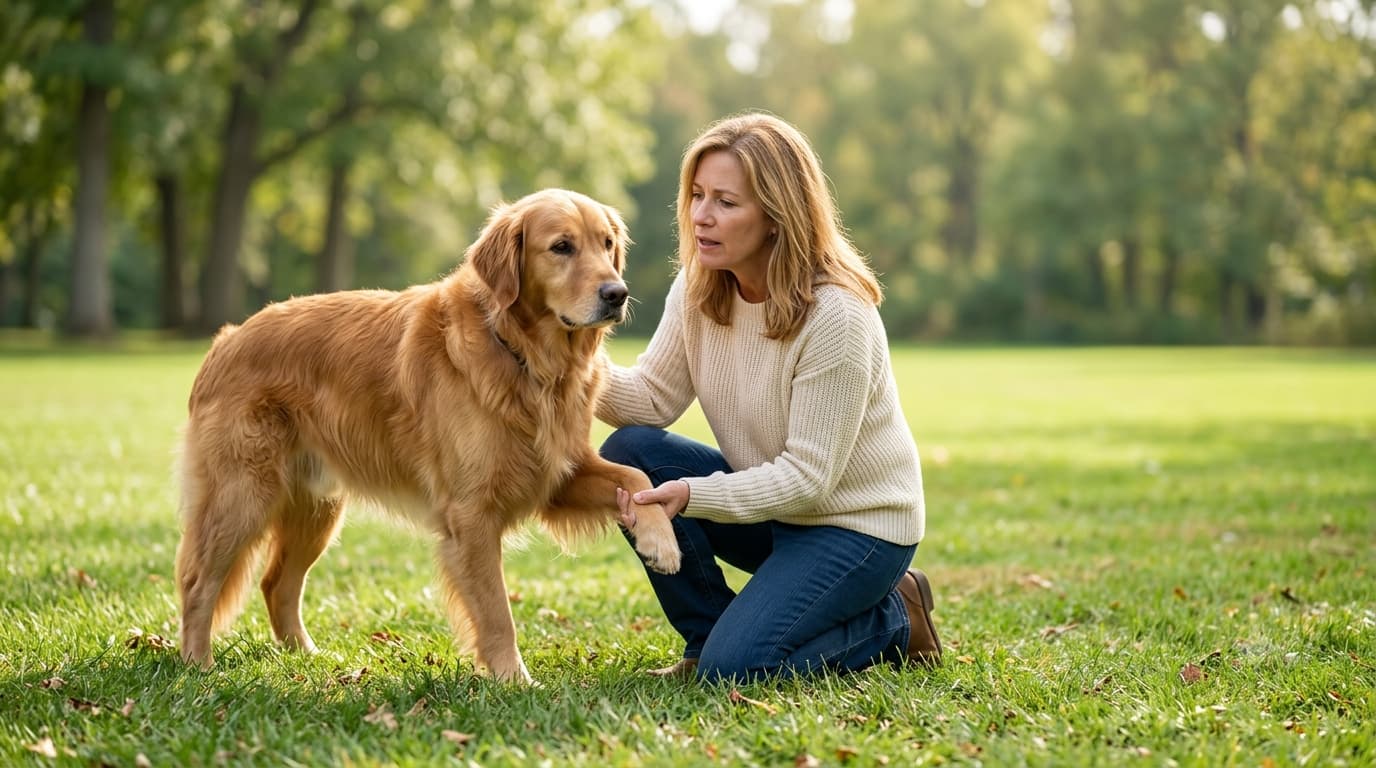
Have you ever watched your dog happily running around one minute, only to notice them limping the next?
It’s one of those moments that instantly makes every dog owner stop and wonder:
“Why is my dog limping? Did they just twist a paw, or could this be something serious?”
The truth is, why is my dog limping is one of the most common questions veterinarians hear every day. While some dogs recover after a little rest, others may be trying to tell you they’re dealing with pain, an injury, arthritis, or even a hidden medical condition.
The difficult part is that dogs can’t tell us exactly where it hurts.
Some continue wagging their tails even when they’re in pain. Others suddenly refuse to walk, climb stairs, or jump onto the couch. That’s why understanding the reason behind your dog’s limp is so important.
The good news?
Not every limp is an emergency. A small pebble stuck in a paw is very different from a broken bone or a torn ligament. Knowing the warning signs can help you decide whether your dog simply needs a day of rest—or immediate veterinary care.
In this guide, you’ll discover why is my dog limping, the 11 most common causes, warning signs you should never ignore, simple home care tips, and exactly when it’s time to call your veterinarian.
Table of Contents
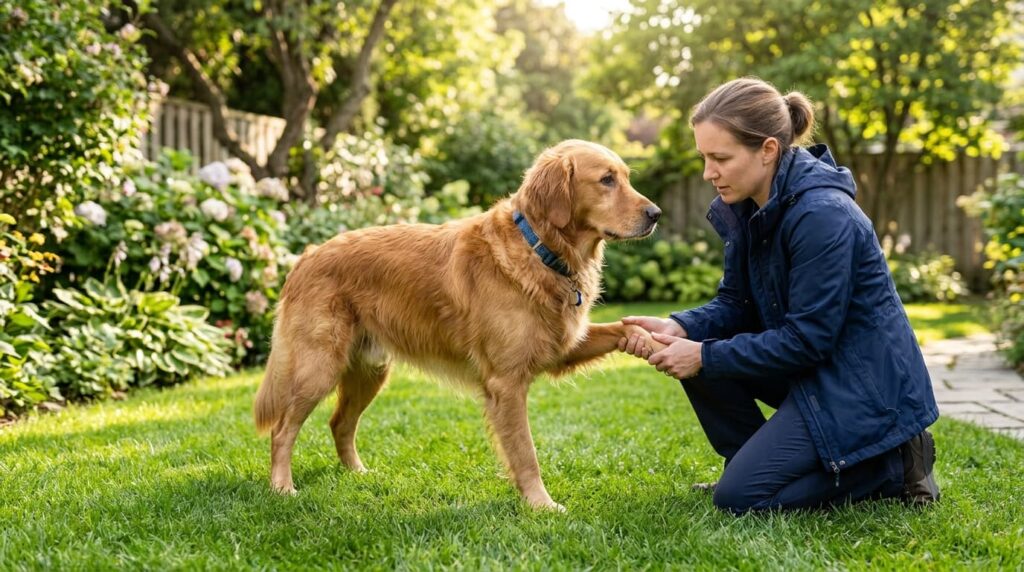
Is Limping Always Serious?
Not necessarily.
Sometimes why is my dog limping has a simple explanation, like stepping on a sharp object during a walk.
Other times, limping may signal joint disease, muscle injuries, infections, or fractures that require prompt treatment.
A helpful rule is this:
- Sudden limping usually points to an injury or accident.
- Gradual limping often develops because of arthritis or joint disease.
If your dog refuses to put any weight on one leg, cries in pain, or the limp lasts longer than 24–48 hours, it’s safest to have them examined by a veterinarian.
🐾 Vet Tip: Never give your dog human painkillers like ibuprofen or diclofenac. Many human medications are toxic to dogs and can cause serious complications.
1. A Small Paw Injury
One of the most common answers to why is my dog limping is also one of the easiest to miss.
Dogs often step on:
- Sharp stones
- Glass fragments
- Thorns
- Splinters
- Hot pavement
- Ice or road salt
Even a tiny cut between the paw pads can make walking painful.
Quick Check
Gently inspect your dog’s paw for:
- Cuts
- Swelling
- Bleeding
- Foreign objects
- Torn nails
If you find a small injury, clean it carefully and keep the paw dry. If bleeding doesn’t stop or something is deeply embedded, contact your veterinarian.
2. Muscle Strain or Sprain
Just like athletes, active dogs can pull muscles or strain ligaments.
Your dog may begin limping after:
- Running too hard
- Jumping from furniture
- Playing fetch
- Hiking
- Slipping on smooth floors
Signs include:
- Mild limping
- Slight swelling
- Pain after activity
- Improvement after resting
Most mild sprains improve with restricted activity, but severe injuries should always be examined professionally.
3. Torn or Broken Nail
Many owners searching why is my dog limping are surprised to discover the problem isn’t the leg at all—it’s a damaged toenail.
A cracked or torn nail can be extremely painful because it exposes sensitive tissue.
Common Signs
- Constant licking of one paw
- Bleeding
- Holding one foot off the ground
- Pain when the nail is touched
Never pull off a partially attached nail yourself. If the nail is badly damaged, let your veterinarian treat it safely.
4. Arthritis (Very Common in Older Dogs)
If your senior dog has been limping more often, arthritis may be the reason.
Arthritis causes inflammation inside the joints, making movement painful and stiff.
Common Symptoms
- Limping after resting
- Difficulty standing up
- Trouble climbing stairs
- Less interest in walks
- Slower movement
Although arthritis can’t be completely cured, early treatment can significantly improve your dog’s comfort and quality of life.
🟦 Don’t Ignore This
If your dog suddenly starts limping and also shows any of these symptoms, don’t wait:
- ❗ Refuses to bear weight on one leg
- ❗ Loud crying when walking
- ❗ Heavy swelling
- ❗ Visible bone deformity
- ❗ Continuous bleeding
These signs may indicate a fracture or serious injury requiring immediate veterinary care.
If your dog is limping and also shaking, it could be a sign of pain or injury.
👉 Link
Why Is My Dog Shaking? 11 Common Causes, Warning Signs & When to Call a Vet
✔ Quick Owner Checklist
Before moving to the next section, ask yourself:
- Did the limping start suddenly?
- Which leg is affected?
- Is your dog still willing to walk?
- Is there swelling or bleeding?
- Does your dog cry when you touch the leg?
The answers to these questions can help you—and your veterinarian—identify the cause much faster.
By now, you’ve learned that why is my dog limping isn’t always caused by a simple paw injury. Sometimes, the problem lies much deeper—in the joints, bones, or even the nervous system.
Let’s look at the next five common causes every dog owner should know.
5. Torn Cruciate Ligament (ACL Injury)
One of the most serious answers to why is my dog limping is a torn cranial cruciate ligament (CCL), often compared to an ACL injury in humans.
This injury usually happens when a dog suddenly twists while running, jumping, or playing.
Common Signs
- Sudden limping after exercise
- Refusing to put weight on one back leg
- Difficulty standing up
- Sitting with one leg stretched out
- Pain when walking
Large breeds such as Labrador Retrievers, Golden Retrievers, German Shepherds, and Rottweilers are more likely to develop this injury.
🐾 Vet Tip: A cruciate ligament injury rarely heals completely without veterinary treatment. Early diagnosis can prevent long-term joint damage.
6. Hip Dysplasia
If you’ve been wondering why is my dog limping, especially in a young large-breed dog, hip dysplasia could be the cause.
Hip dysplasia occurs when the hip joint doesn’t fit together properly. Over time, this leads to pain, inflammation, and arthritis.
Symptoms
- Limping after exercise
- Bunny hopping while running
- Difficulty climbing stairs
- Trouble getting up after lying down
- Less interest in walks
The earlier hip dysplasia is diagnosed, the more treatment options are available to improve your dog’s quality of life.
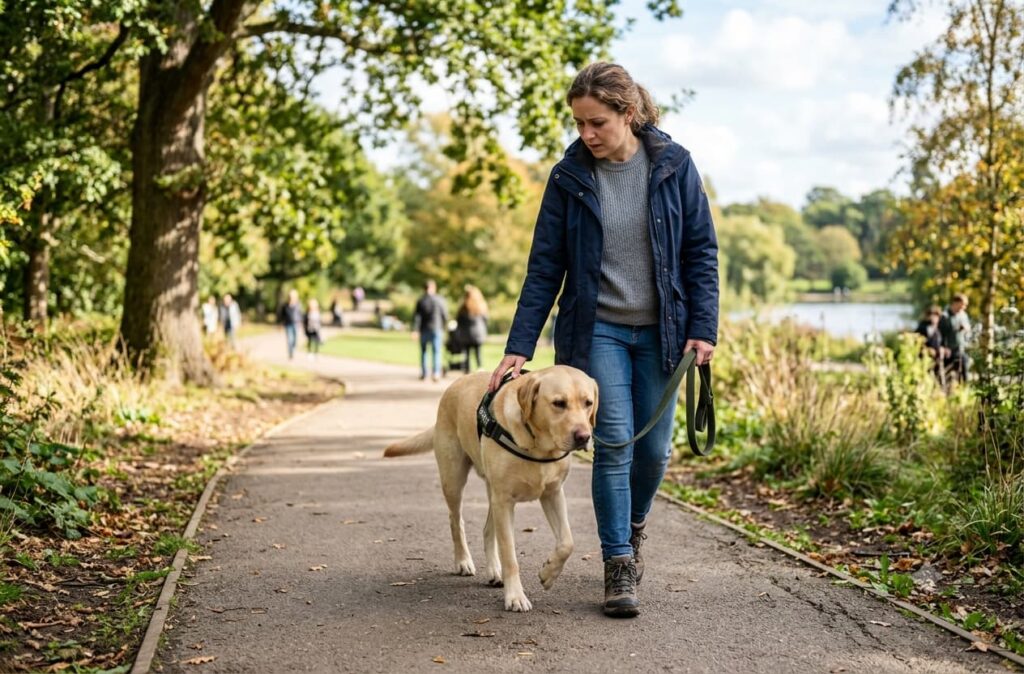
7. Bone Fracture or Dislocation
Another important reason why is my dog limping is a fracture or joint dislocation.
These injuries usually occur after:
- Falling from a height
- Being hit by a vehicle
- Rough play
- Serious accidents
Emergency Signs
- Severe swelling
- Leg hanging at an unusual angle
- Crying loudly
- Complete refusal to walk
- Visible deformity
🚨 Do not try to straighten the leg yourself. Keep your dog as still as possible and visit an emergency veterinarian immediately.
8. Insect Bites or Stings
Sometimes the answer to why is my dog limping is surprisingly simple.
A bee sting, wasp sting, ant bite, or spider bite can cause sudden pain and swelling in one paw.
Look for:
- Swollen paw
- Constant licking
- Redness
- Sudden limping after being outdoors
Most mild stings improve within a day, but if your dog develops facial swelling or difficulty breathing, seek emergency veterinary care immediately.
9. Joint Infection
Although less common, joint infections are another possible reason why is my dog limping.
Bacteria entering a joint through a wound or bloodstream can cause severe inflammation.
Symptoms
- Fever
- Swollen joints
- Pain when walking
- Loss of appetite
- Lethargy
Joint infections require prompt veterinary treatment because delaying care may permanently damage the joint.
Normal Limp vs Emergency Limp
| Situation | Usually Safe to Monitor | See a Veterinarian Immediately |
|---|---|---|
| Mild limp after playing | ✅ Yes | ❌ No |
| Small paw cut | ✅ Usually | ❌ Unless severe |
| Limping for more than 48 hours | ❌ No | ✅ Yes |
| Leg hanging abnormally | ❌ Never | 🚨 Emergency |
| Cannot bear weight at all | ❌ No | 🚨 Emergency |
| Limping with fever | ❌ No | ✅ Yes |
| Limping after a car accident | ❌ No | 🚨 Emergency |
🚨 Don’t Ignore These Warning Signs
Contact your veterinarian as soon as possible if your dog:
- Refuses to walk.
- Cries whenever the leg is touched.
- Has severe swelling.
- Develops a fever.
- Continues limping for more than two days.
- Starts limping more frequently over time.
Ignoring these symptoms may allow a minor problem to become much more serious.
10. Growth Plate Injuries (Common in Puppies)
If you’re asking why is my dog limping and your dog is still a puppy, the cause may be a growth plate injury.
Puppies have softer, developing bones that are more vulnerable to injury than adult dogs.
Jumping off furniture, rough play, or falling from stairs can damage these growth plates.
Common Signs
- Limping after playing
- Swelling around a leg
- Reluctance to run
- Crying when touched
- Difficulty standing
Because untreated growth plate injuries can affect bone development, it’s always best to have young dogs examined by a veterinarian.
11. Neurological Problems
Sometimes why is my dog limping isn’t caused by the leg itself.
Problems affecting the brain, spinal cord, or nerves can change the way a dog walks.
Possible neurological causes include:
- Spinal injuries
- Degenerative nerve disease
- Herniated discs
- Stroke (rare)
- Nerve damage
Warning Signs
- Dragging one leg
- Knuckling (walking on the top of the paw)
- Loss of balance
- Weakness
- Difficulty standing
Unlike a simple muscle injury, neurological problems often worsen without treatment.
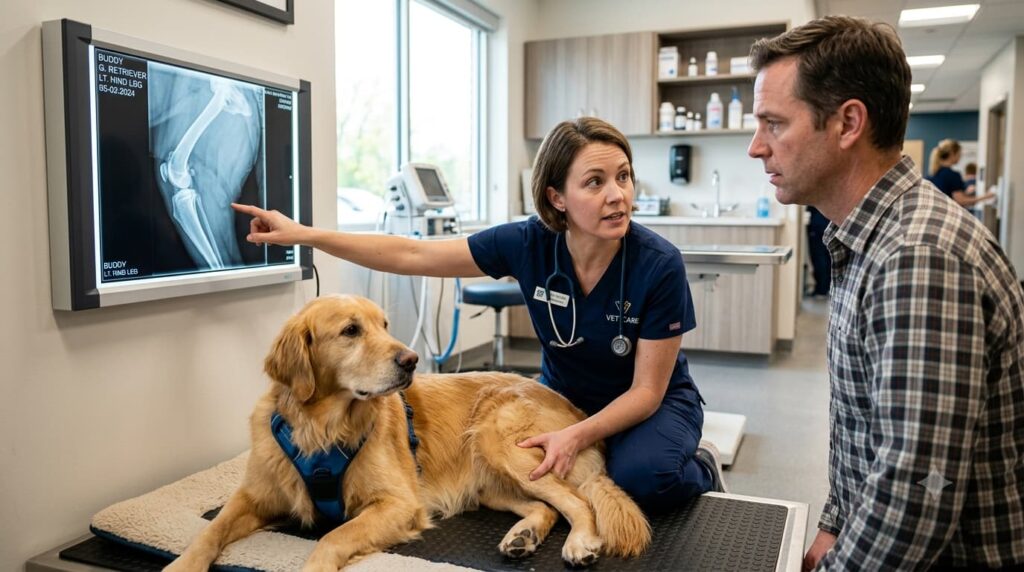
What Should You Do If Your Dog Is Limping?
If your dog suddenly starts limping, don’t panic—but don’t ignore it either.
✅ Monitor at Home If:
- The limp is mild.
- Your dog is still walking normally.
- There is no swelling or bleeding.
- The limp improves after resting.
Keep activity limited for the next 24–48 hours and avoid running or jumping.
🚨 Call Your Veterinarian If:
- Limping lasts longer than two days.
- Your dog refuses to bear weight.
- Swelling becomes worse.
- Your dog cries in pain.
- A fever develops.
- You suspect a fracture.
Prompt treatment often prevents minor injuries from becoming long-term problems.
How to Help Prevent Limping
Although accidents can’t always be avoided, these simple habits can lower your dog’s risk of injury.
✔ Maintain a healthy body weight.
✔ Keep nails trimmed.
✔ Walk on safe surfaces whenever possible.
✔ Avoid excessive jumping from beds or sofas.
✔ Exercise regularly—but don’t overdo it.
✔ Schedule routine veterinary checkups, especially for senior dogs.
Healthy joints today can mean a more active and comfortable life for your dog in the future.
Frequently Asked Questions
Why is my dog limping but not crying?
Dogs often hide pain. Even without crying, limping may indicate a sprain, arthritis, a paw injury, or another medical problem that deserves attention if it continues.
Should I let my dog rest if they are limping?
Yes. Mild limping after exercise may improve with rest. However, if the limp doesn’t improve within 24–48 hours or becomes worse, consult your veterinarian.
Can a dog limp heal on its own?
Minor muscle strains and small paw injuries sometimes heal naturally. Serious conditions like fractures, ligament tears, or infections require professional treatment.
When is limping considered an emergency?
Seek immediate veterinary care if your dog cannot bear weight, has severe swelling, a deformed leg, heavy bleeding, or shows signs of extreme pain.
Will a Dog Limp Heal on Its Own?
A mild limp may improve with rest, but persistent, worsening, or painful limping should be checked by a veterinarian. Sudden severe limping or inability to put weight on a leg needs prompt veterinary attention
When Should I Worry If My Dog Is Limping?
Worry if the limp is severe, lasts more than a day, gets worse, or your dog cannot put weight on the leg. Swelling, obvious pain, or other unusual symptoms also warrant a veterinarian’s evaluation.
What Do You Do When a Dog Is Limping?
Let your dog rest and limit running or jumping while you monitor the limp. If it persists, worsens, or your dog seems painful or unable to use the leg normally, contact a veterinarian.
Final Thoughts
If you’ve been wondering why is my dog limping, remember that limping is your dog’s way of telling you something isn’t right.
Sometimes the cause is minor, such as a small paw injury or muscle strain. Other times, limping may be linked to arthritis, ligament injuries, fractures, infections, or neurological conditions that require immediate medical attention.
The best thing you can do is observe your dog’s behavior carefully, check for visible injuries, and never ignore limping that persists or worsens.
When in doubt, an early visit to your veterinarian can make all the difference in your dog’s recovery and long-term health.
🔗 Trusted Veterinary Resource
For more expert information about limping, joint problems, and orthopedic conditions in dogs, visit the PetMD Dog Health Center.