

Imagine waking up early in the morning, walking into your kitchen, and finding a small puddle of yellow vomit on the floor. Your dog looks at you with innocent eyes, wagging its tail as if nothing happened. Naturally, your first thought is:
“Why is my dog vomiting yellow? Should I be worried?”
If you’ve experienced this, you’re far from alone.
Many dog owners panic the first time they see yellow vomit, assuming it’s always a sign of a serious illness. The truth is more complicated. Sometimes, yellow vomit is simply bile released from an empty stomach. Other times, it may be your dog’s way of warning you about digestive problems, pancreatitis, liver disease, intestinal blockage, or another condition that needs prompt veterinary care.
The challenge is that yellow vomit itself isn’t a diagnosis—it’s a symptom. Understanding what caused it is what truly matters.
In this complete guide, you’ll discover why is my dog vomiting yellow, the 11 most common causes, the warning signs you should never ignore, simple home care tips, and exactly when it’s time to call your veterinarian.
By the end of this article, you’ll know the difference between a situation you can safely monitor at home and one that requires immediate medical attention.
Table of Contents

What Does Yellow Vomit Mean in Dogs?
Before looking at the causes, it’s important to understand what the yellow liquid actually is.
In most cases, the yellow fluid your dog vomits is bile.
Bile is a digestive fluid produced by the liver and stored in the gallbladder. Its main job is to help break down fats after food leaves the stomach and enters the small intestine.
Normally, bile stays inside the digestive tract where it belongs.
However, if your dog’s stomach remains empty for too long or the digestive system becomes irritated, bile can flow back into the stomach. Because bile is highly acidic, it may irritate the stomach lining and trigger vomiting.
That’s why many dogs vomit yellow foam or yellow liquid early in the morning before breakfast.
But here’s something many websites don’t explain:
Yellow vomit doesn’t automatically mean an empty stomach.
It can also be associated with inflammation, intestinal disease, pancreatitis, parasites, food intolerance, liver problems, or even life-threatening emergencies.
This is exactly why understanding the whole picture—not just the color—is essential.
1. Empty Stomach (Bilious Vomiting Syndrome)
One of the most common answers to why is my dog vomiting yellow is something called Bilious Vomiting Syndrome (BVS).
This usually happens when your dog’s stomach stays empty for many hours, allowing bile to build up and irritate the stomach lining.
As a result, your dog may suddenly vomit yellow foam or yellow liquid before eating breakfast.
Common Signs
- Vomits yellow foam early in the morning
- Acts completely normal afterward
- Eats breakfast without problems
- Normal energy level
- No diarrhea or fever
For many healthy dogs, feeding a small meal before bedtime or dividing meals into smaller portions throughout the day may help reduce episodes. However, if vomiting becomes frequent or is accompanied by other symptoms, it should never be ignored.
Vet Insight: Even if yellow vomiting only happens occasionally, repeated episodes deserve a veterinary evaluation because several other conditions can look almost identical during the early stages.
🟢 Quick Owner Check
Ask yourself these questions:
✅ Did your dog vomit only once?
✅ Is your dog still eating normally?
✅ Is your dog drinking water?
✅ Is your dog active and playful?
If you answered yes to all four questions, the cause may be relatively mild—but you should continue monitoring your dog closely over the next 24 hours.
If the answer is no to any of them, continue reading because the next causes become increasingly important.
If your dog is vomiting yellow and refusing food, don’t ignore it.
👉 Read our detailed guide:
Why Is My Dog Not Eating? 11 Common Causes, Warning Signs & When to Call a Vet
2. Pancreatitis (A Serious Cause That Should Never Be Ignored)
If you’ve been searching “why is my dog vomiting yellow,” pancreatitis is one condition you should know about.
Pancreatitis is inflammation of the pancreas, an organ that helps digest food and regulate blood sugar. When it becomes inflamed, digestive enzymes can start damaging the pancreas itself instead of breaking down food.
One of the earliest signs is repeated vomiting—often yellow bile because the stomach is empty.
Dogs at Higher Risk
- Dogs fed high-fat table scraps
- Overweight dogs
- Senior dogs
- Miniature Schnauzers and some other breeds
Warning Signs
- Repeated yellow vomiting
- Severe stomach pain
- Refusing food
- Lethargy
- Diarrhea
- Hunched posture
🚨 Vet Insight: If your dog keeps vomiting yellow and refuses food for more than a few hours, don’t try to treat it only at home. Pancreatitis can become life-threatening without proper veterinary care.
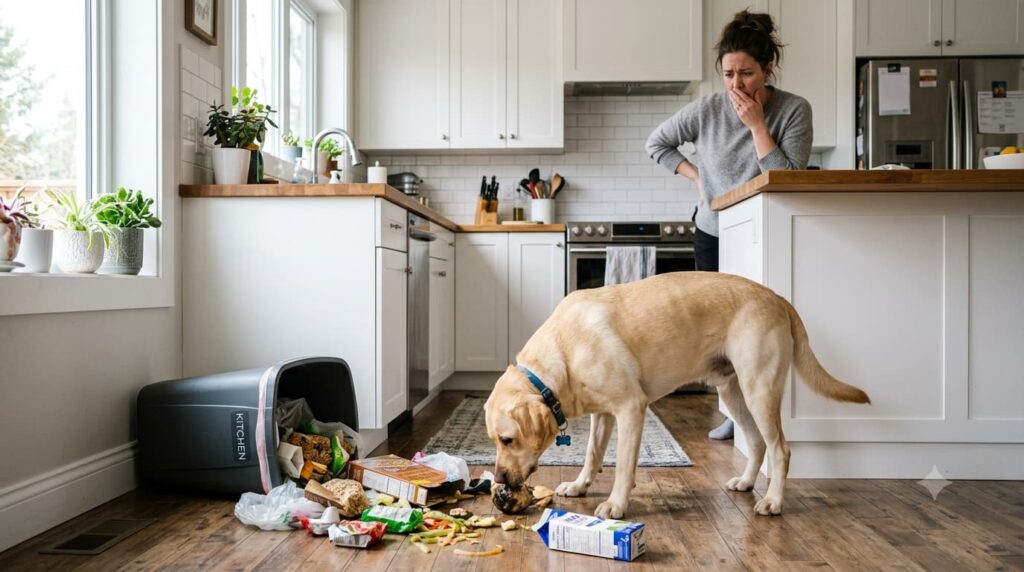
3. Dietary Indiscretion (Eating Something They Shouldn’t)
Let’s be honest—dogs love eating things they shouldn’t.
From greasy pizza crusts to spoiled food found during a walk, many dogs have adventurous appetites.
When your dog’s stomach becomes irritated after eating something unusual, vomiting yellow bile often follows because the stomach empties quickly.
Common Triggers
- Fatty human food
- Garbage
- Moldy leftovers
- Sudden diet changes
- Bones
- Toys or non-food objects
Good News
Most mild stomach upsets improve within 24 hours with veterinary guidance, hydration, and a gentle diet. However, repeated vomiting or signs of pain always deserve medical attention.
4. Intestinal Blockage (A Medical Emergency)
One of the most dangerous answers to why is my dog vomiting yellow is an intestinal blockage.
Dogs sometimes swallow:
- Socks
- Toys
- Corn cobs
- Rocks
- Bones
- Plastic pieces
If the object becomes stuck, food and digestive fluids can’t move normally through the intestines.
Yellow vomiting may be one of the first warning signs.
Emergency Symptoms
- Repeated vomiting
- Unable to keep water down
- Swollen abdomen
- Crying when touched
- No bowel movements
- Weakness
🚨 Do not wait.
An intestinal blockage almost always requires immediate veterinary treatment and may require surgery.
Yellow Vomit Color Guide
| Vomit Color | Possible Meaning | Should You Worry? |
|---|---|---|
| Yellow | Bile, empty stomach, digestive irritation, pancreatitis | Sometimes |
| White Foam | Mild stomach irritation, acid reflux, kennel cough | Monitor closely |
| Green | Excess bile, grass, possible gallbladder issues | Yes |
| Red or Bloody | Internal bleeding or stomach ulcers | 🚨 Emergency |
| Black (Coffee Ground Appearance) | Digested blood from the stomach | 🚨 Emergency |
⚠️ Remember: Color alone never tells the full story. Your dog’s behavior, appetite, breathing, and energy level are equally important.
Quick Decision Box
🟢 You Can Monitor at Home (Temporarily)
Your dog:
- Vomited yellow only once
- Is drinking water
- Wants to eat
- Is playful
- Has no diarrhea or fever
Continue monitoring closely for the next 24 hours.
🔴 Call Your Veterinarian Today If:
- Vomiting happens more than once
- Your dog refuses food
- Vomiting continues for several hours
- There is blood in the vomit
- Your dog seems weak or painful
- Your dog is a puppy, senior, or has existing health problems
If your dog is vomiting yellow and drinking much more water than usual, don’t ignore that combination.
👉 Read:
Why Is My Dog Drinking So Much Water? 11 Common Causes, Warning Signs & When to Call a Vet
Common Mistake Dog Owners Make
One of the biggest mistakes owners make is assuming that yellow vomit always means an empty stomach.
While that’s certainly a common cause, repeated yellow vomiting can also signal pancreatitis, intestinal blockage, liver disease, or another serious condition.
The safest approach is to look at the whole picture—your dog’s appetite, energy level, hydration, and how often the vomiting occurs—not just the color.
5. Liver or Gallbladder Problems
Although less common, liver and gallbladder disorders can also explain why is my dog vomiting yellow.
The liver produces bile, while the gallbladder stores and releases it during digestion. If either organ isn’t functioning properly, bile flow can become abnormal, leading to nausea and yellow vomiting.
Additional Symptoms to Watch For
- Loss of appetite
- Weight loss
- Yellow gums or eyes (jaundice)
- Increased thirst
- Low energy
- Pale stools
These conditions require veterinary testing, including blood work and, in many cases, ultrasound imaging.
6. Food Allergies or Food Intolerance
Not every dog reacts well to every food.
Some dogs develop food intolerances or allergies that irritate the digestive tract, causing vomiting, diarrhea, itchy skin, or chronic stomach discomfort.
If your dog repeatedly vomits yellow after eating a specific food, your veterinarian may recommend an elimination diet to identify the trigger.
Common dietary triggers include:
- Beef
- Chicken
- Dairy products
- Wheat
- Soy
7. Parasites
Intestinal parasites don’t just affect puppies.
Roundworms, hookworms, and Giardia can irritate the digestive tract and sometimes cause yellow vomiting, especially when combined with diarrhea and weight loss.
Routine fecal testing and parasite prevention are essential for keeping your dog healthy.
8. Stomach Ulcers or Severe Gastritis
Inflammation of the stomach lining may also explain why is my dog vomiting yellow, particularly if bile repeatedly irritates the stomach.
Possible causes include:
- Long-term medications
- Toxic substances
- Severe infections
- Chronic digestive disease
Persistent vomiting should never be ignored because ulcers can worsen over time.
9. Motion Sickness or Stress
Some dogs vomit yellow after:
- Long car rides
- Anxiety
- Boarding
- Major changes in routine
Stress can temporarily affect stomach function, but repeated vomiting should still be evaluated if it continues.
10. Poisoning
If your dog has eaten:
- Chocolate
- Xylitol
- Certain plants
- Household chemicals
- Human medications
Yellow vomiting may be only the beginning.
🚨 Emergency Warning
Never wait to “see what happens.”
Contact your veterinarian or an emergency animal hospital immediately if poisoning is suspected.
11. Other Digestive Diseases
Conditions such as inflammatory bowel disease (IBD), chronic gastritis, or certain cancers can also lead to repeated yellow vomiting.
While these are less common than an empty stomach or dietary upset, they become more likely if vomiting continues for weeks or keeps coming back despite treatment.

What Should You Do If Your Dog Is Vomiting Yellow?
If your dog vomits yellow only once, behaves normally, drinks water, and wants to eat, careful monitoring may be appropriate.
However, seek veterinary care immediately if your dog:
- Vomits repeatedly
- Refuses food or water
- Has blood in the vomit
- Shows severe abdominal pain
- Has difficulty breathing
- Becomes weak or collapses
- Is a puppy, senior dog, or has a chronic medical condition
Early treatment often leads to better outcomes and may prevent serious complications.
How to Help Prevent Yellow Vomiting
While not every case can be prevented, these simple habits may reduce the risk:
✔ Feed meals on a consistent schedule.
✔ Avoid giving fatty table scraps.
✔ Prevent access to garbage and toxic foods.
✔ Keep fresh water available.
✔ Maintain regular parasite prevention.
✔ Schedule routine veterinary checkups.
✔ Introduce new foods gradually.
Small daily habits can make a big difference in your dog’s digestive health.
Frequently Asked Questions (FAQs)
Why is my dog vomiting yellow but acting normal?
If your dog vomits yellow only once and quickly returns to normal, the cause may simply be an empty stomach. However, repeated episodes should always be discussed with your veterinarian.
Why is my dog throwing up yellow bile in the morning?
Many dogs vomit yellow bile early in the morning because their stomach has remained empty overnight. This may be associated with Bilious Vomiting Syndrome, but other conditions should also be considered if vomiting continues.
Can I feed my dog after vomiting yellow?
If your dog has stopped vomiting and is acting normally, your veterinarian may recommend gradually reintroducing food. Avoid offering large meals immediately after vomiting.
When should I worry about yellow vomit?
Seek veterinary care immediately if vomiting is frequent, contains blood, is accompanied by severe pain, weakness, dehydration, or your dog refuses food and water.
Should I Be Worried If My Dog Throws Up Yellow?
Occasional yellow vomit can happen when a dog vomits bile, but repeated vomiting or other signs of illness should be checked by a veterinarian.
What to Feed a Dog After Yellow Vomit?
Once vomiting has stopped, offer small amounts of water and, if tolerated, small portions of an easily digestible food. If vomiting continues or your dog seems unwell, contact a veterinarian.
What Home Remedy Can I Give My Dog for Vomiting?
There isn’t a safe one-size-fits-all home remedy for vomiting. If vomiting continues, happens repeatedly, or your dog seems unwell, contact a veterinarian promptly.
Final Thoughts
Seeing yellow vomit on your floor can be alarming, but the color alone doesn’t tell the whole story.
If you’ve been asking “Why is my dog vomiting yellow?”, remember that the answer could range from a simple empty stomach to a medical emergency requiring immediate treatment.
Pay close attention to your dog’s behavior, appetite, energy level, and how often vomiting occurs. When in doubt, it’s always safer to contact your veterinarian rather than wait for symptoms to worsen.
By understanding the warning signs and acting early, you can help protect your dog’s health and give them the best chance of a quick recovery.
🔗 Helpful Resource
For trusted veterinary information about dog digestive health, visit PetMD Dog Health Center.