
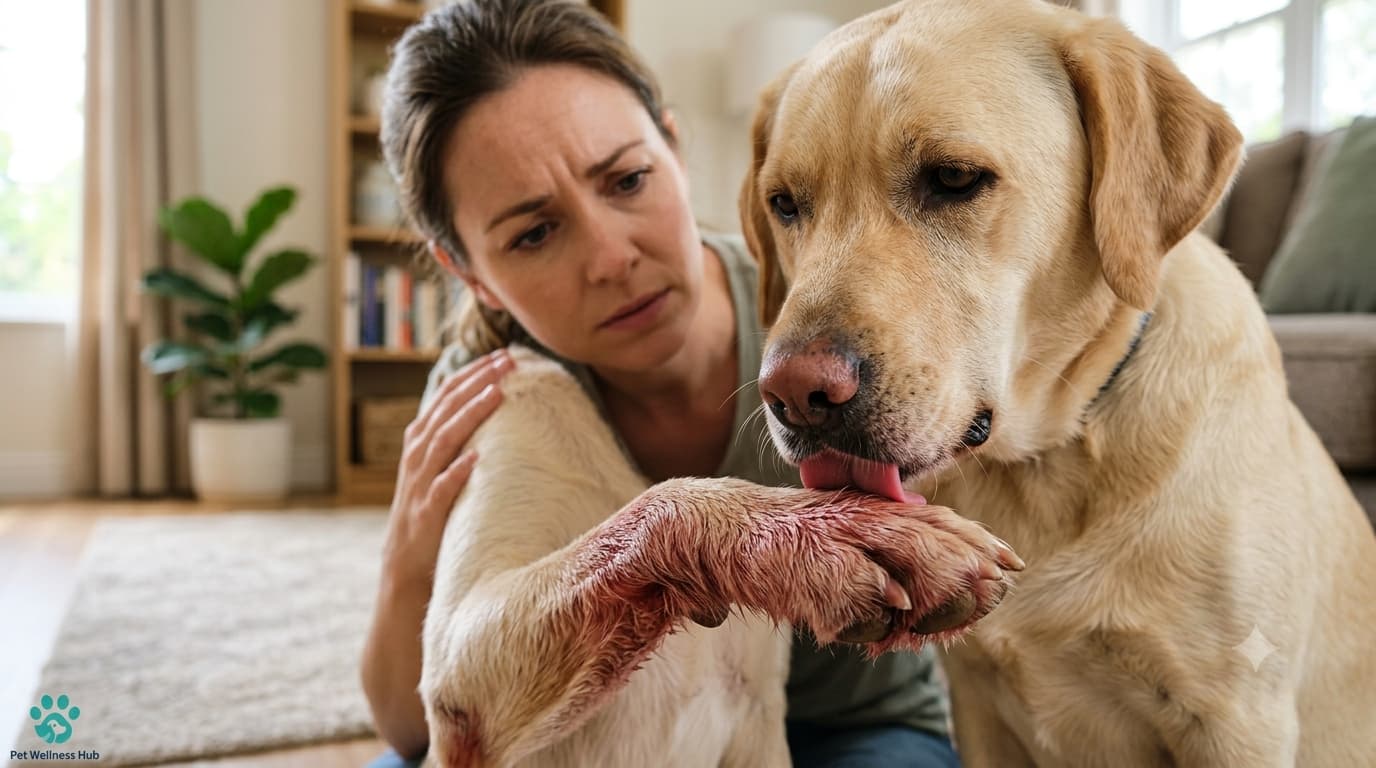
Have you noticed your dog constantly licking his paws and wondered if it’s normal?
As a dog owner, I’ve experienced this firsthand. One evening, I noticed my dog quietly sitting in the corner, repeatedly licking the same paw. At first, I thought he was simply cleaning himself. But after seeing the behavior continue for several days, I started asking myself:
“Why is my dog licking his paws so much?”
The truth is that occasional paw licking is completely normal. Dogs naturally clean their paws from time to time.
However, excessive paw licking can be a sign of allergies, injuries, anxiety, infections, or other underlying health issues that shouldn’t be ignored.
In this guide, you’ll discover the most common reasons dogs lick their paws, how to identify warning signs, and what you can do to help your furry friend feel better.
Table of Contents
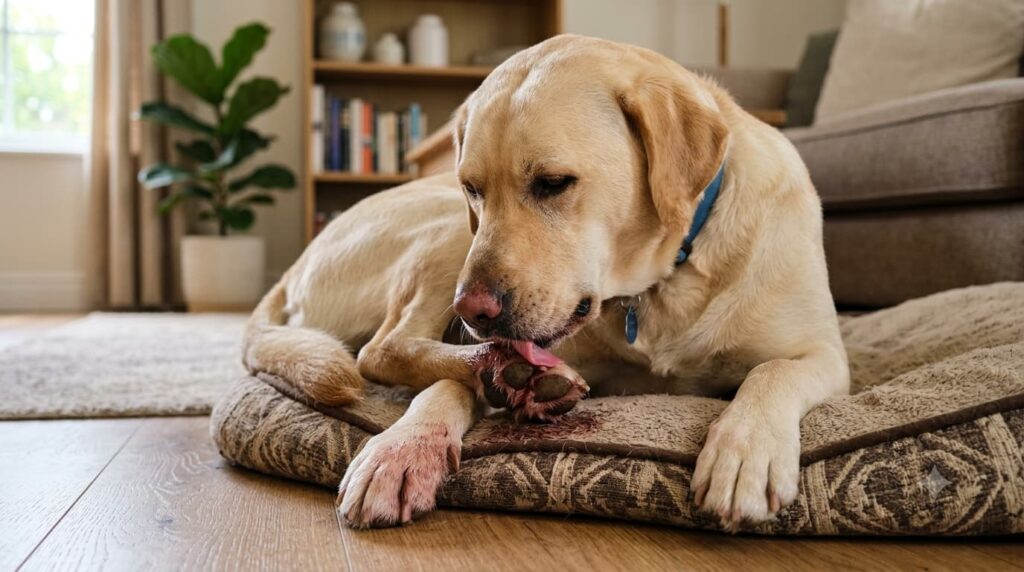
Is It Normal for Dogs to Lick Their Paws?
Yes.
Dogs occasionally lick their paws to:
- Remove dirt
- Clean themselves
- Relieve mild irritation
- Groom after walks
Normal paw licking is usually brief and occasional.
The problem begins when your dog:
- Licks constantly
- Focuses on one paw
- Creates redness or sores
- Interrupts sleep or daily activities
When this happens, it’s time to investigate the cause.
1. Allergies Are the Most Common Cause
One of the biggest reasons behind why is my dog licking his paws is allergies.
Dogs can develop allergies from:
Environmental Allergens
- Grass
- Pollen
- Mold
- Dust mites
Food Allergies
- Chicken
- Beef
- Dairy
- Wheat
When allergens irritate the skin, dogs often respond by licking their paws excessively.
Signs of Allergies
- Itchy skin
- Red paws
- Ear infections
- Excessive scratching
- Paw chewing
2. Dry or Irritated Skin
Just like humans, dogs can suffer from dry skin.
Dry skin may develop because of:
- Cold weather
- Low humidity
- Excessive bathing
- Poor nutrition
Dry skin often creates itching, leading to repeated paw licking.
If your dog has recently been bathed frequently, this may contribute to skin irritation.
👉 Internal Link Opportunity:
How Often Should You Bathe a Dog?
3. Something Is Stuck in the Paw
Sometimes the answer to why is my dog licking his paws is surprisingly simple.
Dogs often step on:
- Small stones
- Grass seeds
- Splinters
- Thorns
- Sharp debris
When a foreign object becomes trapped, dogs instinctively lick the area to relieve discomfort.
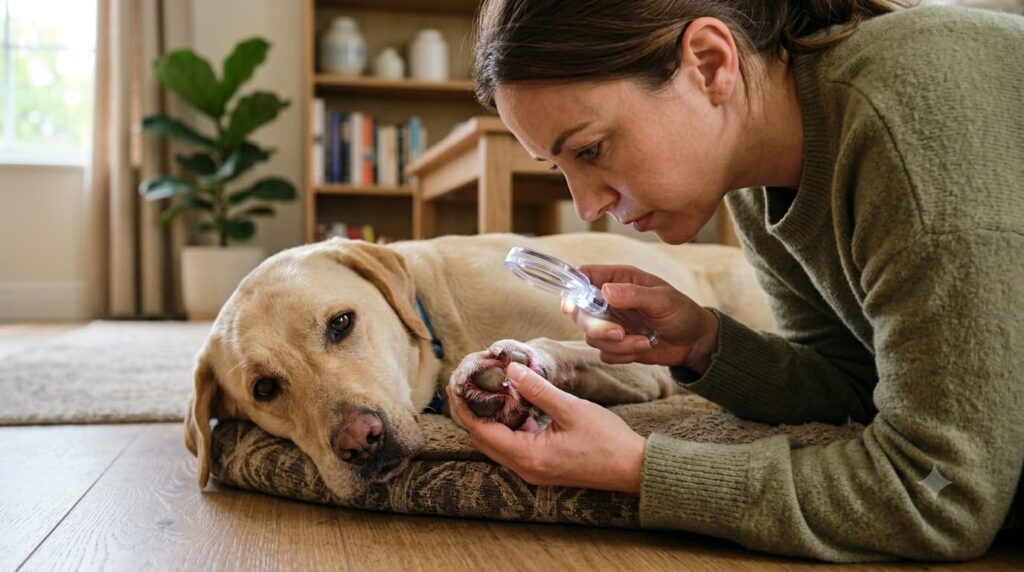
Always inspect the paws carefully.
4. Paw Injuries
Small injuries can cause significant irritation.
Common paw injuries include:
- Cuts
- Scratches
- Burns
- Cracked paw pads
Signs of injury include:
- Limping
- Swelling
- Bleeding
- Sensitivity when touched
Even minor injuries can lead to constant licking.
5. Anxiety and Stress
Many owners are surprised to learn that emotional issues can cause excessive licking.
Dogs often lick their paws when they feel:
- Bored
- Lonely
- Stressed
- Anxious
This behavior is similar to how some humans bite their nails during stressful situations.
Common Anxiety Triggers
- Separation anxiety
- Loud noises
- New environments
- Lack of exercise
If the licking mainly occurs when your dog is alone, anxiety may be the culprit.
6. Yeast or Bacterial Infections
Moisture trapped between the toes creates an ideal environment for infections.
Yeast infections frequently cause:
- Intense itching
- Red skin
- Strong odor
- Excessive licking
Some owners notice a “corn chip” smell coming from the paws.
If your dog constantly licks the same area and the paws smell unusual, an infection may be present.
7. Parasites
Fleas, mites, and ticks can irritate the skin and paws.
Although parasites often affect the entire body, some dogs focus their licking on the paws.
Additional symptoms include:
- Scratching
- Hair loss
- Redness
- Skin irritation
Regular parasite prevention can help reduce this risk.
8. Arthritis and Joint Pain
Older dogs may lick their paws because of pain rather than itching.
When dogs experience discomfort in:
- Joints
- Legs
- Hips
They sometimes lick nearby areas as a self-soothing behavior.
This is particularly common in senior dogs.
If your older dog suddenly starts licking excessively, arthritis may be worth discussing with your veterinarian.
9. Behavioral or Compulsive Disorders
In some cases, licking becomes a habit.
Dogs may continue licking even after the original cause has disappeared.
This is known as compulsive licking.
Warning signs include:
- Licking for hours
- Ignoring distractions
- Creating open sores
- Repeated licking of the same spot
Behavioral training may be necessary.
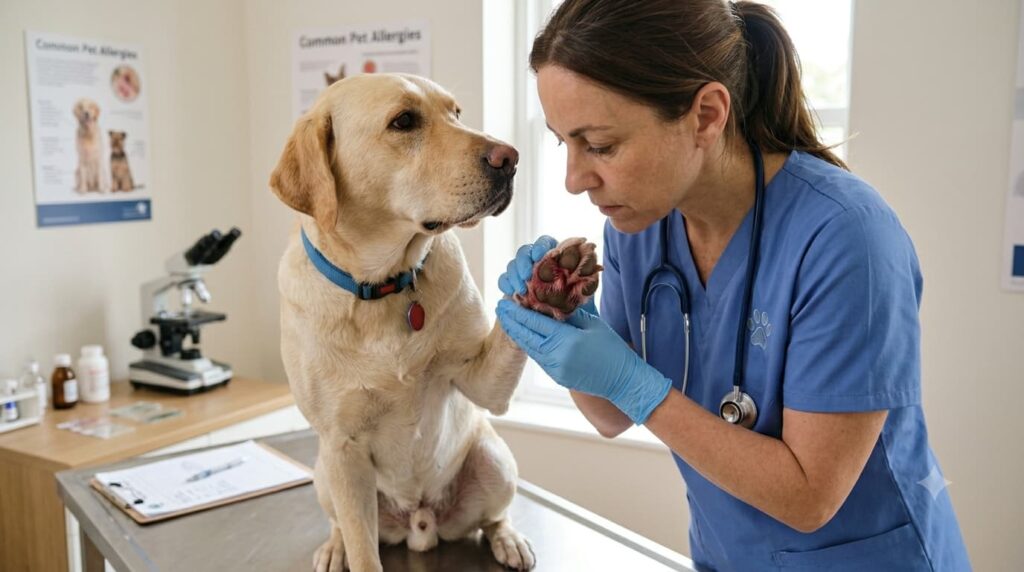
When Should You Worry?
Contact your veterinarian if you notice:
- Bleeding
- Swelling
- Limping
- Pus
- Bad odor
- Open wounds
- Constant licking
These signs often indicate an underlying medical problem.
How To Stop a Dog From Licking His Paws
1. Check the Paws Daily
Inspect for:
- Cuts
- Stones
- Splinters
- Swelling
2. Keep Paws Clean
Wash paws after walks to remove allergens and irritants.
3. Manage Allergies
Work with your veterinarian to identify allergy triggers.
4. Increase Exercise
A tired dog is less likely to develop boredom-related licking habits.
5. Visit a Veterinarian
Persistent licking should always be evaluated professionally.
My Personal Experience
The first time my dog started licking his paws repeatedly, I assumed it was normal grooming.
A week later, the licking became constant.
After checking closely, I discovered a small grass seed stuck between his toes.
Once removed, the licking stopped completely.
That experience taught me an important lesson:
Sometimes the answer to why is my dog licking his paws is simple, while other times it can signal a more serious health issue.
Paying attention early can save your dog from unnecessary discomfort.
Final Thoughts
If you’ve been wondering why is my dog licking his paws, the cause could range from simple grooming behavior to allergies, injuries, infections, or anxiety.
Occasional licking is normal.
Excessive licking is not.
The sooner you identify the underlying cause, the easier it becomes to help your dog stay comfortable, healthy, and happy.
When in doubt, consult your veterinarian.
Your dog’s paws may be trying to tell you something important.
Frequently Asked Questions (FAQ)
Why is my dog licking his paws all the time?
Allergies, infections, injuries, anxiety, and skin irritation are the most common causes.
Why is my dog licking his paws at night?
Dogs often lick their paws at night because distractions are reduced and discomfort becomes more noticeable.
Can food allergies cause paw licking?
Yes. Food allergies are one of the leading reasons dogs lick their paws excessively.
Should I stop my dog from licking his paws?
Occasional licking is normal, but excessive licking should be investigated.
Can anxiety cause paw licking?
Absolutely. Stress and separation anxiety frequently trigger repetitive licking behaviors.
Why are my dog’s paws red?
Red paws often indicate allergies, irritation, infections, or excessive licking.
Can infections cause excessive paw licking?
Yes. Yeast and bacterial infections are common causes.
Why does my senior dog lick his paws so much?
Arthritis and joint pain often contribute to excessive paw licking in older dogs.
When should I call a vet?
If licking is persistent or accompanied by swelling, bleeding, limping, or infection signs.
Can boredom cause paw licking?
Yes. Dogs sometimes lick their paws excessively when they lack mental stimulation.
How do you treat a dog’s licking paws?
Clean and dry the paws, check for injuries or pests, use an anti-itch spray or Elizabeth collar to prevent further licking, and see a vet if it persists to treat underlying allergies or infections.
Should I be worried if my dog keeps licking his paws?
Yes, frequent or compulsive paw licking is usually a sign of allergies, pain, a skin infection, or anxiety, and should be evaluated by a vet if it persists.
For additional information about dog allergies and paw licking, pet owners can refer to resources from the American Kennel Club (AKC).
https://kinshippet.com/how-to-cancel-fetch-pet-insurance-in-2026-step-by-step-guide-for-pet-owners