
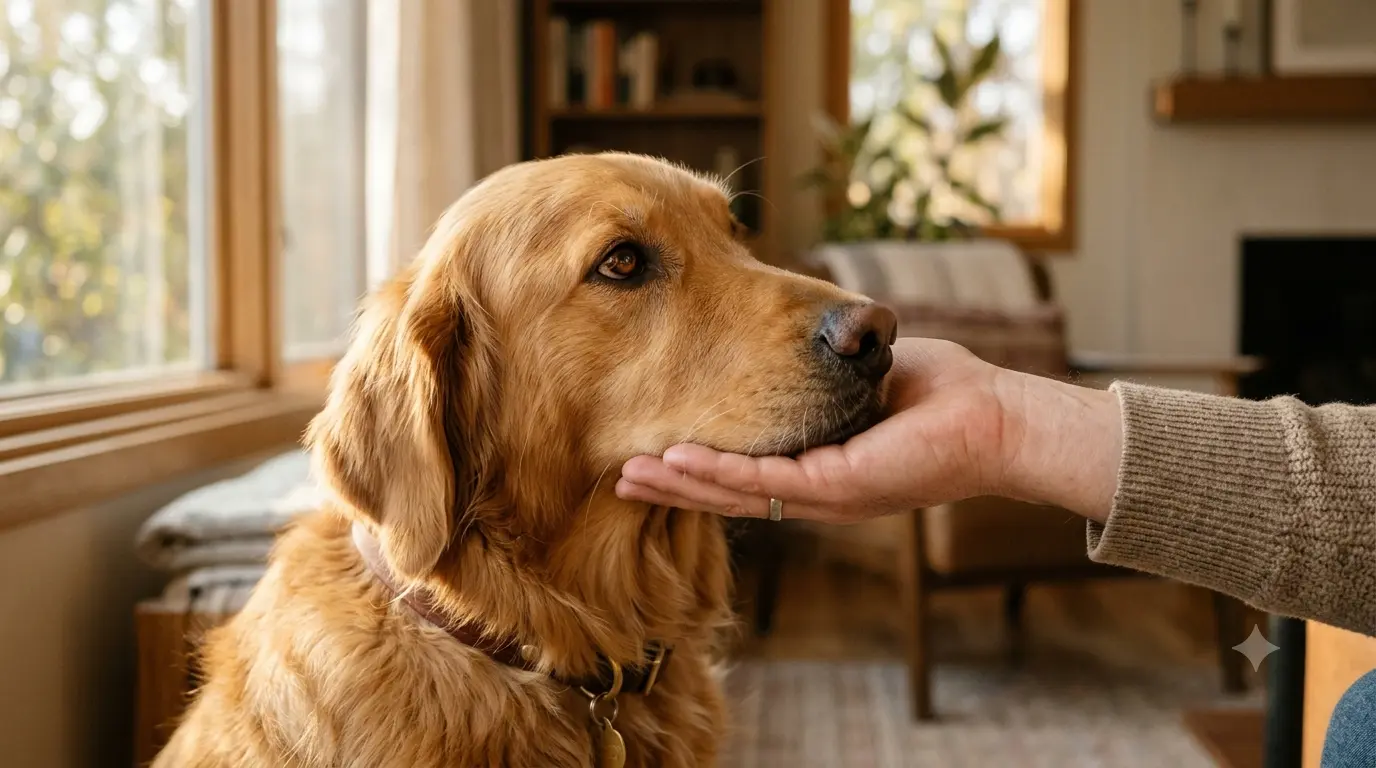
Have you ever been sitting on the couch when your dog gently pushes his head into your hand, almost as if he’s asking you to do something? Maybe he nudges your palm while you’re working, watching TV, or simply relaxing.
It’s one of those little dog behaviors that can make you wonder what your furry friend is trying to communicate.
So, why does my dog push his head into my hand? In most cases, this behavior is a friendly way of asking for attention, affection, comfort, or interaction. However, the meaning can depend on your dog’s body language and the situation.
Let’s explore seven possible reasons behind this sweet behavior and when you should pay closer attention.
Table of Contents
Quick Overview: Why Dogs Push Their Heads Into Your Hands
| Possible Reason | What Your Dog May Want |
|---|---|
| Affection | Physical closeness |
| Attention | Your focus |
| Petting | Head scratches or cuddles |
| Communication | To express a need |
| Comfort | Reassurance and security |
| Learned behavior | A response they’ve enjoyed before |
| Playfulness | Interaction and fun |
7 Reasons Your Dog Pushes His Head Into Your Hand
1. Your Dog Is Showing Affection
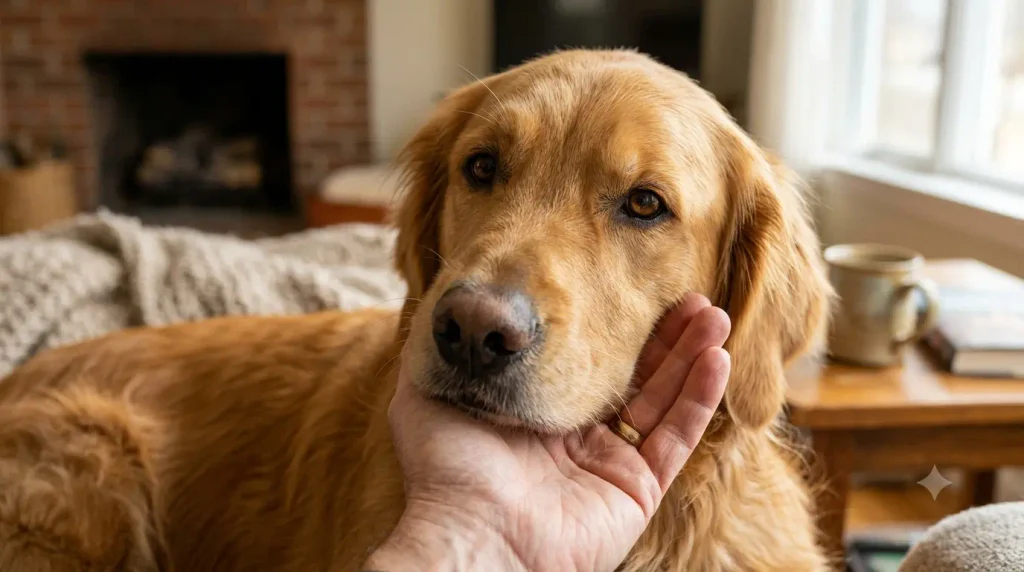
One of the sweetest explanations is that your dog simply enjoys being close to you.
Dogs often use gentle physical contact to build and maintain social bonds. Resting their head against your hand can be a comfortable way to seek closeness.
If your dog has relaxed ears, a soft expression, and a loose body, the gesture may be a sign that he feels comfortable around you.
2. He Wants You to Pet Him

Sometimes, the explanation is surprisingly simple: your dog wants a good head scratch!
If your dog pushes his head into your palm and stays there, he may be encouraging you to pet him. Some dogs even move their heads slightly to guide your hand toward their favorite scratching spot.
Pay attention to his response. If he relaxes and leans closer, he may be enjoying the attention.
3. Your Dog Is Asking for Attention
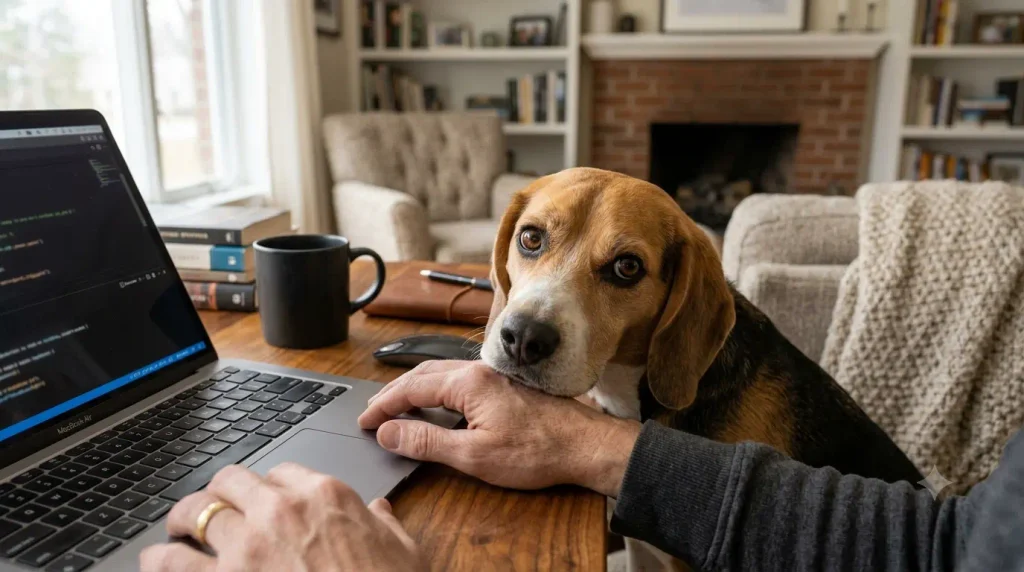
Dogs quickly learn which behaviors get their owners to respond.
If pushing his head into your hand makes you stop working, look at him, or start talking, he may repeat the behavior whenever he wants your attention.
For example, your dog might nudge your hand while you’re scrolling through your phone because he wants you to notice him.
4. He Is Trying to Communicate Something

Your dog cannot use words, so he relies on body language and physical signals to communicate.
When your dog pushes his head into your hand, he may be trying to tell you that he wants something.
Depending on the situation, he could be asking for:
- A little attention.
- A walk outside.
- Playtime.
- Food or fresh water.
- Some quiet companionship.
Look at what happens before and after the behavior to understand what he might need.
Dogs communicate through different body postures and signals, so observing the entire interaction can help you understand what your dog is trying to express. Learn more in this VCA guide to canine communication.
5. Your Dog Is Looking for Comfort
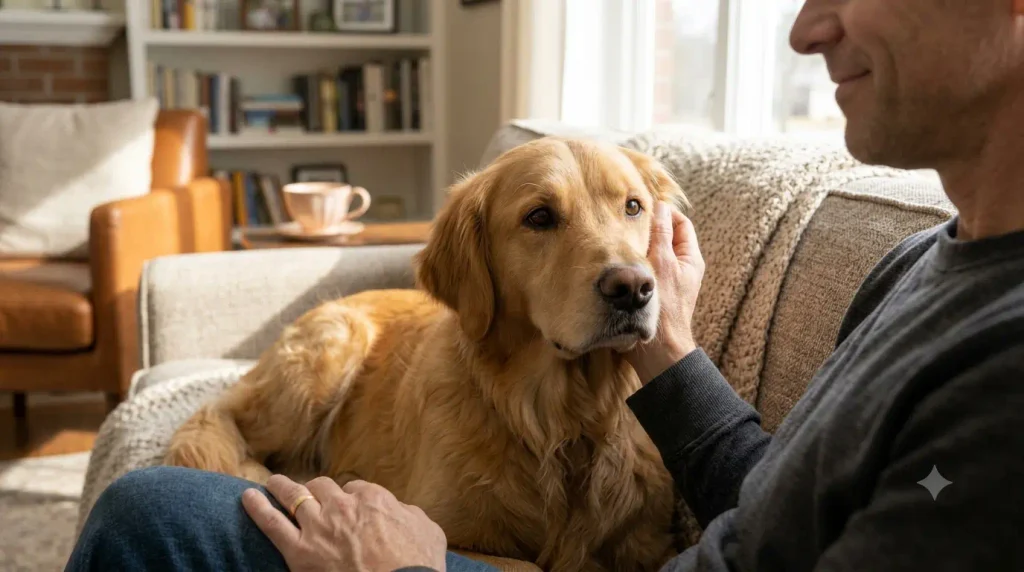
Dogs sometimes seek physical closeness when they feel uncertain, nervous, or overwhelmed.
If your dog gently presses his head into your hand during thunderstorms, unfamiliar situations, or loud noises, he may be looking for reassurance.
Your calm presence and gentle interaction can help him feel more secure.
Avoid forcing physical contact if he seems uncomfortable. Let him choose how close he wants to be.
6. He Has Learned That This Behavior Works
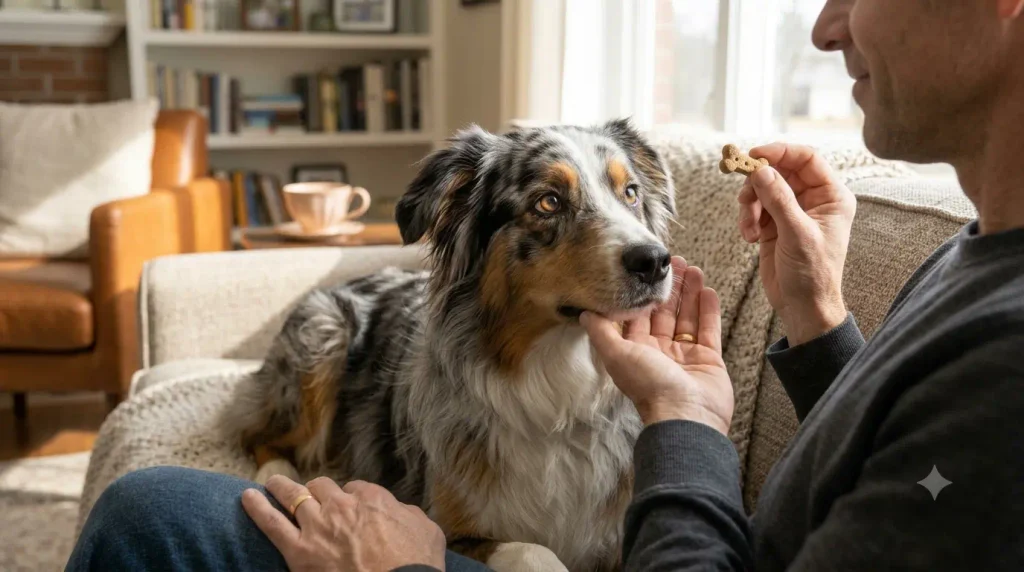
Dogs are excellent at recognizing patterns.
If your dog once pushed his head into your hand and received a lovely belly rub or head scratch, he may have learned that this action gets a positive response.
Over time, it can become a familiar habit.
This doesn’t necessarily mean your dog is demanding attention. He may simply have discovered a behavior that leads to something enjoyable.
7. He Wants to Play With You

Some dogs use gentle nudging as an invitation to interact.
Your dog might push his head into your hand, step back, wag his tail, and then return with a favorite toy.
These playful signals may mean he’s hoping you’ll join him.
If he appears energetic and relaxed, try offering an appropriate toy or starting a short play session.
When Should You Be Concerned?
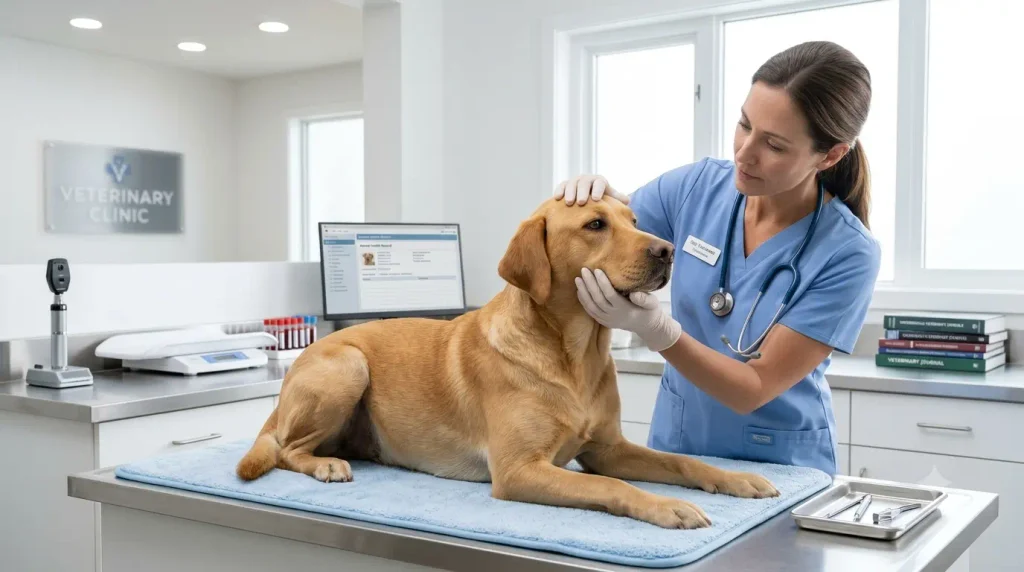
In most situations, gently pushing a head into your hand is normal social behavior.
However, it’s important to understand the difference between ordinary nudging and unusual head pressing.
Head pressing is different from seeking affection. It involves a dog persistently pressing their head against a wall or other hard surface without an obvious social reason. This can be associated with serious neurological or other medical problems.
Contact a veterinarian promptly if you notice:
- Persistent head pressing against walls or furniture.
- Sudden changes in behavior or awareness.
- Unusual walking or difficulty maintaining balance.
- Disorientation or other concerning neurological signs.
If your dog suddenly starts pushing his head into your hand much more frequently, especially alongside signs of discomfort, arrange a veterinary checkup.
Never assume that unusual or repetitive behavior is simply affection.
Frequently Asked Questions
Why does my dog push his head into my hand when I stop petting him?
He may be asking you to continue. If he enjoys being petted, nudging your hand can be his way of requesting more attention.
Why does my dog push his head between my hands?
Your dog may enjoy having both hands around his head for gentle petting or scratches. Observe whether he remains relaxed and comfortable.
Does my dog trust me when he rests his head on my hand?
It can be a sign of comfort and a positive social bond. However, consider his overall body language rather than relying on one behavior alone.
Should I pet my dog when he pushes his head into my hand?
If he appears relaxed and welcomes touch, gentle petting is usually fine. If he moves away, stiffens, or seems uncomfortable, give him space.
Final Thoughts
So, why does my dog push his head into my hand? Most often, it’s a simple way of seeking affection, attention, comfort, or interaction.
These small moments can tell you a lot about how your dog communicates. Instead of looking at the gesture alone, pay attention to his body language, surroundings, and other signals.
After all, understanding your dog’s little habits can help you build a stronger, more trusting relationship with your furry companion.
Understanding your dog’s body language is essential because facial expressions, posture, and other signals can reveal how your dog feels, as explained in this AKC guide to reading dog body language.
Related Articles:
Why Does My Dog Circle Before Lying Down?
Why Does My Dog Sniff My Shoes So Much Every Day?
Why Does My Dog Bring Me Random Objects?