

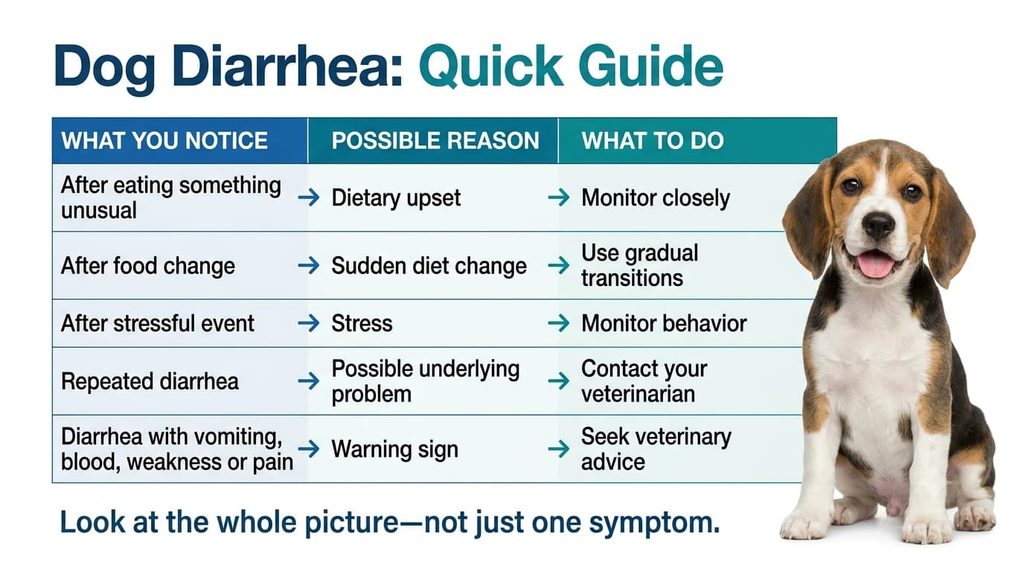
Why does my dog have diarrhea? Seeing your dog suddenly develop diarrhea can be worrying. In many cases, diarrhea is caused by something simple, such as eating unusual food, a sudden diet change, or stress. However, persistent diarrhea can sometimes point to a more serious problem.
Table of Contents
Quick Answer
If you’re wondering why does my dog have diarrhea, common causes include eating something unusual, sudden diet changes, stress, parasites, infections, food intolerance, and certain medications or health problems.
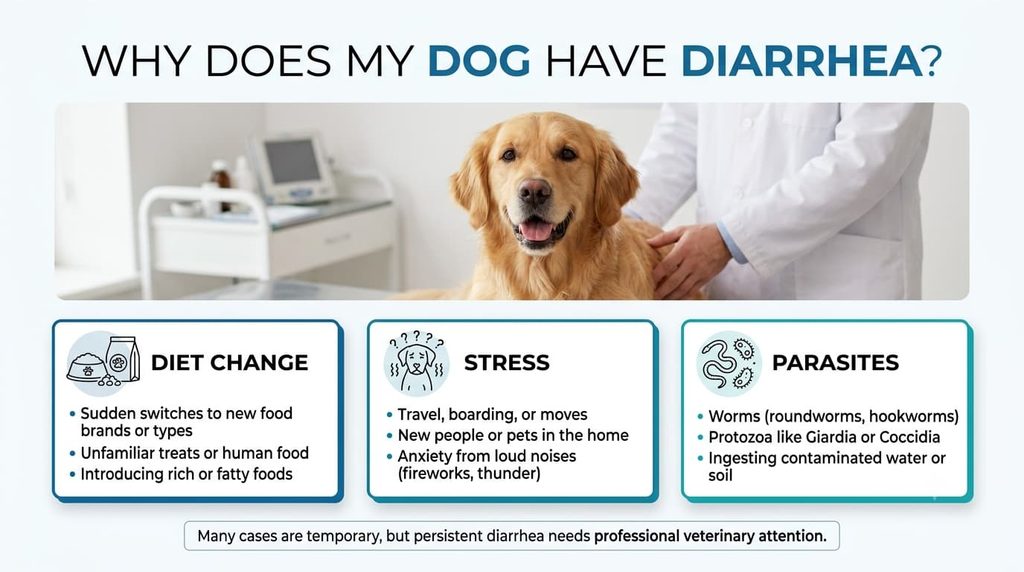
A single mild episode may not be an emergency, but repeated diarrhea or diarrhea with other symptoms deserves closer attention.
7 Common Reasons Your Dog Has Diarrhea
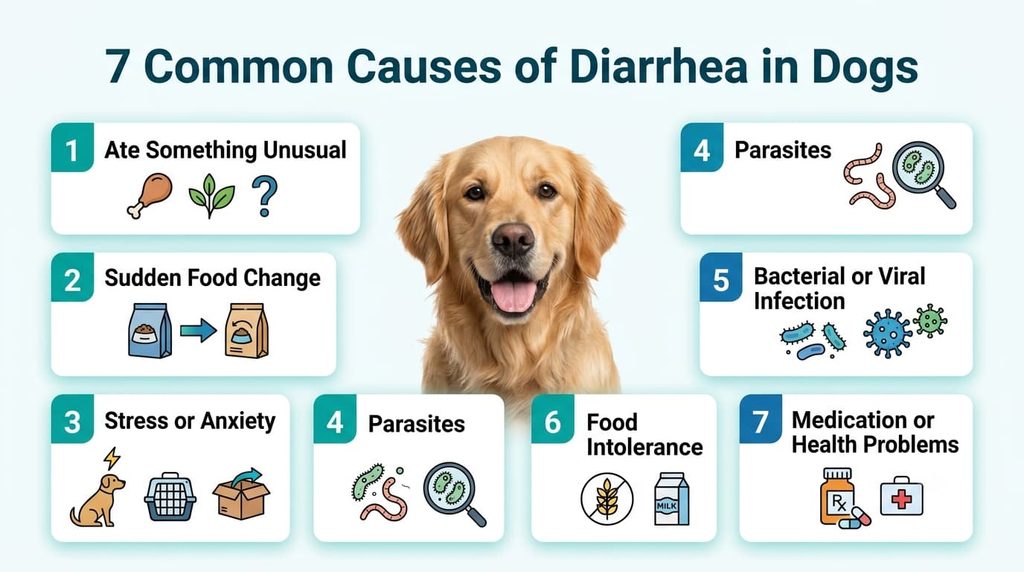
1. Your Dog Ate Something Unusual
Dogs often eat things they shouldn’t, including table scraps, garbage, plants, or unfamiliar treats. Their digestive system may react with loose or watery stools.
2. Sudden Food Changes
Changing your dog’s food too quickly can upset the digestive system. Switching gradually over several days is generally easier for dogs to tolerate.
3. Stress or Anxiety
Travel, visitors, boarding, moving, fireworks, or other stressful events can cause temporary digestive changes. Some dogs develop diarrhea shortly after a stressful experience.
4. Parasites
Intestinal parasites such as roundworms, hookworms, or Giardia can cause diarrhea. Parasite-related diarrhea may sometimes occur with vomiting, poor appetite, weight loss, or low energy.
5. Bacterial or Viral Infections
Certain infections can irritate the digestive tract and lead to diarrhea. Puppies and dogs with other health problems can be more vulnerable to complications.
6. Food Intolerance
Some dogs don’t tolerate particular ingredients well. If diarrhea repeatedly occurs after eating the same food or treat, discuss the pattern with your veterinarian rather than making major dietary changes yourself.
7. Medication or an Underlying Health Problem
Some medications can cause digestive upset. Persistent diarrhea can also occur with conditions affecting the digestive system or other organs, so recurring problems shouldn’t simply be ignored.
What Should You Do If Your Dog Has Diarrhea?
For a dog that otherwise seems comfortable and well, monitor them closely and make sure fresh water is always available.
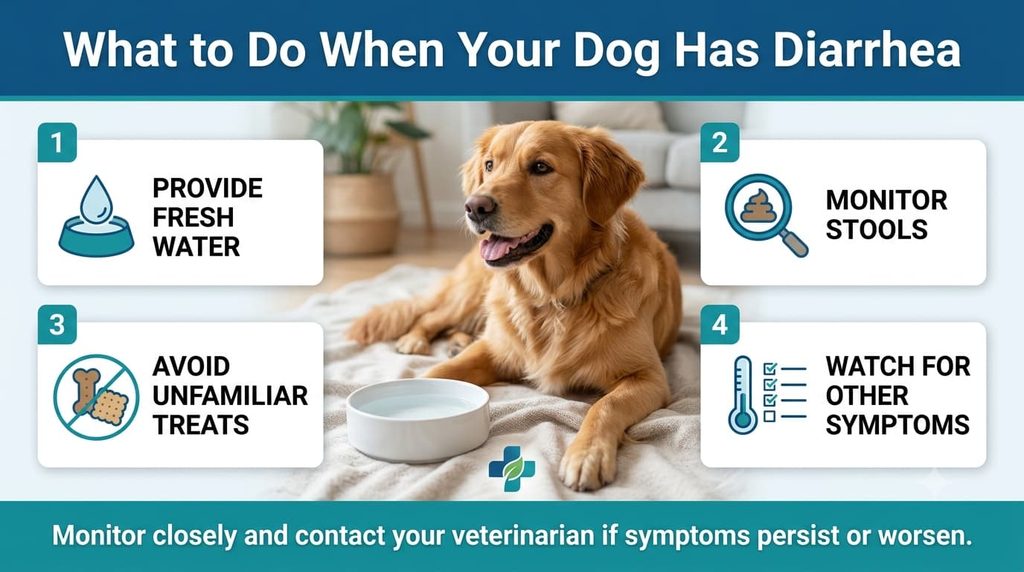
You can also:
- Keep track of how often diarrhea occurs.
- Note any vomiting, appetite changes, or unusual behavior.
- Avoid giving unfamiliar treats or table scraps.
- Keep your dog away from garbage and potentially harmful substances.
- Contact your veterinarian if the problem continues or keeps returning.
Don’t give human anti-diarrhea medicines unless your veterinarian specifically recommends them.
If your dog also has appetite changes, learn more about why dogs may stop eating and what signs to watch for.
When Should You Call a Vet?
Contact your veterinarian promptly if your dog has diarrhea along with:
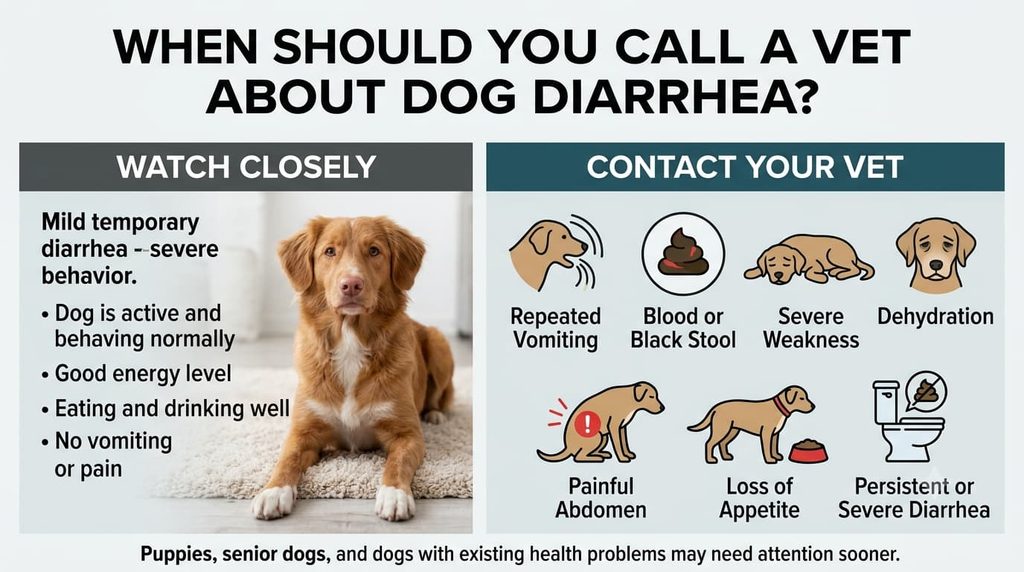
- Repeated vomiting
- Blood in the stool or black, tarry stool
- Severe weakness or unusual tiredness
- Signs of significant dehydration
- A painful or swollen abdomen
- Loss of appetite
- Fever or other concerning symptoms
- Persistent or severe diarrhea
Puppies, senior dogs, and dogs with existing health conditions may need veterinary attention sooner.
For more information about common digestive problems in dogs, see the American Kennel Club’s guide to diarrhea in dogs.
Frequently Asked Questions
1. Is diarrhea in dogs always serious?
No. A mild, short-lived episode can happen after dietary changes or minor digestive upset. However, persistent or severe diarrhea should be evaluated.
2. Why does my dog have diarrhea but seem fine?
Dogs can experience temporary digestive upset while otherwise acting normally. Continue monitoring for additional symptoms or worsening diarrhea.
3. Can changing dog food cause diarrhea?
Yes. A sudden food change can upset some dogs’ digestive systems. Gradual transitions are usually better tolerated.
4. Can stress cause diarrhea in dogs?
Yes. Stress and anxiety can affect the digestive system and may cause temporary loose stools.
5. When should I worry about my dog’s diarrhea?
Worry more when diarrhea is severe, persistent, recurrent, or accompanied by vomiting, blood, weakness, pain, appetite loss, or other unusual symptoms.
Conclusion
If you’re asking why does my dog have diarrhea, there are many possible explanations, from a simple dietary mistake to parasites or an underlying health problem. Pay attention to how your dog is behaving overall, monitor the symptoms, and contact your veterinarian when diarrhea is severe, persistent, or accompanied by other warning signs.