
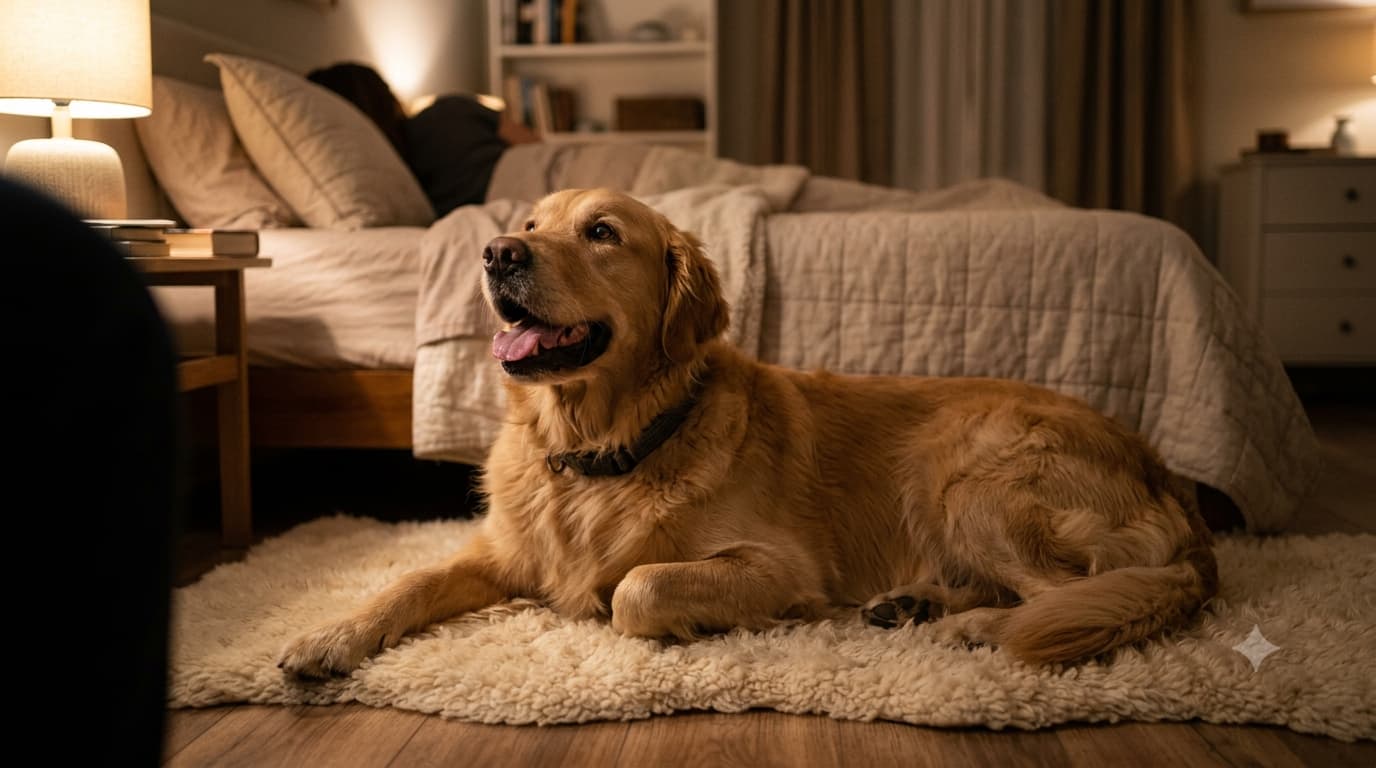
Hearing your dog pant heavily in the middle of the night can be concerning. Many pet owners wake up wondering, why is my dog panting at night when everything seems normal.
Panting is a natural way for dogs to regulate their body temperature. Unlike humans, dogs do not sweat efficiently through their skin. Instead, they cool themselves primarily by panting. However, excessive panting at night can sometimes indicate discomfort, stress, pain, or an underlying medical condition.
If you’ve been asking why is my dog panting at night, understanding the possible causes can help you determine whether the behavior is normal or if your dog needs veterinary attention.
Table of Contents
Quick Overview
| Cause | Serious? | What You Should Do |
|---|---|---|
| Warm Room | Usually No | Cool the environment |
| Anxiety or Stress | Sometimes | Identify triggers |
| Pain or Injury | Yes | Contact a veterinarian |
| Heart Disease | Yes | Seek medical evaluation |
| Respiratory Problems | Yes | Veterinary care needed |
| Obesity | Sometimes | Weight management |
| Medication Side Effects | Sometimes | Consult your vet |
| Cushing’s Disease | Yes | Veterinary diagnosis |
| Excitement | Usually No | Monitor behavior |
| Medical Emergency | Yes | Immediate care |
1. The Room May Be Too Warm
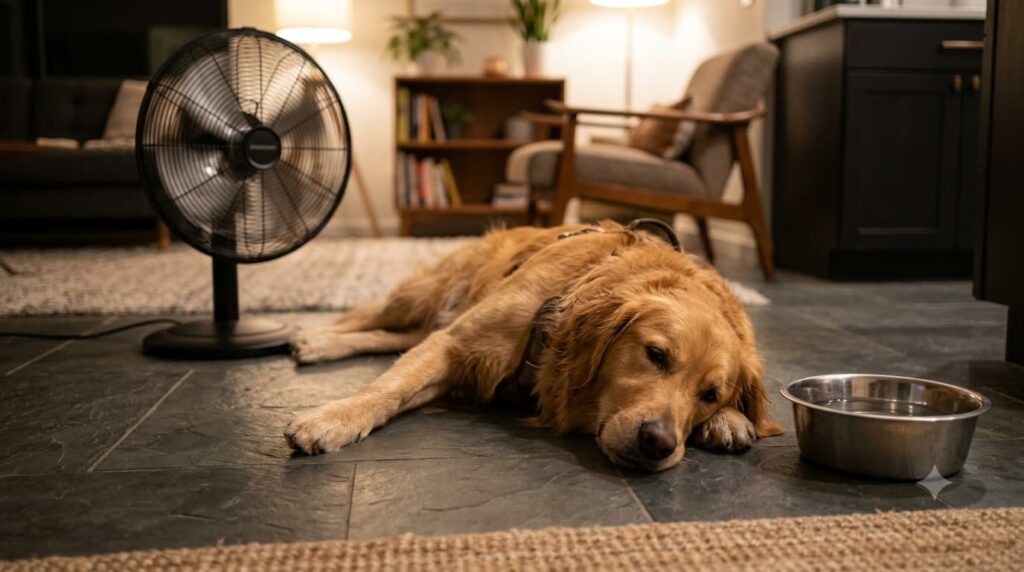
One of the simplest answers to why is my dog panting at night is that your dog is too warm.
Even if the temperature feels comfortable to you, your dog may still feel overheated, especially if they have:
- Thick fur
- A double coat
- Obesity
- Limited airflow
Dogs often pant more while sleeping in warm rooms because they rely on panting to cool down.
What You Should Do
- Improve air circulation
- Provide fresh water
- Use a fan or air conditioning
- Move your dog to a cooler sleeping area
If panting stops after cooling the environment, overheating was likely the cause.
2. Stress or Anxiety
Another common reason why is my dog panting at night is anxiety.
Dogs can experience stress for many reasons, including:
- Thunderstorms
- Fireworks
- Separation anxiety
- Changes in routine
- Moving to a new home
An anxious dog may not only pant but also pace, tremble, whine, or seek constant reassurance.
Signs of Anxiety
- Restlessness
- Shaking
- Hiding
- Excessive panting
- Whining
Related Article:
Why Is My Dog Whining?
Dogs experiencing anxiety often pant and whine at the same time.
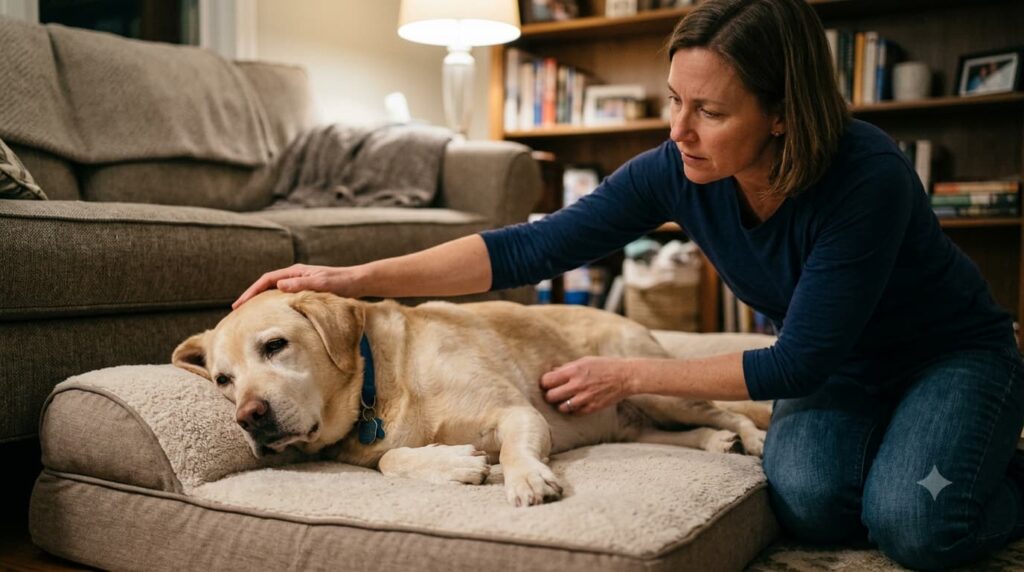
3. Pain or Discomfort
If you’re wondering why is my dog panting at night all of a sudden, pain should never be ignored.
Dogs often hide pain remarkably well. In many cases, nighttime is when discomfort becomes more noticeable because the environment is quiet and distractions are reduced.
Common causes include:
- Arthritis
- Joint pain
- Dental pain
- Back injuries
- Muscle strains
Warning Signs
- Difficulty standing
- Limping
- Crying when touched
- Reduced appetite
- Restlessness during sleep
If your dog is panting heavily and showing any of these symptoms, schedule a veterinary examination.
4. Heart Disease
Heart problems can sometimes explain why is my dog panting at night.
When the heart struggles to pump blood efficiently, dogs may breathe faster and pant excessively, especially while resting.
Additional Symptoms
- Coughing
- Fatigue
- Difficulty exercising
- Rapid breathing
- Weakness
Heart disease requires professional diagnosis and treatment.
5. Respiratory Problems
Respiratory conditions can make it difficult for dogs to breathe comfortably.
If you’ve noticed why is my dog panting at night becoming a frequent concern, respiratory issues may be involved.
Examples include:
- Asthma-like conditions
- Airway obstruction
- Lung disease
- Infections
Seek immediate veterinary care if breathing appears labored or unusually fast.
6. Obesity
Overweight dogs often have a harder time regulating body temperature and breathing efficiently.
This can cause:
- Heavy panting
- Reduced stamina
- Poor sleep quality
Maintaining a healthy weight can significantly reduce nighttime panting in many dogs.
7. Medication Side Effects
Certain medications can increase panting.
Common examples include:
- Steroids
- Prednisone
- Some pain medications
If why is my dog panting at night became noticeable after starting a new medication, consult your veterinarian before making any changes.
8. Cushing’s Disease
Cushing’s disease is a hormonal disorder that commonly causes increased panting.
Other symptoms may include:
- Increased thirst
- Increased urination
- Hair loss
- Weight gain
- Increased appetite
This condition requires veterinary testing and treatment.
9. Excitement or Emotional Stimulation
Not all nighttime panting is related to illness.
Sometimes dogs pant because they are excited, stimulated, or anticipating something.
For example:
- Guests visiting late
- Returning family members
- Play sessions before bedtime
In these situations, panting usually resolves once your dog relaxes.
10. A Medical Emergency
Sometimes why is my dog panting at night has a serious answer.
Seek emergency veterinary care immediately if panting is accompanied by:
- Pale gums
- Collapse
- Severe weakness
- Difficulty breathing
- Blue or gray gums
- Distended abdomen
These symptoms may indicate a life-threatening condition.
When Should You Call a Veterinarian?
Contact your veterinarian if:
- Panting suddenly becomes excessive
- Panting occurs every night
- Your dog appears uncomfortable
- Other symptoms develop
- Breathing becomes labored
Persistent nighttime panting should never be ignored.
Frequently Asked Questions
Is it normal for dogs to pant while sleeping?
Light panting can be normal during dreams or warm weather. Excessive panting should be evaluated.
Why is my dog panting at night but acting normal?
Common causes include a warm room, mild anxiety, excitement, or obesity. Monitor for additional symptoms.
Why is my senior dog panting at night?
Senior dogs may pant due to arthritis, pain, heart disease, or cognitive decline.
Can anxiety cause nighttime panting?
Yes. Anxiety is one of the most common reasons dogs pant excessively during the night.
Should I Be Worried If My Dog Is Panting at Night?
Occasional panting can be normal, but excessive or sudden nighttime panting may indicate heat, stress, pain, or illness and should be checked by a veterinarian if it persists.
What Can I Give My Dog for Panting at Night?
Don’t give your dog medication without veterinary advice. Keep them cool and calm, provide fresh water, and contact a veterinarian if the panting is persistent or unusual.
Does a Dog Panting Mean They Are in Pain?
Not always. Panting can be normal after exercise or when a dog is hot, but sudden or excessive panting—especially with restlessness or other unusual behavior—can be a sign of pain or illness.
How to Help a Panting Dog Calm Down?
Move your dog to a cool, quiet place, offer fresh water, and let them rest. If heavy panting continues or comes with weakness, breathing trouble, or other unusual symptoms, contact a veterinarian.
Conclusion
If you’ve been wondering why is my dog panting at night, the answer may be as simple as a warm room or as serious as an underlying medical condition. Understanding the possible causes allows you to respond appropriately and keep your dog healthy and comfortable.
While occasional panting is normal, persistent or excessive nighttime panting deserves attention. When in doubt, consult your veterinarian to ensure your dog receives the care it needs.